1,2-Dibromoethane
Also known as Ethylene dibromide, Ethylene bromide, sym-Dibromoethane

Key facts
What buyers check first
- Appearance
- Heavy liquid
- Melting point
- 9.8 °C
- Boiling point
- 131.3 °C
- Density
- 2.16832 g/cm³ at 25 °C
- Solubility
- In water, 4,310 mg/L at 30 °C
- HS code
- 290362
- Category
- Rodenticides, nematicides and other pesticides
- UN number
- UN 1605
What is 1,2-Dibromoethane?
Plain description, key identifiers and synonyms
1,2-dibromoethane is a bromoalkane that is ethane carrying bromo substituents at positions 1 and 2. It is produced by marine algae. It has a role as a mutagen, a fumigant, a carcinogenic agent, a mouse metabolite, a marine metabolite and an algal metabolite. It is a bromohydrocarbon and a bromoalkane.
Identifiers
Registry numbers, names and line notations, tap to copy
- IUPAC name
- 1,2-dibromoethane
- CAS number
- 106-93-4 CAS number cross-checked
- EC number
- 203-444-5
- Molecular formula
- C2H4Br2
- UNII
- 1N41638RNO
- MDL number
- MFCD00000233
- InChIKey
- PAAZPARNPHGIKF-UHFFFAOYSA-N
- InChI
- InChI=1S/C2H4Br2/c3-1-2-4/h1-2H2
- SMILES (canonical and isomeric)
- C(CBr)Br
Synonyms
- Ethylene dibromide
- Ethylene bromide
- sym-Dibromoethane
- Ethane, 1,2-dibromo-
- Aadibroom
- Bromofume
- Sanhyuum
- Soilbrom
- Soilfume
- Nefis
- alpha,beta-Dibromoethane
- Iscobrome D
- Fumo-gas
- Glycol Dibromide
- Bromuro di etile
- Dowfume EDB
- Soilbrom-90ec
- Celmide
- Edabrom
- Kopfume
- Soilbrom-40
- Soilbrom-85
- Soilbrom-90
- Unifume
- 1,2-Dibromaethan
Show all 39 synonymsShow fewer synonyms
- 1,2-Dibroomethaan
- Dowfume W-8
- Glycol bromide
- Pestmaster edb-85
- 1,2-Ethylene dibromide
- Soilbrom-100
- Dibromure D'ethylene
- Dowfume W-90
- Dowfume W-100
- E-D-Bee
- Aethylenbromid
- Dwubromoetan
- Dowfume 40
- alpha,omega-Dibromoethane
Physical and chemical properties
Measured values and descriptors computed from the structure
Physical and chemical properties
Measured values, check the supplier specification for your grade
| Appearance | Heavy liquidexp.Measured value |
|---|---|
| Odour | Chloroform odorexp.Measured value |
| Melting point | 9.8 °Cexp.Measured value |
| Boiling point | 131.3 °Cexp.Measured value |
| Density | 2.16832 g/cm³ at 25 °Cexp.Measured value |
| Autoignition temperature | Not flammableexp.Measured value |
| Solubility | In water, 4,310 mg/L at 30 °Cexp.Measured value |
| Vapour pressure | 11.2 mm Hg at 25 °Cexp.Measured value |
Values vary by grade. Ask suppliers for the COA or TDS of the batch you buy.
Computed descriptors
Calculated from the structure, useful for screening and formulation
| Molecular weight | 187.86 g/molcalc.Computed value |
|---|---|
| Exact mass | 185.868 Dacalc.Computed value |
| LogP (octanol/water) | 1.78calc.Computed value |
| Topological polar surface area | 0 Ųcalc.Computed value |
| Hydrogen bond donors | 0calc.Computed value |
| Hydrogen bond acceptors | 0calc.Computed value |
| Rotatable bonds | 1calc.Computed value |
| Heavy atoms | 4calc.Computed value |
| Rings | 0calc.Computed value |
| Aromatic rings | 0calc.Computed value |
| Fraction sp3 carbons | 1calc.Computed value |
| Formal charge | 0calc.Computed value |
| Stereocentres | 0calc.Computed value |
| Lipinski rule of five | Passes (0 violations)calc.Computed value |
Calculated for screening. Confirm critical figures with the supplier.
Safety and hazards
GHS classification summary, not a safety data sheet
Hazard statements
- H301Toxic if swallowed.
- H311Toxic in contact with skin.
- H315Causes skin irritation.
- H319Causes serious eye irritation.
- H331Toxic if inhaled.
- H335May cause respiratory irritation.
- H350May cause cancer.
- H411Toxic to aquatic life with long lasting effects.
Precautionary statements (26)
- P203Obtain, read and follow all safety instructions before use.
- P261Avoid breathing dust, fume, gas, mist, vapours or spray.
- P262Do not get in eyes, on skin, or on clothing.
- P264Wash skin thoroughly after handling.
- P264 + P265Wash skin thoroughly after handling. Do not touch eyes.
- P270Do not eat, drink or smoke when using this product.
- P271Use only outdoors or in a well-ventilated area.
- P273Avoid release to the environment.
- P280Wear protective gloves, protective clothing, eye protection and face protection.
- P301 + P316If swallowed: Get emergency medical help immediately.
- P302 + P352If on skin: Wash with plenty of water.
- P304 + P340If inhaled: Remove person to fresh air and keep comfortable for breathing.
- P305 + P351 + P338If in eyes: Rinse cautiously with water for several minutes. Remove contact lenses, if present and easy to do. Continue rinsing.
- P316Get emergency medical help immediately.
- P318If exposed or concerned, get medical advice.
- P319Get medical help if you feel unwell.
- P321Specific treatment (see supplemental first aid instructions on the label).
- P330Rinse mouth.
- P332 + P317If skin irritation occurs: Get medical help.
- P337 + P317If eye irritation persists: Get medical help.
- P361 + P364Take off immediately all contaminated clothing. And wash it before reuse.
- P362 + P364Take off contaminated clothing. And wash it before reuse.
- P391Collect spillage.
- P403 + P233Store in a well-ventilated place. Keep container tightly closed.
- P405Store locked up.
- P501Dispose of contents and container in accordance with local regulations.
- UN number
- UN 1605
- Transport hazard class
- 6.1
- Packing group
- I
GHS classification summary, not a safety data sheet (SDS). Classifications can differ by supplier, grade and concentration. Always check the supplier's SDS.
Full safety data and first aid1,2-Dibromoethane suppliers
Controlled substance, listings of documented suppliers only, in the documented ranking
1,2-Dibromoethane is controlled. Only documented suppliers can list it, and buyers must upload a valid licence with their request. Every request is reviewed before suppliers see it.
1,2-Dibromoethane (EDB)
Reference: Rotterdam Convention Annex III, prior informed consent before export
Our policy on controlled substancesLicensed buyers can post a request for 1,2-Dibromoethane with their licence. Our compliance team reviews it before suppliers see it.
1,2-Dibromoethane price
Indicative price range per kg from live supplier offers
Suppliers quote this chemical on request. Send one free request and compare quotes side by side.
Uses and applications
What the substance is used for, by industry and function
The active ingredient is no longer contained in any registered products ... "cancelled.".
Soil and grain fumigant, as lead scavenger in anti-knock gasolines.
EDB is a versatile reagent in organic synthesis. Major uses in this category are as an intermediate for pharmaceuticals (tetramisole, theodrenaline), herbicides (diquat dibromide), and dyes (Vat Blue 16), where it provides an ''ethylene bridge'' in the molecular structure. EDB is used as a nonflammable solvent for resins, gums, and waxes. Additionally, EDB can be used as a raw material in the synthesis of chemicals such as vinyl bromide (a precursor of flame-retardants) and styrenic block copolymers.
Ethylene dibromide was used in the past as an additive to leaded gasoline, however, since leaded gasoline is now banned, it is no longer used for this purpose. Ethylene dibromide is currently used in the treatment of felled logs for bark beetles and termites, and control of wax moths in beehives.
Industrial uses: Fuel agents.
Consumer uses: Fuel agents.
Use classes: Volatile organic compounds.
Roles
- aetiopathogenetic role
- algal metabolite
- animal metabolite
- carcinogenic agent
- eukaryotic metabolite
- fumigant
- genotoxin
- mammalian metabolite
- marine metabolite
- metabolite
- mouse metabolite
- mutagen
- pesticide
Pharmacology
Ethylene Dibromide is a clear, colorless, volatile liquid brominated hydrocarbon with a mild, sweet, chloroform-like odor that emits corrosive and toxic fumes when heated to decomposition. Ethylene dibromide is used as a chemical intermediate in the synthesis of resins, waxes, gums, dyes and pharmaceuticals and is used to produce vinyl bromide. Exposure to ethylene dibromide severely irritates the skin and causes depression and collapse. Ethylene dibromide affects DNA integrity by alkylation and is reasonably anticipated to be a human carcinogen.
How it is made
Made from ethylene and bromine, also from acetylene and hydrobromic acid.
EDB is manufactured via uncatalyzed, liquid-phase bromination of ethylene. Gaseous ethylene is brought into contact with bromine by various methods, allowing for dissipation of the heat of the reaction.
The commercial manufacturing process is carried out in a glass column reactor consisting of a lower packed section and an unpacked upper section containing a number of superimposed, high-capacity, coil heat exchangers.
Read more
Liquid bromine is continuously added above the packed section while a slight excess of ethylene is continuously fed countercurrently from the bottom of the packed section. The exothermic reaction between ethylene and bromine occurs in the liquid phase on the surfaces of the cooling coils, and heat is removed at a rate sufficient to maintain a maximum temperature of 100 °C and the section of the column. Some reaction also occurs in the gas phase above the bromine feed where product is condensed and separated from the vent gas (ethylene, hydrogen bromide, and interact material). As the crude liquid product passes downward through the packed section, it provides a contacting surface for rising ethylene to convert any residual dissolved bromine. Ethylene dibromide is continuously withdrawn from the reactor into a hold-up tank where it is irradiated with ultraviolet light to eliminate minor amounts of unconverted starting materials.
Regulatory status
Inventories, regulations and trade controls that list this substance
1,2-Dibromoethane is controlled. Only documented suppliers can list it, and buyers must upload a valid licence with their request. Every request is reviewed before suppliers see it.
1,2-Dibromoethane (EDB)
Reference: Rotterdam Convention Annex III, prior informed consent before export
Our policy on controlled substancesEurope
- EU harmonised classification (CLP Annex VI)Index no: 602-010-00-6
Health and food
- EU Cosmetics Regulation Annex II, prohibited in cosmeticsName: 1,2-Dibromoethane, Ref no: 651, Annex ref: II/651
United States
- TSCA inventory (USA)Status: Active in US commerce
HS code and trade data
Customs classification and reported world trade statistics
Global trade
World import and export statistics for the HS code 1,2-Dibromoethane is traded under.
Ethylene dibromide (ISO) (1,2-dibromoethane)
- Israel85.2%
- India * partner reported11.6%
- United Kingdom3.0%
- United Kingdom74.4%
- South Africa18.9%
- Switzerland * partner reported2.4%
* Partner reported figures, a lower bound.
The HS code shown for 1,2-Dibromoethane is indicative (it was matched by name in the HS nomenclature). Confirm the classification with your customs broker before shipping.
Related chemicals
Parent and salt forms, stereoisomers, similar structures and isomers
Stereoisomers and isotopic forms
Same connectivity, different stereochemistry or isotopes (same InChIKey skeleton)


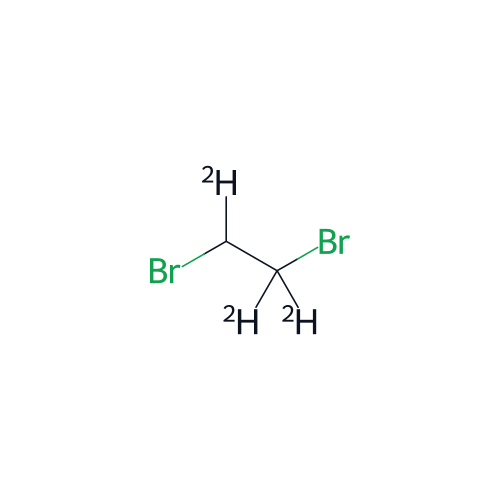


Same formula isomers
Different compounds that share this molecular formula

Frequently asked questions
Quick answers about 1,2-Dibromoethane, based on the data on this page
What is 1,2-Dibromoethane?
What is the CAS number of 1,2-Dibromoethane?
What is the molecular formula and weight of 1,2-Dibromoethane?
What is 1,2-Dibromoethane used for?
Is 1,2-Dibromoethane hazardous?
What is the HS code of 1,2-Dibromoethane?
Can I buy 1,2-Dibromoethane on CompoundList?
Guides for buyers
Practical guides that help when you source, ship or handle 1,2-Dibromoethane
- Guide, SafetyHow to read a safety data sheet in 10 minutesA section by section method to pull the essentials out of any 16 section SDS: identity, hazards, composition, storage, PPE, properties, transport and emergency measures.Read
- Guide, Trade and logisticsShipping dangerous goods: UN numbers, classes and packing groupsHow the UN dangerous goods system works for chemicals, from the nine classes and UN numbers to packing groups, UN packaging marks, labels, documents and segregation.Read
- Guide, SafetyGHS pictograms, signal words and hazard statements explainedA practical guide to the nine GHS pictograms, the signal words Danger and Warning, H and P statements, and how to read a chemical label in seconds.Read
Request as a licensed buyer
Embed this structure on your websiteShow code
Paste this code into your page to show the 2D structure of 1,2-Dibromoethane with a 3D view, its CAS number where known and a link back to this page. Free to use with the link kept.
<iframe src="https://www.compoundlist.com/embed/structure/1-2-dibromoethane-106-93-4" title="1,2-Dibromoethane structure on CompoundList" width="360" height="420" style="border:1px solid #E7E2DA;border-radius:12px;max-width:100%" loading="lazy" referrerpolicy="strict-origin-when-cross-origin"></iframe>Explore more in Rodenticides, nematicides and other pesticides or HS code 290362