Antimony trioxide
Also known as Diantimony trioxide, Antimonious oxide, Antimony sesquioxide

Key facts
What buyers check first
- Appearance
- Colorless, cubic form (valentinite), colorless (senarmontite)
- Melting point
- 655 °C
- Boiling point
- 1,425 °C
- Density
- 5.67 (valentinite), 5.2 (senarmontite)
- Flash point
- Not Applicable. Not flammable.
- HS code
- 282580
- Category
- Oxides and peroxides
- UN number
- UN 1549

What is Antimony trioxide?
Plain description, key identifiers and synonyms
Antimony trioxide is a white crystalline solid. It is insoluble in water. The primary hazard is the threat to the environment. Immediate steps should be taken to limit its spread to the environment. It is used to fireproof fabrics, paper and plastics, as a paint pigment and for many other uses.
Identifiers
Registry numbers, names and line notations, tap to copy
- IUPAC name
- bis(antimony(3+)), tris(oxygen(2-))
- CAS number
- 1309-64-4 CAS number cross-checkedOther or deprecated CAS: 12412-52-1, 1317-98-2, 1327-33-9
- EC numbers
- 215-175-0, 215-474-6
- Molecular formula
- O3Sb2
- UNII
- P217481X5E
- InChIKey
- GHPGOEFPKIHBNM-UHFFFAOYSA-N
- InChI
- InChI=1S/3O.2Sb/q3*-2;2*+3
- SMILES (canonical and isomeric)
- [O-2].[O-2].[O-2].[Sb+3].[Sb+3]
Synonyms
- Diantimony trioxide
- Antimonious oxide
- Antimony sesquioxide
- Exitelite
- Timonox
- Twinkling star
- Antimony White
- Thermoguard B
- Thermoguard L
- Thermoguard S
- White star
- Fireshield H
- Dechlorane A-O
- Stibiox MS
- Amspec-KR
- Patox C
- Patox H
- Patox L
- Patox M
- Patox S
- Atox B
- Atox F
- Atox R
- Atox S
- Antimony oxide (Sb2O3)
Show all 40 synonymsShow fewer synonyms
- Timonox White Star
- Microfine A 05
- Octoguard FR 10
- Flameguard VF 59
- Chemetron fire shield
- Antimony(3+) oxide
- Flame Cut 610
- Flame Cut 610R
- Antimony Bloom 100A
- Antimony Bloom 500A
- Weisspiessglanz
- Nyacol A 1510LP
- Fireshield FSPO 405
- Nyacol A 1530
- AP 50 (metal oxide)
Physical and chemical properties
Measured values and descriptors computed from the structure
Physical and chemical properties
Measured values, check the supplier specification for your grade
| Appearance | Colorless, cubic form (valentinite), colorless (senarmontite)exp.Measured value |
|---|---|
| Odour | Odorlessexp.Measured value |
| Melting point | 655 °Cexp.Measured value |
| Boiling point | 1,425 °Cexp.Measured value |
| Density | 5.67 (valentinite), 5.2 (senarmontite)exp.Measured value |
| Flash point | Not Applicable. Not flammable.exp.Measured value |
| Solubility | Slightly soluble in waterexp.Measured value |
| Vapour pressure | 1 mm Hg at 574 °Cexp.Measured value |
Values vary by grade. Ask suppliers for the COA or TDS of the batch you buy.
Computed descriptors
Calculated from the structure, useful for screening and formulation
| Molecular weight | 291.52 g/molcalc.Computed value |
|---|---|
| Exact mass | 289.7924 Dacalc.Computed value |
| LogP (octanol/water) | -1.12calc.Computed value |
| Topological polar surface area | 85.5 Ųcalc.Computed value |
| Hydrogen bond donors | 0calc.Computed value |
| Hydrogen bond acceptors | 0calc.Computed value |
| Rotatable bonds | 0calc.Computed value |
| Heavy atoms | 5calc.Computed value |
| Rings | 0calc.Computed value |
| Aromatic rings | 0calc.Computed value |
| Fraction sp3 carbons | 0calc.Computed value |
| Formal charge | 0calc.Computed value |
| Stereocentres | 0calc.Computed value |
| Components | 5calc.Computed value |
Calculated for screening. Confirm critical figures with the supplier.
Safety and hazards
GHS classification summary, not a safety data sheet
Hazard statements
- H351Suspected of causing cancer.
Precautionary statements (5)
- P203Obtain, read and follow all safety instructions before use.
- P280Wear protective gloves, protective clothing, eye protection and face protection.
- P318If exposed or concerned, get medical advice.
- P405Store locked up.
- P501Dispose of contents and container in accordance with local regulations.
- UN number
- UN 1549
GHS classification summary, not a safety data sheet (SDS). Classifications can differ by supplier, grade and concentration. Always check the supplier's SDS.
Full safety data and first aidAntimony trioxide suppliers
Sponsored listings first, then the documented ranking: membership, verification, replies, completeness, freshness and ratings
- India, Navi MumbaiUnclaimed profileAntimony TrioxideGrade, purity and minimum order on requestPrice on request
- China, NanjingUnclaimed profileAntimony TrioxideGrade, purity and minimum order on requestPrice on request
- Spain, ValenciaUnclaimed profileAntimony TrioxideGrade, purity and minimum order on requestPrice on request
- Belgium, AntwerpenUnclaimed profileAntimony TrioxideGrade, purity and minimum order on requestPrice on request
- Turkey, MersinUnclaimed profileAntimony TrioxideGrade, purity and minimum order on requestPrice on request
- Hong Kong, North PointUnclaimed profileAntimony WhiteGrade, purity and minimum order on requestPrice on request
- United StatesUnclaimed profileAntimony TrioxideGrade, purity and minimum order on requestPrice on request
- GermanyUnclaimed profileAntimony TrioxideGrade, purity and minimum order on requestPrice on request
- United StatesUnclaimed profileAntimony TrioxideGrade, purity and minimum order on requestPrice on request
- India, Ahmedabad ManufacturerUnclaimed profileAntimony TrioxideGrade, purity and minimum order on requestPrice on request
Suppliers marked Unclaimed profile have not claimed their profile yet. They are not verified by CompoundList, their offers are price on request and details may have changed, so please confirm them with the supplier. Company representatives can claim a profile with a business email on the company's own website domain. Our team verifies each claim and sends the result by email.
Where suppliers are based
162 suppliers in 29 countries
- United States37
- India36
- China28
- Germany6
- Turkey5
- South Korea4
- and 23 more countries
Send one request to many suppliers
Choose up to 10 suppliers or let us match your request. Compare quotes side by side, free.
Antimony trioxide price
Indicative price range per kg from live supplier offers
Suppliers quote this chemical on request. Send one free request and compare quotes side by side.
Uses and applications
What the substance is used for, by industry and function
Manufacture of tartar emetic, as paint pigment, in enamels and glasses, as mordant, as fire retardant for textiles, canvas, rubber, adhesives, pigments, and paper.
Catalyst, intermediate, staining iron and copper, phosphors...
Its principle use is as a flame retardant in textiles and plastics. It is also used as a stabilizer for plastics, as a catalyst, and as an opacifier in glass, ceramics, and vitreous enamels.
Industrial uses: Chemical reaction regulator, Processing aids not otherwise specified, Other, Pigment, Catalyst, Corrosion inhibitor, Brightener, Flame retardant.
Consumer uses: Flame retardant, Catalyst.
Functional uses
- Adhesion/cohesion promoter
- Catalyst
- Conductive agent
- Filler
- Flame retardant
How it is made
Laboratory preparation from (antimony trichloride) and water... Obtained from antimony ore minerals by a volatilization (roasting) process...
Antimony trioxide can be produced by roasting antimony trisulfide, by burning antimony in air or oxygen, by alkaline hydrolysis of antimony halides (trichloride, tribromide, or triiodide), or by hydrolysis of antimony trisulfide with superheated steam.
Burning antimony in air, adding ammonium hydroxide to antimony chloride, directly from low-grade ores.
Regulatory status
Inventories, regulations and trade controls that list this substance
Europe
- EU harmonised classification (CLP Annex VI)Index no: 051-005-00-X
Health and food
- Active ingredient in FDA approved drug labels
United States
- TSCA inventory (USA)Status: Active in US commerce
HS code and trade data
Customs classification and reported world trade statistics
Global trade
World import and export statistics for the HS code Antimony trioxide is traded under.
Antimony oxides
- United States27.4%
- Italy8.1%
- India * partner reported7.4%
* Partner reported figures, a lower bound.
The HS code shown for Antimony trioxide is indicative (it was assigned by structure rules). Confirm the classification with your customs broker before shipping.
Related chemicals
Parent and salt forms, stereoisomers, similar structures and isomers
Similar structures
Nearest neighbours by Morgan fingerprint Tanimoto similarity

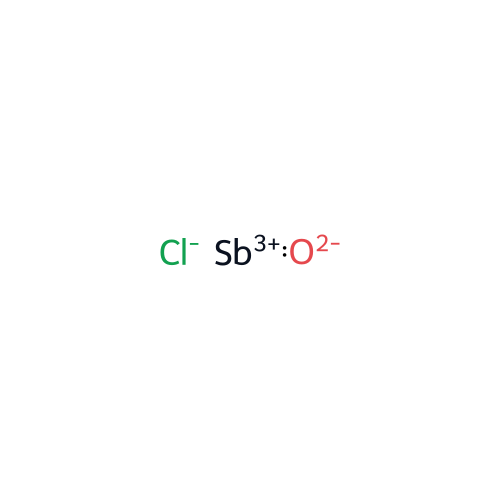
Frequently asked questions
Quick answers about Antimony trioxide, based on the data on this page
What is Antimony trioxide?
What is Antimony trioxide used for?
Is Antimony trioxide hazardous?
Guides for buyers
Practical guides that help when you source, ship or handle Antimony trioxide
- Guide, SafetyHow to read a safety data sheet in 10 minutesA section by section method to pull the essentials out of any 16 section SDS: identity, hazards, composition, storage, PPE, properties, transport and emergency measures.Read
- Guide, Trade and logisticsShipping dangerous goods: UN numbers, classes and packing groupsHow the UN dangerous goods system works for chemicals, from the nine classes and UN numbers to packing groups, UN packaging marks, labels, documents and segregation.Read
- Guide, SafetyGHS pictograms, signal words and hazard statements explainedA practical guide to the nine GHS pictograms, the signal words Danger and Warning, H and P statements, and how to read a chemical label in seconds.Read
Get quotes for Antimony trioxide
Embed this structure on your websiteShow code
Paste this code into your page to show the 2D structure of Antimony trioxide with a 3D view, its CAS number where known and a link back to this page. Free to use with the link kept.
<iframe src="https://www.compoundlist.com/embed/structure/antimony-trioxide-1309-64-4" title="Antimony trioxide structure on CompoundList" width="360" height="420" style="border:1px solid #E7E2DA;border-radius:12px;max-width:100%" loading="lazy" referrerpolicy="strict-origin-when-cross-origin"></iframe>Explore more in Oxides and peroxides or HS code 282580