Cobalt
Also known as Cobalt, elemental, Cobalt-59, Aquacat

Key facts
What buyers check first
- Appearance
- Gray metal, hexagonal or cubic
- Melting point
- 1,495 °C
- Boiling point
- 2,927 °C
- Density
- 8.9 g/cm³ at 20 °C
- Solubility
- Solubility in water: none
- HS code
- 810520
- Category
- Metals, alloys and elements
- UN number
- UN 3178
What is Cobalt?
Plain description, key identifiers and synonyms
Cobalt atom is a cobalt group element atom that has atomic number 27. It has a role as a micronutrient. It is a cobalt group element atom and a metal allergen.
Cobalt is a chemical element with symbol Co and atomic number 27.
Identifiers
Registry numbers, names and line notations, tap to copy
- IUPAC name
- cobalt
- CAS number
- 7440-48-4 CAS number cross-checked
- EC numbers
- 231-158-0, 919-713-1
- Molecular formula
- Co
- UNII
- 3G0H8C9362
- MDL number
- MFCD00010935
- InChIKey
- GUTLYIVDDKVIGB-UHFFFAOYSA-N
- InChI
- InChI=1S/Co
- SMILES (canonical and isomeric)
- [Co]
Synonyms
- Cobalt, elemental
- Cobalt-59
- Aquacat
- Super cobalt
- C.I. 77320
- Cobaltum metallicum
- CI 77320
- Cobalt metal dust
- Cobalt metal fume
- Cobalt 59
- Dietary Cobalt
- lambda2-cobalt(2+) ion
- Co
- Cobalt(2+) ion
- Cobalt(II)
- cobalt atom
- Kobalt
- Cobalt moncation
- Cobalt, ion (Co1+)
- Co1+
- Cobalt (II) ion
- cobalt(1+)
- Cobalt powder
- Cobalt metal powder
- 7440-48-4(powder)
Show all 37 synonymsShow fewer synonyms
- cobalto
- Cobalt fume
- Ultra Low Particle V-Solv+Co Solvent
- Cobalt Standard: Co @ 6 wt% in Mineral Spirits
- Al alloy CRM for Cobalt in 1075, O 64x25 mm
- Cobalt Standard: Co @ 10 microg/mL in 2% HNO3
- Cobalt Standard: Co @ 1000 microg/mL in 5% HNO3
- Cobalt Standard: Co @ 10000 microg/mL in 5% HNO3
- Cobalt AA Standard: Co @ 1000 microg/mL in 5% HNO3
- cobaltum
- Cobalt Standard: Co @ 1000 microg/g in Hydrocarbon Oil
- Cobalt Standard: Co @ 5000 microg/g in Hydrocarbon Oil
Physical and chemical properties
Measured values and descriptors computed from the structure
Physical and chemical properties
Measured values, check the supplier specification for your grade
| Appearance | Gray metal, hexagonal or cubicexp.Measured value |
|---|---|
| Odour | Odorless (cobalt metal dust and cobalt fumes)exp.Measured value |
| Melting point | 1,495 °Cexp.Measured value |
| Boiling point | 2,927 °Cexp.Measured value |
| Density | 8.9 g/cm³ at 20 °Cexp.Measured value |
| Solubility | Solubility in water: noneexp.Measured value |
| Vapour pressure | 1 Pa at 1517 °C, 10 Pa at 1687 °C, 100 Pa at 1982 °C, 1 kPa at 2150 °Cexp.Measured value |
Values vary by grade. Ask suppliers for the COA or TDS of the batch you buy.
Computed descriptors
Calculated from the structure, useful for screening and formulation
| Molecular weight | 58.93 g/molcalc.Computed value |
|---|---|
| Exact mass | 58.9332 Dacalc.Computed value |
| LogP (octanol/water) | 0calc.Computed value |
| Topological polar surface area | 0 Ųcalc.Computed value |
| Hydrogen bond donors | 0calc.Computed value |
| Hydrogen bond acceptors | 0calc.Computed value |
| Rotatable bonds | 0calc.Computed value |
| Heavy atoms | 1calc.Computed value |
| Rings | 0calc.Computed value |
| Aromatic rings | 0calc.Computed value |
| Fraction sp3 carbons | 0calc.Computed value |
| Formal charge | 0calc.Computed value |
| Stereocentres | 0calc.Computed value |
Calculated for screening. Confirm critical figures with the supplier.
Safety and hazards
GHS classification summary, not a safety data sheet
Hazard statements
- H317May cause an allergic skin reaction.
- H334May cause allergy or asthma symptoms or breathing difficulties if inhaled.
- H341Suspected of causing genetic defects.
- H350May cause cancer.
- H360FMay damage fertility.
- H413May cause long lasting harmful effects to aquatic life.
Precautionary statements (19)
- P203Obtain, read and follow all safety instructions before use.
- P233Keep container tightly closed.
- P260Do not breathe dust, fume, gas, mist, vapours or spray.
- P261Avoid breathing dust, fume, gas, mist, vapours or spray.
- P271Use only outdoors or in a well-ventilated area.
- P272Contaminated work clothing should not be allowed out of the workplace.
- P273Avoid release to the environment.
- P280Wear protective gloves, protective clothing, eye protection and face protection.
- P284In case of inadequate ventilation wear respiratory protection.
- P302 + P352If on skin: Wash with plenty of water.
- P304 + P340If inhaled: Remove person to fresh air and keep comfortable for breathing.
- P318If exposed or concerned, get medical advice.
- P321Specific treatment (see supplemental first aid instructions on the label).
- P333 + P317If skin irritation or rash occurs: Get medical help.
- P342 + P316If experiencing respiratory symptoms: Get emergency medical help immediately.
- P362 + P364Take off contaminated clothing. And wash it before reuse.
- P403Store in a well-ventilated place.
- P405Store locked up.
- P501Dispose of contents and container in accordance with local regulations.
- UN number
- UN 3178
GHS classification summary, not a safety data sheet (SDS). Classifications can differ by supplier, grade and concentration. Always check the supplier's SDS.
Full safety data and first aidCobalt suppliers
Sponsored listings first, then the documented ranking: membership, verification, replies, completeness, freshness and ratings
- India, Navi MumbaiUnclaimed profileCobaltGrade, purity and minimum order on requestPrice on request
- India, ChennaiUnclaimed profileCobaltGrade, purity and minimum order on requestPrice on request
- Italy, Genova ManufacturerUnclaimed profileCobaltGrade, purity and minimum order on requestPrice on request
- Canada, Guelph ManufacturerUnclaimed profileCobaltGrade, purity and minimum order on requestPrice on request
- India, Thane ManufacturerUnclaimed profileCobaltGrade, purity and minimum order on requestPrice on request
- Price on request
- Price on request
- Price on request
- India ManufacturerUnclaimed profileCobaltGrade, purity and minimum order on requestPrice on request
Suppliers marked Unclaimed profile have not claimed their profile yet. They are not verified by CompoundList, their offers are price on request and details may have changed, so please confirm them with the supplier. Company representatives can claim a profile with a business email on the company's own website domain. Our team verifies each claim and sends the result by email.
Where suppliers are based
56 suppliers in 10 countries
- United States27
- China9
- India6
- Germany5
- Spain2
- United Kingdom2
- and 4 more countries
Send one request to many suppliers
Choose up to 10 suppliers or let us match your request. Compare quotes side by side, free.
Cobalt price
Indicative price range per kg from live supplier offers
Suppliers quote this chemical on request. Send one free request and compare quotes side by side.
Uses and applications
What the substance is used for, by industry and function
Chemical (cobalt salts, oxidizing agent), electroplating ceramics, lamp filaments, catalyst (sulfur removal from petroleum, Oxo process, organic synthesis), trace element in fertilizers, glass, drier in printing inks, paints, and varnishes, color, cements. Principal use in alloys, especially cobalt steels for permanent and soft magnets and cobalt-chromium high-speed tool steels.
Read more
Cemented carbides, jet engines, coordination, and complexing agent.
Cobalt nanoparticles are used in medical applications (e.g., sensors, magnetic resonance imaging contrast enhancement, and drug delivery), and cobalt nanofibers and nanowires are used in industrial applications.
Cobalt metal has three major uses in the petrochemical and plastic industries as both heterogeneous and homogeneous catalysts: (1) hydro-treating and desulfurization catalysts for oil and gas, these catalysts are typically 3-5% cobalt oxide (Co3O4), 14% manganese trioxide (MnO3), and the balance aluminium oxide (Al2O3), (2) mixed cobalt acetate/manganese-sodium bromide homogeneous catalyst for the production of terephthalic acid and dimethyl terephthalate, and (3) cobalt catalyst in the oxo synthesis (hydroformylation) for the production of alcohols and aldehydes for plastic and detergent production, employing freshly reduced cobalt metal, carbonyls, or cobalt salts (transformed in situ to carbonyl).
Cobalt metal is used in alloys with iron, nickel, and other metals to make Alnico, an alloy of unusual magnetic strength, and in Stellite alloys, which contain cobalt, chromium, and tungsten and are used for high-speed, heavy-duty, hightemperature cutting tools.
Cobalt is used to make superalloys (alloys that maintain their strength at high temperatures approaching their melting points) and in pigment manufacture.
Industries and functions
Pharmacological actions
- Trace Elements
Roles
- food component
- micronutrient
- nutrient
- physiological role
Functional uses
- Pigment
Pharmacology
Cobalt is a Standardized Chemical Allergen. The physiologic effect of cobalt is by means of Increased Histamine Release and Cell-mediated Immunity.
How it is made
Cobalt is normally associated with copper or nickel, mined ore often contains only 0.1% elemental cobalt. About 44% of world production of cobalt comes from nickel ores. Cobalt is extracted from the metals in the ore by both flotation (sulfide ores) and gravity (arsenide ores), roasting or acid leaching is necessary to concentrate the cobalt.
Read more
Cobalt is also extracted from the ore and concentrated by pyrometallurgical, hydrometallurgical, and electrolytic processes alone or in combination.
From ore concentration by roasting followed (1) by thermal reduction by aluminum, (2) by electrolytic reduction of solutions of metal, or (3) by leaching with either ammonia or acid in an autoclave under elevated temperatures and pressures and subsequent reduction by hydrogen.
Cobalt powder can be produced by a number of methods, but those of industrial importance involve the reduction of oxides, the pyrolysis of carboxylates, and the reduction of cobalt ions in aqueous solution with hydrogen under pressure. Very pure cobalt powder is prepared by the decomposition of cobalt carbonyls.
Regulatory status
Inventories, regulations and trade controls that list this substance
Europe
- EU harmonised classification (CLP Annex VI)Index no: 027-001-00-9
Health and food
- EU Cosmetics Regulation Annex II, prohibited in cosmeticsName: Cobalt, Ref no: 1645, Annex ref: II/1645
- Active ingredient in FDA approved drug labels
United States
- TSCA inventory (USA)Status: Active in US commerce
HS code and trade data
Customs classification and reported world trade statistics
Global trade
World import and export statistics for the HS code Cobalt is traded under.
Cobalt mattes and other intermediate products of cobalt metallurgy, unwrought cobalt…
Our trade statistics cover HS chapters 25 to 40 (minerals, chemicals, plastics and rubber). This code is in chapter 81, metals, which is not included yet.
The HS code shown for Cobalt is indicative (it is known at chapter level only). Confirm the classification with your customs broker before shipping.
Related chemicals
Parent and salt forms, stereoisomers, similar structures and isomers
Stereoisomers and isotopic forms
Same connectivity, different stereochemistry or isotopes (same InChIKey skeleton)
Similar structures
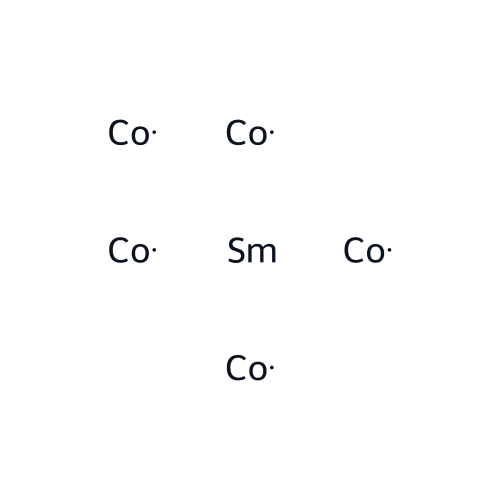
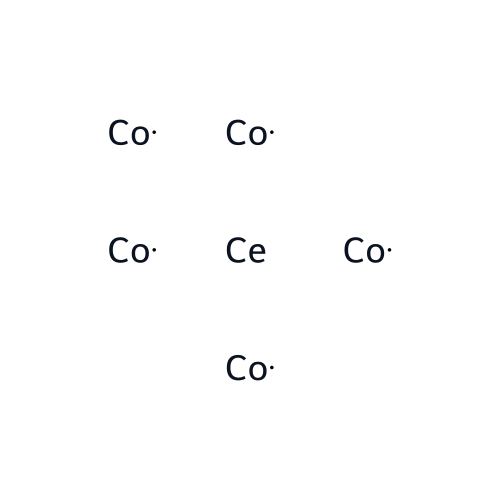
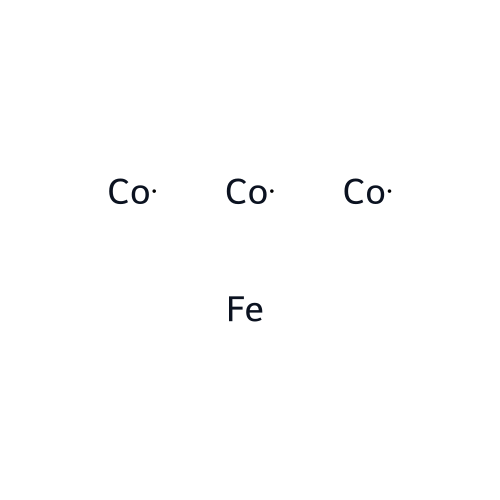
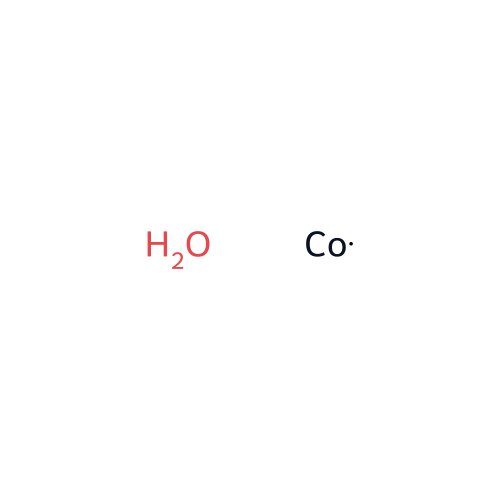
Nearest neighbours by Morgan fingerprint Tanimoto similarity


Frequently asked questions
Quick answers about Cobalt, based on the data on this page
What is Cobalt?
What is the CAS number of Cobalt?
What is the molecular formula and weight of Cobalt?
What is Cobalt used for?
Is Cobalt hazardous?
What is the HS code of Cobalt?
Where can I buy Cobalt?
Where can I buy Cobalt in India?
What is the price of Cobalt?
Guides for buyers
Practical guides that help when you source, ship or handle Cobalt
- Guide, SafetyHow to read a safety data sheet in 10 minutesA section by section method to pull the essentials out of any 16 section SDS: identity, hazards, composition, storage, PPE, properties, transport and emergency measures.Read
- Guide, Trade and logisticsShipping dangerous goods: UN numbers, classes and packing groupsHow the UN dangerous goods system works for chemicals, from the nine classes and UN numbers to packing groups, UN packaging marks, labels, documents and segregation.Read
- Guide, SafetyGHS pictograms, signal words and hazard statements explainedA practical guide to the nine GHS pictograms, the signal words Danger and Warning, H and P statements, and how to read a chemical label in seconds.Read
Get quotes for Cobalt
Embed this structure on your websiteShow code
Paste this code into your page to show the 2D structure of Cobalt with a 3D view, its CAS number and a link back to this page. Free to use with the link kept.
<iframe src="https://www.compoundlist.com/embed/structure/cobalt-7440-48-4" title="Cobalt structure on CompoundList" width="360" height="420" style="border:1px solid #E7E2DA;border-radius:12px;max-width:100%" loading="lazy" referrerpolicy="strict-origin-when-cross-origin"></iframe>Explore more in Metals, alloys and elements or HS code 810520