Silica
Also known as Silicon dioxide, Dioxosilane, Silicic anhydride

Key facts
What buyers check first
- Appearance
- Amorphous powder
- Melting point
- 1,710 °C
- Boiling point
- 2,230 °C
- Density
- 2.3 g/cm³
- Solubility
- Silica is rather poorly soluble in water although solubility is higher for the amorphous…
- HS code
- 281122
- Category
- Oxides and peroxides
What is Silica?
Plain description, key identifiers and synonyms
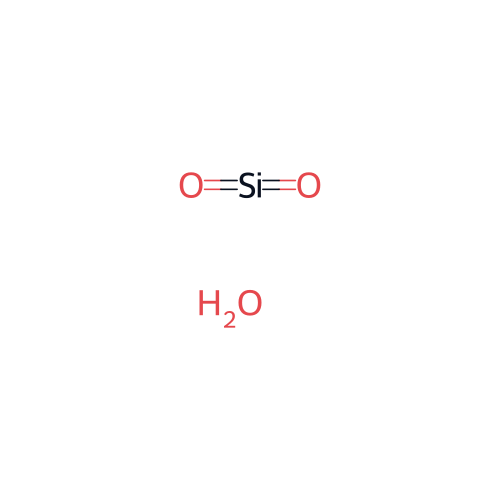
Silicon dioxide is a silicon oxide made up of linear triatomic molecules in which a silicon atom is covalently bonded to two oxygens.
Identifiers
Registry numbers, names and line notations, tap to copy
- IUPAC name
- dioxosilane
- CAS number
- 7631-86-9 CAS number cross-checkedOther or deprecated CAS: 112926-00-8, 112945-52-5, 1317-79-9, 13778-37-5, 13778-38-6, 14464-46-1, 14639-89-5, 14808-60-7
- EC numbers
- 231-545-4, 238-455-4, 238-878-4, 239-487-1, 262-373-8, 266-046-0, 272-489-0, 601-214-2, 601-216-3, 604-037-9, 643-045-7, 685-393-2, 807-338-5, 921-597-2
- Molecular formula
- O2Si
- UNII
- ETJ7Z6XBU4
- MDL number
- MFCD00011232, MFCD00148266, MFCD00217788, MFCD00603035
- INCI name
- QUARTZ, SILICA, SOLUM DIATOMEAE
- InChIKey
- VYPSYNLAJGMNEJ-UHFFFAOYSA-N
- InChI
- InChI=1S/O2Si/c1-3-2
- SMILES (canonical and isomeric)
- O=[Si]=O
Synonyms
- Silicon dioxide
- Dioxosilane
- Silicic anhydride
- Diatomaceous silica
- Wessalon
- Zorbax sil
- Silica, amorphous
- Silica, colloidal
- Sillikolloid
- Acticel
- Carplex
- Extrusil
- Porasil
- Santocel
- Silikil
- Siloxid
- Sipernat
- Neosil
- Neosyl
- Zipax
- colloidal silica
- White carbon
- Silicone dioxide
- Vulkasil S
- Snowtex O
Show all 39 synonymsShow fewer synonyms
- Corasil II
- Cab-o-sil M-5
- Tokusil TPLM
- Dri-Die
- Manosil vn 3
- Ultrasil VH 3
- Ultrasil VN 3
- Aerosil K 7
- Carplex 30
- Carplex 80
- Snowtex 30
- Syton 2X
- Zeofree 80
- Min-U-Sil
Physical and chemical properties
Measured values and descriptors computed from the structure
Physical and chemical properties
Measured values, check the supplier specification for your grade
| Appearance | Amorphous powderexp.Measured value |
|---|---|
| Odour | Odorlessexp.Measured value |
| Taste | Tastelessexp.Measured value |
| Melting point | 1,710 °Cexp.Measured value |
| Boiling point | 2,230 °Cexp.Measured value |
| Density | 2.3 g/cm³exp.Measured value |
| Solubility | Silica is rather poorly soluble in water although solubility is higher for the amorphous than for the crystalline morphologies . The external amorphous layer in quartz is more soluble than the crystalline underlying core.exp.Measured value |
| Vapour pressure | Approx 0 mm Hgexp.Measured value |
Values vary by grade. Ask suppliers for the COA or TDS of the batch you buy.
Computed descriptors
Calculated from the structure, useful for screening and formulation
| Molecular weight | 60.08 g/molcalc.Computed value |
|---|---|
| Exact mass | 59.9668 Dacalc.Computed value |
| LogP (octanol/water) | -0.62calc.Computed value |
| Topological polar surface area | 34.14 Ųcalc.Computed value |
| Hydrogen bond donors | 0calc.Computed value |
| Hydrogen bond acceptors | 2calc.Computed value |
| Rotatable bonds | 0calc.Computed value |
| Heavy atoms | 3calc.Computed value |
| Rings | 0calc.Computed value |
| Aromatic rings | 0calc.Computed value |
| Fraction sp3 carbons | 0calc.Computed value |
| Formal charge | 0calc.Computed value |
| Stereocentres | 0calc.Computed value |
Calculated for screening. Confirm critical figures with the supplier.
Safety and hazards
GHS classification summary, not a safety data sheet
Hazard statements
- H315Causes skin irritation.
- H319Causes serious eye irritation.
- H335May cause respiratory irritation.
Precautionary statements (16)
- P261Avoid breathing dust, fume, gas, mist, vapours or spray.
- P264Wash skin thoroughly after handling.
- P264 + P265Wash skin thoroughly after handling. Do not touch eyes.
- P271Use only outdoors or in a well-ventilated area.
- P280Wear protective gloves, protective clothing, eye protection and face protection.
- P302 + P352If on skin: Wash with plenty of water.
- P304 + P340If inhaled: Remove person to fresh air and keep comfortable for breathing.
- P305 + P351 + P338If in eyes: Rinse cautiously with water for several minutes. Remove contact lenses, if present and easy to do. Continue rinsing.
- P319Get medical help if you feel unwell.
- P321Specific treatment (see supplemental first aid instructions on the label).
- P332 + P317If skin irritation occurs: Get medical help.
- P337 + P317If eye irritation persists: Get medical help.
- P362 + P364Take off contaminated clothing. And wash it before reuse.
- P403 + P233Store in a well-ventilated place. Keep container tightly closed.
- P405Store locked up.
- P501Dispose of contents and container in accordance with local regulations.
GHS classification summary, not a safety data sheet (SDS). Classifications can differ by supplier, grade and concentration. Always check the supplier's SDS.
Full safety data and first aidSilica suppliers
Sponsored listings first, then the documented ranking: membership, verification, replies, completeness, freshness and ratings
- China, Changsha ManufacturerUnclaimed profileSilicon DioxideGrade, purity and minimum order on requestPrice on request
- China, Dongying ManufacturerUnclaimed profileSilicaGrade, purity and minimum order on requestPrice on request
- United States, TucsonUnclaimed profileSilicaGrade, purity and minimum order on requestPrice on request
- Japan, Chuo-Ku ManufacturerUnclaimed profileSilicaGrade, purity and minimum order on requestPrice on request
- Thailand, SamphanthawongUnclaimed profileSilicaGrade, purity and minimum order on requestPrice on request
- ChinaUnclaimed profileSilicon dioxideGrade, purity and minimum order on requestPrice on request
- NetherlandsUnclaimed profileSilicon DioxideGrade, purity and minimum order on requestPrice on request
- ChinaUnclaimed profileSilicon DioxideGrade, purity and minimum order on requestPrice on request
- ChinaUnclaimed profileSilicaGrade, purity and minimum order on requestPrice on request
- China ManufacturerUnclaimed profileSilicon DioxideGrade, purity and minimum order on requestPrice on request
Suppliers marked Unclaimed profile have not claimed their profile yet. They are not verified by CompoundList, their offers are price on request and details may have changed, so please confirm them with the supplier. Company representatives can claim a profile with a business email on the company's own website domain. Our team verifies each claim and sends the result by email.
Where suppliers are based
593 suppliers in 48 countries
- United States180
- India107
- China104
- Canada30
- Germany20
- South Korea15
- and 42 more countries
Send one request to many suppliers
Choose up to 10 suppliers or let us match your request. Compare quotes side by side, free.
Silica price
Indicative price range per kg from live supplier offers
Suppliers quote this chemical on request. Send one free request and compare quotes side by side.
Uses and applications
What the substance is used for, by industry and function
Amorphous silica (such as fumed silica) is incorporated in a variety of food products as anti-caking agents at levels up to 2% by weight. Amorphous silica is also used as an anti-caking agent and as an excipient in pharmaceuticals for various drug and vitamin preparations.
According to the different physicochemical properties, the major classes of synthetic amorphous silica are used in a variety of products, e.g.
Read more
as fillers in the rubber industry, in tire compounds, as free-flow and anti-caking agents in powder materials, and as liquid carriers, particularly in the manufacture of animal feed and agrochemicals, other uses are found in toothpaste additives, paints, silicon rubber, insulation material, liquid systems in coatings, adhesives, printing inks, plastisol car undercoats, and cosmetics.
Bioactive glasses are silica-based, surface-active bone substitutes that have shown good biocompatibility both in bone and in soft tissue and are used in oral and maxillofacial bone augmentation.
Silica sand has been used for many different purposes for many years, its most ancient and principal use throughout history has been in the manufacture of glass. Sands are used in ceramics, foundry, abrasive, hydraulic fracturing applications and many other uses.
Refractory silica bricks, in which silica is converted by heat into cristobalite and tridymite are used in sprung arches of open-hearth furnaces, covers of electric furnaces, roofs of glass-tank furnaces, blast pre-heaters and coke and gas ovens.
Industrial uses: Other, Insulators, Abrasives, Heat transferring agent, pH regulating agent, Sealant (barrier), Crystal growth modifiers (nucleating agents).
Industries and functions
Cosmetic ingredient, INCI name SOLUM DIATOMEAE(abrasive, absorbent, anticaking, opacifying)
Functional uses
- Abrasive
- Absorbent
- Anti-caking agent
- Binder
- Defoamer
- Filler
- Monomers
- Pigment
- Processing aids not otherwise specified
- Surface modifier
- Thickening agent
- Viscosity modifier
Cosmetic functions
- Abrasive
- Absorbent
- Anticaking
- Bulking
- Opacifying
- Viscosity controlling
Pharmacology
Silicon Dioxide is a natural compound of silicon and oxygen found mostly in sand, Silica has three main crystalline varieties: quartz, tridymite, and cristobalite. Fine particulate silica dust from quartz rock causes over a long-term progressive lung injury, silicosis. (NCI04)
How it is made
/The wet/ process is based mainly on the precipitation of amorphous silicon dioxide particles from aqueous alkali metal silicate solution by acid neutralization. Usually, sulfuric acid is used, although carbon dioxide and hydrochloric acid can be used. Depending on the final pH of the solution, t he following two different classes of synthetic amorphous silicas can be obtained: precipitated silicas - obtained in neutral or alkaline conditions, silica gels - obtained under acidic conditions.
Read more
The main manufacturing steps include precipitation, filtration, washing, drying and grinding.
The manufacturing process for pyrogenic silicas is based mainly on the combustion of volatile silanes, especially silicon tetrachloride, in an oxygen-hydrogen burner. Primary particles (7-50 nm particle size) of amorphous silica fuse together in the high-temperature flame to yield stable aggregates of between 100 and 500 nm in diameter. These aggregates form micron-sized agglomerates. The finely divided silica is separated from the hydrochloric acid-containing off-gas stream in filter stations. The hydrochloric acid content of the product is commonly reduced to less than 100 ppm by desorbing the hydrochloric acid with air in a fluid-bed reactor. Pyrogenic silica appears as a fluffy white powder.
All forms of synthetic amorphous silicas can be surface-modified either physically or chemically. Methods for chemical modification of the silica particle surface (e.g. silylation) are many and various.
Regulatory status
Inventories, regulations and trade controls that list this substance
Health and food
- EU cosmetic ingredient inventory
- Active ingredient in FDA approved drug labels
- Food additive
United States
- Safer Choice ingredient list (USA)
- TSCA inventory (USA)Status: Active in US commerce
HS code and trade data
Customs classification and reported world trade statistics
Global trade
World import and export statistics for the HS code Silica is traded under.
Silicon dioxide
- China25.9%
- Germany13.7%
- United Kingdom9.1%
- United States11.0%
- China6.7%
- Germany5.1%
The HS code shown for Silica is indicative (it was matched by name in the HS nomenclature). Confirm the classification with your customs broker before shipping.
Related chemicals
Parent and salt forms, stereoisomers, similar structures and isomers
Similar structures
Nearest neighbours by Morgan fingerprint Tanimoto similarity
Frequently asked questions
Quick answers about Silica, based on the data on this page
What is Silica?
What is the CAS number of Silica?
What is the molecular formula and weight of Silica?
What is Silica used for?
Is Silica hazardous?
What is the HS code of Silica?
Where can I buy Silica?
Where can I buy Silica in India?
What is the price of Silica?
Guides for buyers
Practical guides that help when you source, ship or handle Silica
- Guide, SafetyHow to read a safety data sheet in 10 minutesA section by section method to pull the essentials out of any 16 section SDS: identity, hazards, composition, storage, PPE, properties, transport and emergency measures.Read
- Guide, Trade and logisticsShipping dangerous goods: UN numbers, classes and packing groupsHow the UN dangerous goods system works for chemicals, from the nine classes and UN numbers to packing groups, UN packaging marks, labels, documents and segregation.Read
- Guide, SafetyGHS pictograms, signal words and hazard statements explainedA practical guide to the nine GHS pictograms, the signal words Danger and Warning, H and P statements, and how to read a chemical label in seconds.Read
Get quotes for Silica
Embed this structure on your websiteShow code
Paste this code into your page to show the 2D structure of Silica with a 3D view, its CAS number where known and a link back to this page. Free to use with the link kept.
<iframe src="https://www.compoundlist.com/embed/structure/silica-7631-86-9" title="Silica structure on CompoundList" width="360" height="420" style="border:1px solid #E7E2DA;border-radius:12px;max-width:100%" loading="lazy" referrerpolicy="strict-origin-when-cross-origin"></iframe>Explore more in Oxides and peroxides or HS code 281122