Iron
Also known as Iron powder, Iron, elemental, ferrous iron
Key facts
What buyers check first
- Appearance
- Silvery-white or gray, soft, ductile, malleable metal In powder form it is black to gray
- Melting point
- 1,538 °C
- Boiling point
- 2,861 °C
- Density
- 7.87 g/cm³
- Solubility
- INSOL IN HOT & COLD WATER, ALKALI, ALC, ETHER, SOL IN ACIDS
- HS code
- 720529
- Category
- Metals, alloys and elements
- UN number
- UN 3178

What is Iron?
Plain description, key identifiers and synonyms
Iron atom is an iron group element atom that has atomic number 26. It has a role as a micronutrient and an Escherichia coli metabolite.
Iron is a chemical element with symbol Fe and atomic number 26.
Identifiers
Registry numbers, names and line notations, tap to copy
- IUPAC name
- iron
- CAS number
- 7439-89-6 CAS number cross-checkedOther or deprecated CAS: 12597-68-1, 33485-98-2, 8048-10-0
- EC numbers
- 231-096-4, 232-467-3, 603-108-1, 617-112-6, 628-861-3, 640-395-2, 912-499-0, 917-706-8
- Molecular formula
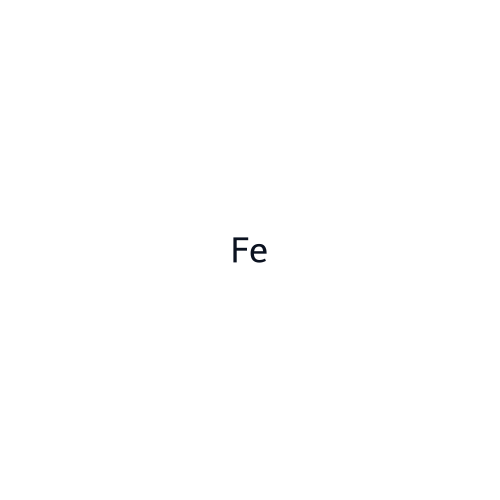
- Fe
- UNII
- E1UOL152H7
- MDL number
- MFCD00010999
- INCI name
- IRON POWDER
- InChIKey
- XEEYBQQBJWHFJM-UHFFFAOYSA-N
- InChI
- InChI=1S/Fe
- SMILES (canonical and isomeric)
- [Fe]
Synonyms
- Iron powder
- Iron, elemental
- ferrous iron
- Remko
- iron metal
- Armco iron
- Ferrovac E
- Hoeganaes EH
- 3ZhP
- Ancor B
- Atomiron 5M
- PZhO
- Atomiron 44MR
- hierro
- Atomiron AFP 5
- Atomiron AFP 25
- FE
- Atomel 28
- Atomel 95
- HQ (metal)
- LOHA
- FT 3 (element)
- HF 2 (element)
- HL (iron)
- HS (iron)
Show all 39 synonymsShow fewer synonyms
- Atomel 500M
- PZh2M
- PZh3M
- PZh4M
- Ferrum metallicum
- PZh3
- Hoeganaes ATW 230
- Diseases, iron overload
- F 60 (metal)
- PZh1M1
- PZh2M1
- PZh2M2
- Atomel 300M200
- PZh-2
Physical and chemical properties
Measured values and descriptors computed from the structure
Physical and chemical properties
Measured values, check the supplier specification for your grade
| Appearance | Silvery-white or gray, soft, ductile, malleable metal In powder form it is black to grayexp.Measured value |
|---|---|
| Melting point | 1,538 °Cexp.Measured value |
| Boiling point | 2,861 °Cexp.Measured value |
| Density | 7.87 g/cm³exp.Measured value |
| Solubility | INSOL IN HOT & COLD WATER, ALKALI, ALC, ETHER, SOL IN ACIDSexp.Measured value |
| Vapour pressure | 1Pa at 1455 °C (solid), 10 Pa at 1617 °C, 100 Pa at 1818 °C, 1 kPa at 2073 °C, 10 kPa at 2406 °C, 100 kPa at 2859 °Cexp.Measured value |
Values vary by grade. Ask suppliers for the COA or TDS of the batch you buy.
Computed descriptors
Calculated from the structure, useful for screening and formulation
| Molecular weight | 55.85 g/molcalc.Computed value |
|---|---|
| Exact mass | 55.9349 Dacalc.Computed value |
| LogP (octanol/water) | 0calc.Computed value |
| Topological polar surface area | 0 Ųcalc.Computed value |
| Hydrogen bond donors | 0calc.Computed value |
| Hydrogen bond acceptors | 0calc.Computed value |
| Rotatable bonds | 0calc.Computed value |
| Heavy atoms | 1calc.Computed value |
| Rings | 0calc.Computed value |
| Aromatic rings | 0calc.Computed value |
| Fraction sp3 carbons | 0calc.Computed value |
| Formal charge | 0calc.Computed value |
| Stereocentres | 0calc.Computed value |
Calculated for screening. Confirm critical figures with the supplier.
Safety and hazards
GHS classification summary, not a safety data sheet
Hazard statements
- H228Flammable solid.
- H251Self-heating, may catch fire.
Precautionary statements (10)
- P210Keep away from heat, hot surfaces, sparks, open flames and other ignition sources. No smoking.
- P235Keep cool.
- P240Ground and bond container and receiving equipment.
- P241Use explosion-proof electrical, ventilating and lighting equipment.
- P280Wear protective gloves, protective clothing, eye protection and face protection.
- P370 + P378In case of fire: Use appropriate media to extinguish.
- P407Maintain air gap between stacks or pallets.
- P410Protect from sunlight.
- P413Store bulk masses at temperatures not exceeding the specified limit.
- P420Store separately.
- UN number
- UN 3178
GHS classification summary, not a safety data sheet (SDS). Classifications can differ by supplier, grade and concentration. Always check the supplier's SDS.
Full safety data and first aidIron suppliers
Sponsored listings first, then the documented ranking: membership, verification, replies, completeness, freshness and ratings
- China, TianjinUnclaimed profileIron powderGrade, purity and minimum order on requestPrice on request
- Price on request
- Price on request
- Price on request
- Price on request
- United KingdomUnclaimed profileIronGrade, purity and minimum order on requestPrice on request
- China, Xi'anUnclaimed profileIronGrade, purity and minimum order on requestPrice on request
- India, Vadodara ManufacturerUnclaimed profileIronGrade, purity and minimum order on requestPrice on request
- Australia, DuncraigUnclaimed profileIron MetalGrade, purity and minimum order on requestPrice on request
Suppliers marked Unclaimed profile have not claimed their profile yet. They are not verified by CompoundList, their offers are price on request and details may have changed, so please confirm them with the supplier. Company representatives can claim a profile with a business email on the company's own website domain. Our team verifies each claim and sends the result by email.
Where suppliers are based
105 suppliers in 12 countries
- United States52
- China22
- India6
- Germany5
- United Kingdom4
- Canada3
- and 6 more countries
Send one request to many suppliers
Choose up to 10 suppliers or let us match your request. Compare quotes side by side, free.
Iron price
Indicative price range per kg from live supplier offers
Suppliers quote this chemical on request. Send one free request and compare quotes side by side.
Uses and applications
What the substance is used for, by industry and function
In manufacture of iron and steel castings (pig iron), of alloys with carbon, chromium, and other metals, as a material to increase density of oil well drilling fluids.
Alloyed with carbon, manganese, chromium, nickel and other elements to form steels ...
Catalysts for ammonia synthesis.
The primary use of DRI (direct reduced iron) is as a clean supplement for replacement for the ferrous scrap charge in high quality-oriented electric arc furnace steelmaking.
Industrial uses: Alloys, Other, Conductive agent, Heat transferring agent, Chemical reaction regulator, Monomers, Filler, Corrosion inhibitor.
Consumer uses: Flocculating agent, Intermediate, Heat stabilizer, Corrosion inhibitor, Filler, Soil amendments (fertilizers), Other (specify).
Industries and functions
Cosmetic ingredient, INCI name IRON POWDER(opacifying, reducing)
Pharmacological actions
- Trace Elements
Roles
- Escherichia coli metabolite
- bacterial metabolite
- food component
- metabolite
- micronutrient
- nutrient
- physiological role
- prokaryotic metabolite
Functional uses
- Anti-caking agent
- Binder
- Catalyst
- Flavouring and nutrient
- Opacifer
- Pigment
- Reducing agent
- Sealant (barrier)
- Softener and conditioner
Cosmetic functions
- Opacifying
- Reducing
Pharmacology
Iron is an element with atomic symbol Fe, atomic number 26, and atomic weight 55.85.
How it is made
The blast furnace is the predominant method for making iron. In essence, the blast furnace is a large, countercurrent, chemical reactor in the form of a vertical shaft which is circular in cross section. Iron ore, coke, and fluxes constitute the burden which is charged continually into the top. Pressures in the shaft are controlled to 100-300 kPa (1-3 atms) gauge. Preheated air (hot blast) is blown in through water-cooled nozzles (tuyeres) around the circumference of the furnace near the bottom.
Read more
The oxygen in the air reacts with the coke to form hot reducing gases (mostly carbon monoxide) which ascend through the burden and (1) provide heat for melting, (2) react with the iron ore to reduce it to iron, and (3) heat the ore, coke, and fluxes to reaction temperatures. Nitrogen in the hot blast is heated by the coke combustion, and aids in heat transfer to the burden. The gases leaving the top of the furnace (top gases) are cleaned, cooled, and used as fuel to preheat the air for the hot blast. Molten iron (hot metal or pig iron) and slag (molten oxides) are produced and accumulate in the bottom of the furnace.
Direct smelting processes use coal directly instead of coke. Several processes are under development which effectively divide the functions of the blast furnace into two separate but connected unit operations. First, the iron ore is prereduced in a shaft furnace or a fluidized bed, depending on the process and the type of ore used.
Regulatory status
Inventories, regulations and trade controls that list this substance
Health and food
- EU cosmetic ingredient inventory
- Active ingredient in FDA approved drug labels
United States
- TSCA inventory (USA)Status: Active in US commerce
HS code and trade data
Customs classification and reported world trade statistics
Global trade
World import and export statistics for the HS code Iron is traded under.
Powders, other
Our trade statistics cover HS chapters 25 to 40 (minerals, chemicals, plastics and rubber). This code is in chapter 72, iron and steel, which is not included yet.
The HS code shown for Iron is indicative (it is known at chapter level only). Confirm the classification with your customs broker before shipping.
Related chemicals
Parent and salt forms, stereoisomers, similar structures and isomers
Stereoisomers and isotopic forms
Same connectivity, different stereochemistry or isotopes (same InChIKey skeleton)
Similar structures
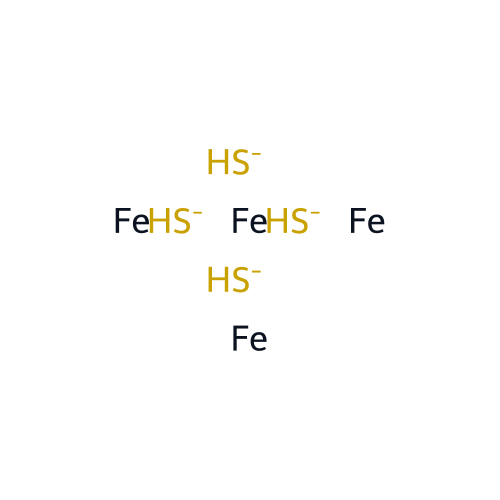
Nearest neighbours by Morgan fingerprint Tanimoto similarity


Frequently asked questions
Quick answers about Iron, based on the data on this page
What is Iron?
What is the CAS number of Iron?
What is the molecular formula and weight of Iron?
What is Iron used for?
Is Iron hazardous?
What is the HS code of Iron?
Where can I buy Iron?
Where can I buy Iron in India?
What is the price of Iron?
Guides for buyers
Practical guides that help when you source, ship or handle Iron
- Guide, SafetyHow to read a safety data sheet in 10 minutesA section by section method to pull the essentials out of any 16 section SDS: identity, hazards, composition, storage, PPE, properties, transport and emergency measures.Read
- Guide, Trade and logisticsShipping dangerous goods: UN numbers, classes and packing groupsHow the UN dangerous goods system works for chemicals, from the nine classes and UN numbers to packing groups, UN packaging marks, labels, documents and segregation.Read
- Guide, SafetyGHS pictograms, signal words and hazard statements explainedA practical guide to the nine GHS pictograms, the signal words Danger and Warning, H and P statements, and how to read a chemical label in seconds.Read
Get quotes for Iron
Embed this structure on your websiteShow code
Paste this code into your page to show the 2D structure of Iron with a 3D view, its CAS number where known and a link back to this page. Free to use with the link kept.
<iframe src="https://www.compoundlist.com/embed/structure/iron-7439-89-6" title="Iron structure on CompoundList" width="360" height="420" style="border:1px solid #E7E2DA;border-radius:12px;max-width:100%" loading="lazy" referrerpolicy="strict-origin-when-cross-origin"></iframe>Explore more in Metals, alloys and elements or HS code 720529