Sodium dithionite
Also known as Sodium hydrosulfite, Sodium hydrosulphite, Vatrolite

Key facts
What buyers check first
- Appearance
- White or grayish-white crystalline powder
- Melting point
- 52 °C
- Density
- 2.38 g/cm³
- Flash point
- Ca. 100
- Solubility
- Slightly sol in alcohol, very soluble in water
- HS code
- 283110
- Category
- Sulfates and sulfur salts
- UN number
- UN 1384
What is Sodium dithionite?
Plain description, key identifiers and synonyms
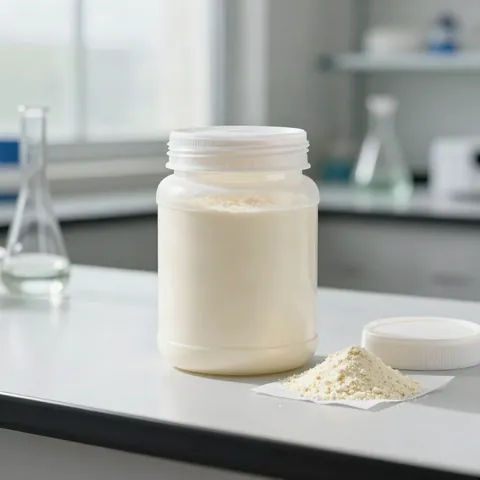
Sodium dithionite is an inorganic sodium salt that is the disodium salt of dithionous acid. It has a role as a bleaching agent and a reducing agent. It contains a dithionite(2-).
Identifiers
Registry numbers, names and line notations, tap to copy
- CAS number
- 7775-14-6 CAS number cross-checked
- EC number
- 231-890-0
- Molecular formula
- Na2O4S2
- UNII
- 2K5B8F6ES1
- MDL number
- MFCD00011640
- INCI name
- SODIUM HYDROSULFITE
- InChIKey
- JVBXVOWTABLYPX-UHFFFAOYSA-L
- InChI
- InChI=1S/2Na.H2O4S2/c;;1-5(2)6(3)4/h;;(H,1,2)(H,3,4)/q2*+1;/p-2
- SMILES (canonical and isomeric)
- [O-]S(=O)S(=O)[O-].[Na+].[Na+]
Synonyms
- Sodium hydrosulfite
- Sodium hydrosulphite
- Vatrolite
- Sodium sulfoxylate
- Disodium dithionite
- Dithionous acid, disodium salt
- Blankit
- Burmol
- Hydros
- Blankit IN
- V-Brite B
- Hydrosulfite R Conc
- Disodium hydrosulfite
- Sodium hydrosulfite (Na2S2O4)
- Sodium dithionite (Na2(S2O4))
- Dithionite, Sodium
- Sodium hypodisulfite
- Sodium Hydrosulfite, 85%
- sodium dithionit
- sodiumdithionite
- sodiumhydrosulfite
- Sodiumhydrosulphite
- sodium hydro sulfite
- Dithionous acid, sodium salt (1:2)
- sodium sodium hydrosulfite
Show all 32 synonymsShow fewer synonyms
- Dithionous aciddisodiuMsalt
- Na2O4S2
- Na2S2O4
- Sodium dithionite (Na2S2O4)
- Na2 (S2 O4)
- Sodium dithionite or sodium hydrosulfite
- Sodium dithionite or sodium hydrosulfite [UN1384] [Spontaneously combustible]
Physical and chemical properties
Measured values and descriptors computed from the structure
Physical and chemical properties
Measured values, check the supplier specification for your grade
| Appearance | White or grayish-white crystalline powderexp.Measured value |
|---|---|
| Odour | Faint sulfurousexp.Measured value |
| Melting point | 52 °Cexp.Measured value |
| Density | 2.38 g/cm³exp.Measured value |
| Flash point | Ca. 100exp.Measured value |
| Autoignition temperature | Ca. 190exp.Measured value |
| Solubility | Slightly sol in alcohol, very soluble in waterexp.Measured value |
Values vary by grade. Ask suppliers for the COA or TDS of the batch you buy.
Computed descriptors
Calculated from the structure, useful for screening and formulation
| Molecular weight | 174.11 g/molcalc.Computed value |
|---|---|
| Exact mass | 173.9033 Dacalc.Computed value |
| LogP (octanol/water) | -7.33calc.Computed value |
| Topological polar surface area | 80.26 Ųcalc.Computed value |
| Hydrogen bond donors | 0calc.Computed value |
| Hydrogen bond acceptors | 4calc.Computed value |
| Rotatable bonds | 1calc.Computed value |
| Heavy atoms | 8calc.Computed value |
| Rings | 0calc.Computed value |
| Aromatic rings | 0calc.Computed value |
| Fraction sp3 carbons | 0calc.Computed value |
| Formal charge | 0calc.Computed value |
| Stereocentres | 2calc.Computed value |
| Components | 3calc.Computed value |
Calculated for screening. Confirm critical figures with the supplier.
Safety and hazards
GHS classification summary, not a safety data sheet
Hazard statements
- H251Self-heating, may catch fire.
- H302Harmful if swallowed.
Precautionary statements (11)
- P235Keep cool.
- P264Wash skin thoroughly after handling.
- P270Do not eat, drink or smoke when using this product.
- P280Wear protective gloves, protective clothing, eye protection and face protection.
- P301 + P317If swallowed: Get medical help.
- P330Rinse mouth.
- P407Maintain air gap between stacks or pallets.
- P410Protect from sunlight.
- P413Store bulk masses at temperatures not exceeding the specified limit.
- P420Store separately.
- P501Dispose of contents and container in accordance with local regulations.
- UN number
- UN 1384
- Transport hazard class
- 4.2
- Packing group
- II
GHS classification summary, not a safety data sheet (SDS). Classifications can differ by supplier, grade and concentration. Always check the supplier's SDS.
Full safety data and first aidSodium dithionite suppliers
Sponsored listings first, then the documented ranking: membership, verification, replies, completeness, freshness and ratings
- India, ChennaiUnclaimed profileSodium HydrosulphiteGrade, purity and minimum order on requestPrice on request
- India, New Delhi ManufacturerUnclaimed profileSodium HydrosulfiteGrade, purity and minimum order on requestPrice on request
- China, NantongUnclaimed profileSodium DithioniteGrade, purity and minimum order on requestPrice on request
- South Korea, Ansan ManufacturerUnclaimed profileSodium DithioniteGrade, purity and minimum order on requestPrice on request
- Thailand, Phra PradaengUnclaimed profileSodium HydrosulfiteGrade, purity and minimum order on requestPrice on request
- Thailand, SamphanthawongUnclaimed profileSodium DithioniteGrade, purity and minimum order on requestPrice on request
- ChinaUnclaimed profileSodium HydrosulfiteGrade, purity and minimum order on requestPrice on request
- India, Vadodara ManufacturerUnclaimed profileSodium DithioniteGrade, purity and minimum order on requestPrice on request
- United Kingdom ManufacturerUnclaimed profileSodium DithioniteGrade, purity and minimum order on requestPrice on request
- Price on request
Suppliers marked Unclaimed profile have not claimed their profile yet. They are not verified by CompoundList, their offers are price on request and details may have changed, so please confirm them with the supplier. Company representatives can claim a profile with a business email on the company's own website domain. Our team verifies each claim and sends the result by email.
Where suppliers are based
211 suppliers in 40 countries
- India45
- China44
- United States32
- Thailand11
- Turkey7
- United Kingdom6
- and 34 more countries
Send one request to many suppliers
Choose up to 10 suppliers or let us match your request. Compare quotes side by side, free.
Sodium dithionite price
Indicative price range per kg from live supplier offers
Suppliers quote this chemical on request. Send one free request and compare quotes side by side.
Uses and applications
What the substance is used for, by industry and function
Reducing agent to strip certain dyes from fabrics and in vat dyeing, bleaching agent for ground wood pulp, soap, straws, sugar reducing agent to strip certain dyes from fabrics and in vat dyeing, bleaching agent for ground wood pulp, soap, straws, sugar.
Oxygen scavenger for synthetic rubbers, vat dyeing of fibers and textiles, stripping agent for dyes, reagent, bleaching of sugar, soap, oils, and groundwood.
As reducing agent, particularly in dyeing with indigo and vat dyes, bleaching soaps, straw, removing dyes from dyed fabrics.
All uses of sodium dithionite are based on its reducing properties. In the textile industry, sodium dithionite is primarily used as reducing agent for vat dyes and sulfur containing dyes, and for the removal of pigments on textiles.
Read more
It is also used as a bleaching agent in reductive bleaching processes, for instance, in the bleaching of mechanical paper pulp, and the bleaching of cotton and wool, as well as sugar.
The use pattern is 50% textile bleaching, 35% pulp and paper bleaching, 5% kaolin bleaching, 10% other applications (e.g. household stain remover).
Industrial uses: Bleaching agent, Other, Dye, Oxidizing agent, Reducing agent.
Consumer uses: Reducing agent.
Use classes: Cosmetics.
Industries and functions
Cosmetic ingredient, INCI name SODIUM HYDROSULFITE(reducing, viscosity controlling)
Roles
- bleaching agent
- reagent
- reducing agent
Functional uses
- Reducing agent
- Viscosity modifier
Cosmetic functions
- Reducing
- Viscosity controlling
How it is made
Zinc dust process: ... An aqueous slurry of zinc dust is treated in a stirred reactor with cooling at ca. 40 °C with liquid or gaseous sulfur dioxide to give zinc dithionite. After completion of the reaction the solution is passed through a filter press to remove unreacted zinc dust and impurities from the zinc. The zinc is then precipitated from the zinc dithionite by adding sodium carbonate or sodium hydroxide in stirred vessels. The zinc carbonate or hydroxide is removed in filter presses.
Read more
Anhydrous sodium dithionite is precipitated from the clarified sodium dithionite solution by concentration under vacuum and addition of sodium chloride at > 60 °C. It is filtered, washed with methanol, and dried at 90 - 100 °C. Besides the evaporation process the salting out process, which was more widely used previously, is still known. In this process the dithionite is obtained from the solution by the addition of sodium chloride and methanol.
Amalgam Process. In the amalgam process, sodium hydrogensulfite is reduced to sodium dithionite in aqueous solution in a cooled, stirred vessel using the sodium amalgam of a chloralkali electrolysis cell. The sodium-free mercury is returned to the electrolysis cell where it is recharged with sodium. During reaction of the amalgam with the hydrogensulfite solution a pH of 5 - 6 must be maintained. The product is obtained by precipitation with salts or methanol or both.
Regulatory status
Inventories, regulations and trade controls that list this substance
Europe
- EU harmonised classification (CLP Annex VI)Index no: 016-028-00-1
Health and food
- EU cosmetic ingredient inventory
United States
- TSCA inventory (USA)Status: Active in US commerce
HS code and trade data
Customs classification and reported world trade statistics
Global trade
World import and export statistics for the HS code Sodium dithionite is traded under.
Dithionites and sulphoxylates of sodium
- Turkey15.3%
- United States8.7%
- Vietnam * partner reported7.4%
* Partner reported figures, a lower bound.
The HS code shown for Sodium dithionite is indicative (it was assigned by structure rules). Confirm the classification with your customs broker before shipping.
Related chemicals
Parent and salt forms, stereoisomers, similar structures and isomers
Similar structures
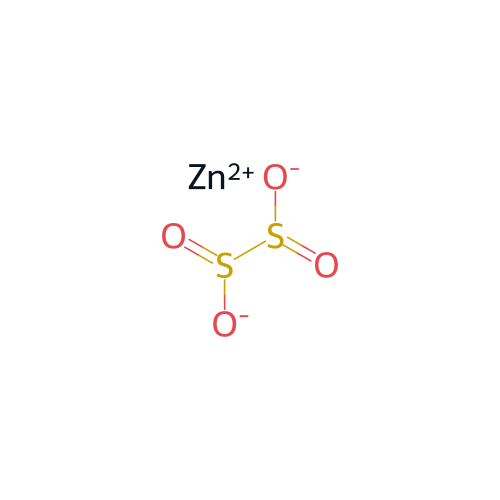
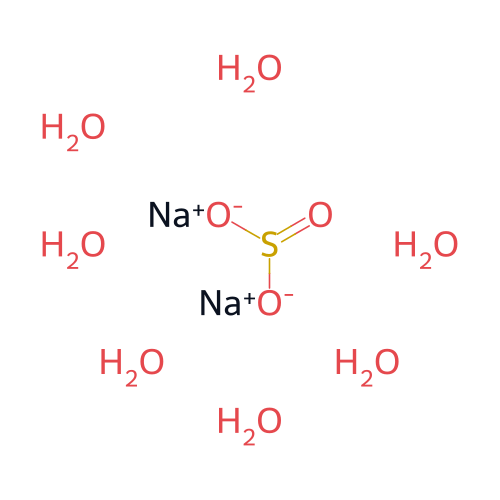
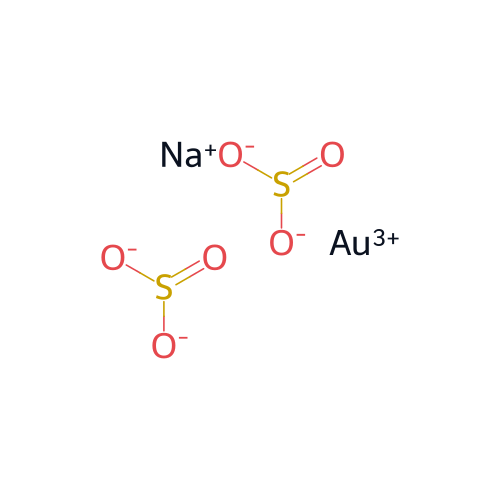
Nearest neighbours by Morgan fingerprint Tanimoto similarity



Frequently asked questions
Quick answers about Sodium dithionite, based on the data on this page
What is Sodium dithionite?
What is the CAS number of Sodium dithionite?
What is the molecular formula and weight of Sodium dithionite?
What is Sodium dithionite used for?
Is Sodium dithionite hazardous?
What is the HS code of Sodium dithionite?
Where can I buy Sodium dithionite?
Where can I buy Sodium dithionite in India?
What is the price of Sodium dithionite?
Guides for buyers
Practical guides that help when you source, ship or handle Sodium dithionite
- Guide, SafetyHow to read a safety data sheet in 10 minutesA section by section method to pull the essentials out of any 16 section SDS: identity, hazards, composition, storage, PPE, properties, transport and emergency measures.Read
- Guide, Trade and logisticsShipping dangerous goods: UN numbers, classes and packing groupsHow the UN dangerous goods system works for chemicals, from the nine classes and UN numbers to packing groups, UN packaging marks, labels, documents and segregation.Read
- Guide, SafetyGHS pictograms, signal words and hazard statements explainedA practical guide to the nine GHS pictograms, the signal words Danger and Warning, H and P statements, and how to read a chemical label in seconds.Read
Get quotes for Sodium dithionite
Embed this structure on your websiteShow code
Paste this code into your page to show the 2D structure of Sodium dithionite with a 3D view, its CAS number where known and a link back to this page. Free to use with the link kept.
<iframe src="https://www.compoundlist.com/embed/structure/sodium-dithionite-7775-14-6" title="Sodium dithionite structure on CompoundList" width="360" height="420" style="border:1px solid #E7E2DA;border-radius:12px;max-width:100%" loading="lazy" referrerpolicy="strict-origin-when-cross-origin"></iframe>Explore more in Sulfates and sulfur salts or HS code 283110