Vinylidene fluoride
Also known as 1,1-Difluoroethylene, 1,1-Difluoroethene, Vinylidene difluoride
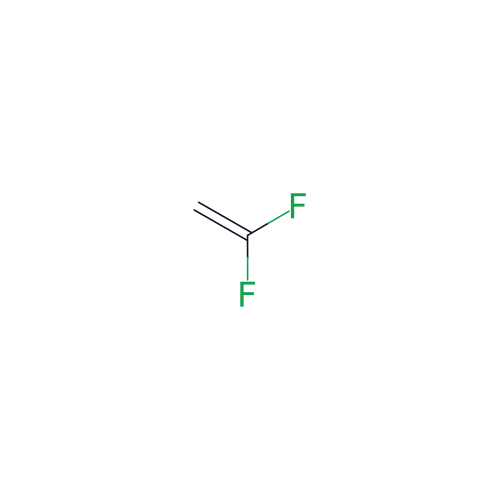
Key facts
What buyers check first
- Appearance
- Colorless gas
- Melting point
- -144 °C
- Boiling point
- -85.7 °C
- Density
- Relative density (water = 1): 0.6
- Flash point
- Flammable gas
- HS code
- 290359
- Category
- Refrigerants and blowing agents
- UN number
- UN 1959

What is Vinylidene fluoride?
Plain description, key identifiers and synonyms
Vinylidene fluoride is an organofluorine compound and an olefinic compound.
Identifiers
Registry numbers, names and line notations, tap to copy
- IUPAC name
- 1,1-difluoroethene
- CAS number
- 75-38-7 CAS number cross-checked
- EC number
- 200-867-7
- Molecular formula
- C2H2F2
- UNII
- 3C1IX2905B
- MDL number
- MFCD00000448, MFCD00084470
- INCI name
- POLYVINYLIDENE DIFLUORIDE
- InChIKey
- BQCIDUSAKPWEOX-UHFFFAOYSA-N
- InChI
- InChI=1S/C2H2F2/c1-2(3)4/h1H2
- SMILES (canonical and isomeric)
- C=C(F)F
Synonyms
- 1,1-Difluoroethylene
- 1,1-Difluoroethene
- Vinylidene difluoride
- Ethene, 1,1-difluoro-
- Ethylene, 1,1-difluoro-
- Genetron 1132a
- Halocarbon 1132A
- Difluoro-1,1-ethylene
- Dalvor
- Dulite
- Vidar
- Ftoroplast 2
- Fluorolon 2
- Ftorlon 2
- Foraflon 50
- Kynar 51
- VDF
- Kynar 200
- Kynar 202
- Kynar 300
- Kynar 301
- Kynar 450
- Kynar 460
- Kynar 500
- Kynar 821
Show all 38 synonymsShow fewer synonyms
- Kynar 901
- VF 2
- VW 12
- TL 450
- KF 1000
- KF 1100
- 1,1-Difluoroethylene or Refrigerant gas R 1132a
- Poly(vinylidene fluoride) pound PVDF pound(c)
- fluorovinylidene
- Norflurane EP Impurity Jj
- CH2=CF2
- 1,1-Difluoro-ethenhomopolymer
- FC 1132a
Physical and chemical properties
Measured values and descriptors computed from the structure
Physical and chemical properties
Measured values, check the supplier specification for your grade
| Appearance | Colorless gasexp.Measured value |
|---|---|
| Odour | Nearly odorlessexp.Measured value |
| Melting point | -144 °Cexp.Measured value |
| Boiling point | -85.7 °Cexp.Measured value |
| Density | Relative density (water = 1): 0.6exp.Measured value |
| Flash point | Flammable gasexp.Measured value |
| Autoignition temperature | 640 °Cexp.Measured value |
| Solubility | Slightly sol in water, sol in alcohol and etherexp.Measured value |
| Vapour pressure | Liquid molar volume = 0.055194 m³/kmol, Vapor pressure = 3 × 10⁺⁴ mm Hg at 25 C (calculated from experimentally derived coefficients)exp.Measured value |
Values vary by grade. Ask suppliers for the COA or TDS of the batch you buy.
Computed descriptors
Calculated from the structure, useful for screening and formulation
| Molecular weight | 64.03 g/molcalc.Computed value |
|---|---|
| Exact mass | 64.0125 Dacalc.Computed value |
| LogP (octanol/water) | 1.4calc.Computed value |
| Topological polar surface area | 0 Ųcalc.Computed value |
| Hydrogen bond donors | 0calc.Computed value |
| Hydrogen bond acceptors | 0calc.Computed value |
| Rotatable bonds | 0calc.Computed value |
| Heavy atoms | 4calc.Computed value |
| Rings | 0calc.Computed value |
| Aromatic rings | 0calc.Computed value |
| Fraction sp3 carbons | 0calc.Computed value |
| Formal charge | 0calc.Computed value |
| Stereocentres | 0calc.Computed value |
| Lipinski rule of five | Passes (0 violations)calc.Computed value |
Calculated for screening. Confirm critical figures with the supplier.
Safety and hazards
GHS classification summary, not a safety data sheet
Hazard statements
- H220Extremely flammable gas.
- H230May react explosively even in the absence of air.
- H280Contains gas under pressure, may explode if heated.
- H340May cause genetic defects.
- H350May cause cancer.
Precautionary statements (12)
- P203Obtain, read and follow all safety instructions before use.
- P210Keep away from heat, hot surfaces, sparks, open flames and other ignition sources. No smoking.
- P222Do not allow contact with air.
- P280Wear protective gloves, protective clothing, eye protection and face protection.
- P318If exposed or concerned, get medical advice.
- P337If eye irritation persists:
- P377Leaking gas fire: do not extinguish, unless leak can be stopped safely.
- P381In case of leakage, eliminate all ignition sources.
- P403Store in a well-ventilated place.
- P405Store locked up.
- P410 + P403Protect from sunlight. Store in a well-ventilated place.
- P501Dispose of contents and container in accordance with local regulations.
- UN number
- UN 1959
- Transport hazard class
- 2.1
GHS classification summary, not a safety data sheet (SDS). Classifications can differ by supplier, grade and concentration. Always check the supplier's SDS.
Full safety data and first aidVinylidene fluoride suppliers
Sponsored listings first, then the documented ranking: membership, verification, replies, completeness, freshness and ratings
- ManufacturerUnclaimed profileVinylidene fluorideGrade, purity and minimum order on requestPrice on request
- JapanUnclaimed profileVinylidene fluorideGrade, purity and minimum order on requestPrice on request
- United States, Princeton ManufacturerUnclaimed profileVinylidene fluorideGrade, purity and minimum order on requestPrice on request
- United States, King Of Prussia ManufacturerUnclaimed profileVinylidene fluorideGrade, purity and minimum order on requestPrice on request
- India, KurukshetraUnclaimed profileVinylidene fluorideGrade, purity and minimum order on requestPrice on request
- United StatesUnclaimed profileVinylidene fluorideGrade, purity and minimum order on requestPrice on request
- United States, Brownwood ManufacturerUnclaimed profileVinylidene fluorideGrade, purity and minimum order on requestPrice on request
- United States, FriscoUnclaimed profileVinylidene fluorideGrade, purity and minimum order on requestPrice on request
- Price on request
- United States, ElginUnclaimed profileVinylidene fluorideGrade, purity and minimum order on requestPrice on request
Suppliers marked Unclaimed profile have not claimed their profile yet. They are not verified by CompoundList, their offers are price on request and details may have changed, so please confirm them with the supplier. Company representatives can claim a profile with a business email on the company's own website domain. Our team verifies each claim and sends the result by email.
Where suppliers are based
12 suppliers in 4 countries
Send one request to many suppliers
Choose up to 10 suppliers or let us match your request. Compare quotes side by side, free.
Vinylidene fluoride price
Indicative price range per kg from live supplier offers
Suppliers quote this chemical on request. Send one free request and compare quotes side by side.
Uses and applications
What the substance is used for, by industry and function
Manufacture of polymers and copolymers, chemical intermediate.
Used for the mfg of poly(vinylidene fluoride) and for copolymerization with many fluorinated monomers. One commercially significant use is the mfg of high performance fluoroelastomers that include copolymers of 1,1-difluorothene with hexafluoropropylene (HFP) or chlorotrifluoroethylene (CTFE) and terpolymers with HFP and tetrafluoroethylene.
Industrial uses: Monomers.
Industries and functions
Cosmetic ingredient, INCI name POLYVINYLIDENE DIFLUORIDE(binding, skin conditioning)
Functional uses
- Binder
- Processing aids not otherwise specified
- Softener and conditioner
- Surfactant (surface active agent)
- Wetting agent (non-aqueous)
Cosmetic functions
- Binding
- Skin conditioning
How it is made
Currently, three basic methods are used for the commercial production: (1) dechlorination of 1,2-dichloro-1,1-difluoroethane in the gas phase and on a metal catalyst, (2) dechlorination of 1-chloro-1,1-difluoroethane, and (3) dehydrofluorination of 1,1,1-trifluoroethane.
Thermal elimination of HCl from 1-chloro-1,1-difluoroethane is the principal industrial route...dehydrohalogenation of 1-bromo-1,1-difluoroethane or 1,1,1-trifluoroethane, or dehalogenation of 1,2-dichloro-1,1-difluoroethane are alternative routes, it can also be continuously prepared by the pyrolysis of trifluoromethane in the presence of a catalyst and either methane or ethylene.
Regulatory status
Inventories, regulations and trade controls that list this substance
Health and food
- EU cosmetic ingredient inventory
United States
- TSCA inventory (USA)Status: Active in US commerce
HS code and trade data
Customs classification and reported world trade statistics
Global trade
World import and export statistics for the HS code Vinylidene fluoride is traded under.
Unsaturated fluorinated derivatives of acyclic hydrocarbons, other
- Japan33.8%
- China17.1%
- South Korea13.0%
- Japan23.0%
- China18.3%
- United States13.0%
The HS code shown for Vinylidene fluoride is indicative (it was assigned by structure rules). Confirm the classification with your customs broker before shipping.
Related chemicals
Parent and salt forms, stereoisomers, similar structures and isomers
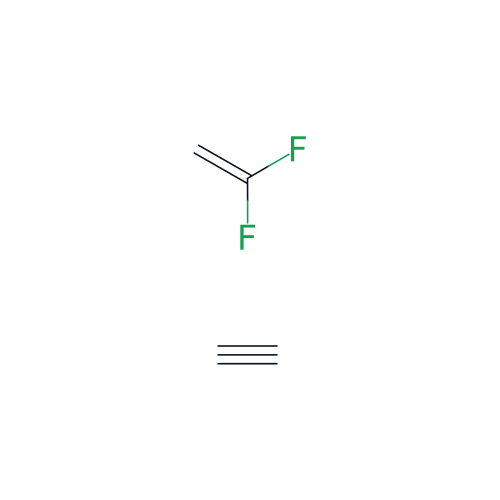
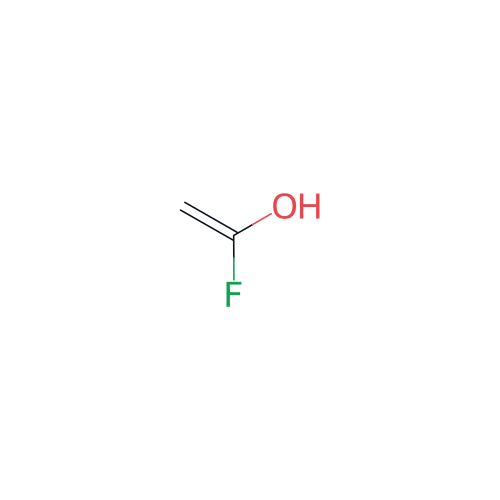
Similar structures
Nearest neighbours by Morgan fingerprint Tanimoto similarity

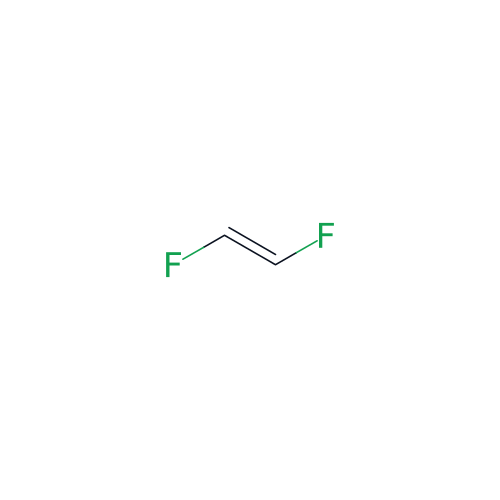
Same formula isomers
Different compounds that share this molecular formula


Frequently asked questions
Quick answers about Vinylidene fluoride, based on the data on this page
What is Vinylidene fluoride?
What is Vinylidene fluoride used for?
Is Vinylidene fluoride hazardous?
Guides for buyers
Practical guides that help when you source, ship or handle Vinylidene fluoride
- Guide, Trade and logisticsShipping dangerous goods: UN numbers, classes and packing groupsHow the UN dangerous goods system works for chemicals, from the nine classes and UN numbers to packing groups, UN packaging marks, labels, documents and segregation.Read
- Guide, SafetyHow to read a safety data sheet in 10 minutesA section by section method to pull the essentials out of any 16 section SDS: identity, hazards, composition, storage, PPE, properties, transport and emergency measures.Read
- Guide, SafetyGHS pictograms, signal words and hazard statements explainedA practical guide to the nine GHS pictograms, the signal words Danger and Warning, H and P statements, and how to read a chemical label in seconds.Read
Get quotes for Vinylidene fluoride
Embed this structure on your websiteShow code
Paste this code into your page to show the 2D structure of Vinylidene fluoride with a 3D view, its CAS number where known and a link back to this page. Free to use with the link kept.
<iframe src="https://www.compoundlist.com/embed/structure/vinylidene-fluoride-75-38-7" title="Vinylidene fluoride structure on CompoundList" width="360" height="420" style="border:1px solid #E7E2DA;border-radius:12px;max-width:100%" loading="lazy" referrerpolicy="strict-origin-when-cross-origin"></iframe>Explore more in Refrigerants and blowing agents or HS code 290359