Hydrofluoric acid
Also known as Hydrogen fluoride, Fluorhydric acid, Hydrofluoride

Key facts
What buyers check first
- Appearance
- Colorless gas, fumes in air
- Melting point
- -83.6 °C
- Boiling point
- 20 °C
- Density
- Critical density, 0.29 g/mL, critical compressibility factor 0.117, density, liquid: 0.9…
- Flash point
- Not Flammable
- HS code
- 281111
- Category
- Inorganic acids
- UN number
- UN 1790
What is Hydrofluoric acid?
Plain description, key identifiers and synonyms
Fluorine atom is a halogen. It has a role as a micronutrient.
Identifiers
Registry numbers, names and line notations, tap to copy
- IUPAC name
- fluorane
- CAS number
- 7664-39-3 CAS number cross-checkedOther or deprecated CAS: 12381-92-9, 32057-09-3, 37249-79-9
- EC number
- 231-634-8
- Molecular formula
- HF
- UNII
- RGL5YE86CZ
- MDL number
- MFCD00011346
- InChIKey
- KRHYYFGTRYWZRS-UHFFFAOYSA-N
- InChI
- InChI=1S/FH/h1H
- SMILES (canonical and isomeric)
- F
Synonyms
- Hydrogen fluoride
- Fluorhydric acid
- Hydrofluoride
- Rubigine
- Fluorwasserstoff
- Antisal 2B
- Hydrofluoricum acidum
- Fluorowodor
- Fluorwaterstof
- Acido fluoridrico
- Acide fluorhydrique
- RCRA waste number U134
- fluoridohydrogen
- fluoric acid
- Fluohydric Acid
- Acid, Fluohydric
- Acid, Fluorhydric
- Acid, Hydrofluoric
- Fluoride, Hydrogen
- Anhydrous hydrogen fluoride
- Acidum Fluoricum
- Aqueous hydrogen fluoride
- Hydrofluoric acid, anhydrous
- fluorane
- Hydrogen-fluoride
Show all 33 synonymsShow fewer synonyms
- Hydrogen fluoride, anhydrous
- [2H]hydrogen fluoride
- Hydrogenfluorid
- hydrogenfluoride
- Hydrogen fluoride (HF)
- Hydrofluoric acid, ACS reagent, 48%
- UN 1052 (anhydrous)
- Acido fluorhidrico
Physical and chemical properties
Measured values and descriptors computed from the structure
Physical and chemical properties
Measured values, check the supplier specification for your grade
| Appearance | Colorless gas, fumes in airexp.Measured value |
|---|---|
| Odour | Strong, irritating odorexp.Measured value |
| Melting point | -83.6 °Cexp.Measured value |
| Boiling point | 20 °Cexp.Measured value |
| Density | Critical density, 0.29 g/mL, critical compressibility factor 0.117, density, liquid: 0.958 g/mL at 25 °C, heat of fusion: 3.931 kJ/mol at 83.6 °C, heat capacity at constant pressure (liquid at 16 °C): 50.6 J/(mol K), heat of formation…exp.Measured value |
| Flash point | Not Flammableexp.Measured value |
| Autoignition temperature | Not flammableexp.Measured value |
| Solubility | Miscible with waterexp.Measured value |
| Vapour pressure | 917 mm Hg at 25 °Cexp.Measured value |
Values vary by grade. Ask suppliers for the COA or TDS of the batch you buy.
Computed descriptors
Calculated from the structure, useful for screening and formulation
| Molecular weight | 20.01 g/molcalc.Computed value |
|---|---|
| Exact mass | 20.0062 Dacalc.Computed value |
| LogP (octanol/water) | 0.15calc.Computed value |
| Topological polar surface area | 0 Ųcalc.Computed value |
| Hydrogen bond donors | 0calc.Computed value |
| Hydrogen bond acceptors | 0calc.Computed value |
| Rotatable bonds | 0calc.Computed value |
| Heavy atoms | 1calc.Computed value |
| Rings | 0calc.Computed value |
| Aromatic rings | 0calc.Computed value |
| Fraction sp3 carbons | 0calc.Computed value |
| Formal charge | 0calc.Computed value |
| Stereocentres | 0calc.Computed value |
Calculated for screening. Confirm critical figures with the supplier.
Safety and hazards
GHS classification summary, not a safety data sheet
Hazard statements
- H300Fatal if swallowed.
- H310Fatal in contact with skin.
- H314Causes severe skin burns and eye damage.
- H330Fatal if inhaled.
Precautionary statements (22)
- P260Do not breathe dust, fume, gas, mist, vapours or spray.
- P262Do not get in eyes, on skin, or on clothing.
- P264Wash skin thoroughly after handling.
- P270Do not eat, drink or smoke when using this product.
- P271Use only outdoors or in a well-ventilated area.
- P280Wear protective gloves, protective clothing, eye protection and face protection.
- P284In case of inadequate ventilation wear respiratory protection.
- P301 + P316If swallowed: Get emergency medical help immediately.
- P301 + P330 + P331If swallowed: Rinse mouth. Do not induce vomiting.
- P302 + P352If on skin: Wash with plenty of water.
- P302 + P361 + P354If on skin: Take off immediately all contaminated clothing. Immediately rinse with water for several minutes.
- P304 + P340If inhaled: Remove person to fresh air and keep comfortable for breathing.
- P305 + P354 + P338If in eyes: Immediately rinse with water for several minutes. Remove contact lenses, if present and easy to do. Continue rinsing.
- P316Get emergency medical help immediately.
- P320Specific treatment is urgent (see supplemental first aid instructions on the label).
- P321Specific treatment (see supplemental first aid instructions on the label).
- P330Rinse mouth.
- P361 + P364Take off immediately all contaminated clothing. And wash it before reuse.
- P363Wash contaminated clothing before reuse.
- P403 + P233Store in a well-ventilated place. Keep container tightly closed.
- P405Store locked up.
- P501Dispose of contents and container in accordance with local regulations.
- UN number
- UN 1790
- Transport hazard class
- 8
- Packing group
- I
GHS classification summary, not a safety data sheet (SDS). Classifications can differ by supplier, grade and concentration. Always check the supplier's SDS.
Full safety data and first aidHydrofluoric acid suppliers
Controlled substance, listings of documented suppliers only, in the documented ranking
Hydrofluoric acid is controlled. Only documented suppliers can list it, and buyers must upload a valid licence with their request. Every request is reviewed before suppliers see it.
Licensed buyers only, every enquiry is reviewed by our compliance team.
Reference: Australia Group export control list, chemical weapons precursor
Our policy on controlled substancesLicensed buyers can post a request for Hydrofluoric acid with their licence. Our compliance team reviews it before suppliers see it.
Hydrofluoric acid price
Indicative price range per kg from live supplier offers
Suppliers quote this chemical on request. Send one free request and compare quotes side by side.
Uses and applications
What the substance is used for, by industry and function
Cleaning cast iron, copper, brass, removing efflorescence from brick and stone, or sand particle from metallic castings, working over too heavily weighted silks, frosting, etching glass and enamel, polishing crystal glass, decomposing cellulose, enameling and galvanizing iron, increasing porosity of ceramics ... in analytical work to determine silicon dioxide, etc. (Hydrofluoric acid).
Catalyst, especially in the petroleum industry (paraffin alkylation), in fluorination processes, especially in the aluminum industry, in the manufacture of fluorides, for separating uranium isotopes, in making fluorine containing plastics, in dye chemistry.
Read more
(Hydrogen fluoride gas).
Catalyst in alkylation, isomerization, condensation, dehydration, and polymerization reactions, fluorinating agent in organic and inorganic reactions, production of fluorine and aluminum fluoride, additive in liquid rocket propellents, refining of uranium. (Hydrogen fluoride gas).
Hydrogen fluoride mixes readily with water forming hydrofluoric acid. For all practical purposes, they are considered the same chemical. Hydrogen fluoride/hydrofluoric acid is used extensively in the extraction, processing, and refining of metals, rock, brick, and oil. It is an intermediate for many chemical reactions and syntheses. It is used to remove and inhibit rust, and to etch, polish, and frost glass. It is used in the manufacture of silicon semiconductor chips. Hydrogen fluoride/hydrofluoric acid is used in commercial automotive cleaners, rust removers and inhibitors for ceramics and fabrics, and water spot removers. It is released into the environment from manufacturing and welding processes, volcanoes, and sea salt aerosol.
Industries and functions
Roles
- food component
- micronutrient
- nutrient
- physiological role
Functional uses
- pH regulating agent
How it is made
Obtained by the action of sulfuric acid on fluorspar (calcium fluoride). (Hydrogen fluoride gas)
Solution of hydrogen fluoride gas in water. Obtained by distilling calcium fluoride with sulfuric acid. (Hydrofluoric acid)
Distillation from the reaction product of calcium fluoride and sulfuric acid, also from fluosilicic acid. (Hydrogen fluoride gas)
Regulatory status
Inventories, regulations and trade controls that list this substance
Hydrofluoric acid is controlled. Only documented suppliers can list it, and buyers must upload a valid licence with their request. Every request is reviewed before suppliers see it.
Licensed buyers only, every enquiry is reviewed by our compliance team.
Reference: Australia Group export control list, chemical weapons precursor
Our policy on controlled substancesEurope
- EU harmonised classification (CLP Annex VI)Index no: 009-002-00-6
Health and food
- EU Cosmetics Regulation Annex II, prohibited in cosmeticsName: Hydrofluoric acid, its normal salts, its complexes and hydrofluorides with exception of those given in Annex III, Ref no: 191, Annex ref: II/191
- Active ingredient in FDA approved drug labels
United States
- TSCA inventory (USA)Status: Active in US commerce
HS code and trade data
Customs classification and reported world trade statistics
Global trade
World import and export statistics for the HS code Hydrofluoric acid is traded under.
Hydrogen fluoride (hydrofluoric acid)
- South Korea23.7%
- United States21.9%
- Japan16.1%
The HS code shown for Hydrofluoric acid is indicative (it was matched by name in the HS nomenclature). Confirm the classification with your customs broker before shipping.
Related chemicals
Parent and salt forms, stereoisomers, similar structures and isomers
Stereoisomers and isotopic forms
Same connectivity, different stereochemistry or isotopes (same InChIKey skeleton)


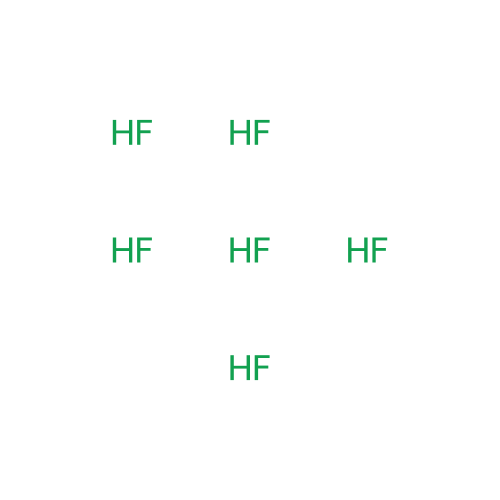
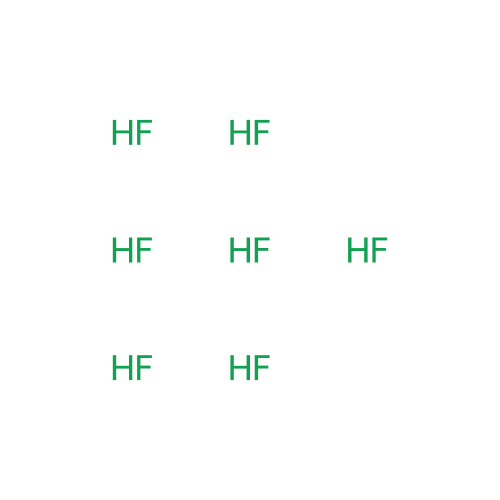
Similar structures
Nearest neighbours by Morgan fingerprint Tanimoto similarity
Frequently asked questions
Quick answers about Hydrofluoric acid, based on the data on this page
What is Hydrofluoric acid?
What is the CAS number of Hydrofluoric acid?
What is the molecular formula and weight of Hydrofluoric acid?
What is Hydrofluoric acid used for?
Is Hydrofluoric acid hazardous?
What is the HS code of Hydrofluoric acid?
Can I buy Hydrofluoric acid on CompoundList?
Guides for buyers
Practical guides that help when you source, ship or handle Hydrofluoric acid
- Guide, SafetyHow to read a safety data sheet in 10 minutesA section by section method to pull the essentials out of any 16 section SDS: identity, hazards, composition, storage, PPE, properties, transport and emergency measures.Read
- Guide, Trade and logisticsShipping dangerous goods: UN numbers, classes and packing groupsHow the UN dangerous goods system works for chemicals, from the nine classes and UN numbers to packing groups, UN packaging marks, labels, documents and segregation.Read
- Guide, SafetyGHS pictograms, signal words and hazard statements explainedA practical guide to the nine GHS pictograms, the signal words Danger and Warning, H and P statements, and how to read a chemical label in seconds.Read
Request as a licensed buyer
Embed this structure on your websiteShow code
Paste this code into your page to show the 2D structure of Hydrofluoric acid with a 3D view, its CAS number where known and a link back to this page. Free to use with the link kept.
<iframe src="https://www.compoundlist.com/embed/structure/hydrofluoric-acid-7664-39-3" title="Hydrofluoric acid structure on CompoundList" width="360" height="420" style="border:1px solid #E7E2DA;border-radius:12px;max-width:100%" loading="lazy" referrerpolicy="strict-origin-when-cross-origin"></iframe>Explore more in Inorganic acids or HS code 281111