Isoprene
Also known as 2-Methyl-1,3-butadiene, 2-Methylbuta-1,3-diene, Isopentadiene

Key facts
What buyers check first
- Appearance
- Colorless volatile liquid
- Melting point
- -145.9 °C
- Boiling point
- 34.1 °C
- Density
- 0.679 g/cm³ at 20 °C
- Flash point
- -54 °C
- HS code
- 290124
- Category
- Olefins and dienes
- UN number
- UN 1218

What is Isoprene?
Plain description, key identifiers and synonyms
Isoprene is a hemiterpene with the formula CH2=C(CH3)CH=CH2, the monomer of natural rubber and a common structure motif to the isoprenoids, a large class of other naturally occurring compounds. It has a role as a plant metabolite. It is a volatile organic compound, an alkadiene and a hemiterpene.
Identifiers
Registry numbers, names and line notations, tap to copy
- IUPAC name
- 2-methylbuta-1,3-diene
- CAS number
- 78-79-5 CAS number cross-checkedOther or deprecated CAS: 104389-32-4, 26796-44-1, 9006-04-6, 9041-65-0
- EC numbers
- 201-143-3, 232-689-0, 618-550-0
- Molecular formula
- C5H8
- UNII
- 0A62964IBU
- MDL number
- MFCD00008600
- INCI name
- RUBBER LATEX
- InChIKey
- RRHGJUQNOFWUDK-UHFFFAOYSA-N
- InChI
- InChI=1S/C5H8/c1-4-5(2)3/h4H,1-2H2,3H3
- SMILES (canonical and isomeric)
- CC(=C)C=C
Synonyms
- 2-Methyl-1,3-butadiene
- 2-Methylbuta-1,3-diene
- Isopentadiene
- 2-Methylbutadiene
- 2-Methyldivinyl
- 1,3-Butadiene, 2-methyl-
- beta-Methylbivinyl
- 3-Methyl-1,3-butadiene
- Methyl bivinyl
- Natural rubber
- isopreno
- isoterpene
- Isopren
- Rubber, natural
- CH2=C(CH3)CH=CH2
- Isoprene (Stabilized with TBC)
- Rubber latex, rubberfume
- Caoutchouc
- Elastomers
- Ebonite
- Heveaplus
- Impervia
- Rubber
- Latex particles
- Nafka
Show all 37 synonymsShow fewer synonyms
- Natural latex
- India rubber
- Nafka kristalgom
- Dynatex LA
- Dynatex GTZ
- Thiokol NVT
- Trans polyisoprene
- LATZ latex
- 2-methyl-butadiene
- Isoprene, inhibited
- Harub 5LV
- 2-methyl-1
Physical and chemical properties
Measured values and descriptors computed from the structure
Physical and chemical properties
Measured values, check the supplier specification for your grade
| Appearance | Colorless volatile liquidexp.Measured value |
|---|---|
| Odour | Petroleum-lkeexp.Measured value |
| Taste | Tastelessexp.Measured value |
| Melting point | -145.9 °Cexp.Measured value |
| Boiling point | 34.1 °Cexp.Measured value |
| Density | 0.679 g/cm³ at 20 °Cexp.Measured value |
| Flash point | -54 °Cexp.Measured value |
| Autoignition temperature | 395 °Cexp.Measured value |
| Solubility | In water, 642 mg/L at 25 °Cexp.Measured value |
| Vapour pressure | VP: 400 mm Hg at 15.4 °Cexp.Measured value |
Values vary by grade. Ask suppliers for the COA or TDS of the batch you buy.
Computed descriptors
Calculated from the structure, useful for screening and formulation
| Molecular weight | 68.12 g/molcalc.Computed value |
|---|---|
| Exact mass | 68.0626 Dacalc.Computed value |
| LogP (octanol/water) | 1.75calc.Computed value |
| Topological polar surface area | 0 Ųcalc.Computed value |
| Hydrogen bond donors | 0calc.Computed value |
| Hydrogen bond acceptors | 0calc.Computed value |
| Rotatable bonds | 1calc.Computed value |
| Heavy atoms | 5calc.Computed value |
| Rings | 0calc.Computed value |
| Aromatic rings | 0calc.Computed value |
| Fraction sp3 carbons | 0.2calc.Computed value |
| Formal charge | 0calc.Computed value |
| Stereocentres | 0calc.Computed value |
| Lipinski rule of five | Passes (0 violations)calc.Computed value |
Calculated for screening. Confirm critical figures with the supplier.
Safety and hazards
GHS classification summary, not a safety data sheet
Hazard statements
- H224Extremely flammable liquid and vapour.
- H341Suspected of causing genetic defects.
- H350May cause cancer.
- H412Harmful to aquatic life with long lasting effects.
Precautionary statements (15)
- P203Obtain, read and follow all safety instructions before use.
- P210Keep away from heat, hot surfaces, sparks, open flames and other ignition sources. No smoking.
- P233Keep container tightly closed.
- P240Ground and bond container and receiving equipment.
- P241Use explosion-proof electrical, ventilating and lighting equipment.
- P242Use non-sparking tools.
- P243Take action to prevent static discharges.
- P273Avoid release to the environment.
- P280Wear protective gloves, protective clothing, eye protection and face protection.
- P303 + P361 + P353If on skin (or hair): Take off immediately all contaminated clothing. Rinse skin with water or shower.
- P318If exposed or concerned, get medical advice.
- P370 + P378In case of fire: Use appropriate media to extinguish.
- P403 + P235Store in a well-ventilated place. Keep cool.
- P405Store locked up.
- P501Dispose of contents and container in accordance with local regulations.
- UN number
- UN 1218
- Transport hazard class
- 3
- Packing group
- I
GHS classification summary, not a safety data sheet (SDS). Classifications can differ by supplier, grade and concentration. Always check the supplier's SDS.
Full safety data and first aidIsoprene suppliers
Sponsored listings first, then the documented ranking: membership, verification, replies, completeness, freshness and ratings
- India, ChennaiUnclaimed profileIsopreneGrade, purity and minimum order on requestPrice on request
- NetherlandsUnclaimed profileIsopreneGrade, purity and minimum order on requestPrice on request
- China ManufacturerUnclaimed profileIsopreneGrade, purity and minimum order on requestPrice on request
- Romania, Bucharest ManufacturerUnclaimed profileIsopreneGrade, purity and minimum order on requestPrice on request
- United States ManufacturerUnclaimed profileIsopreneGrade, purity and minimum order on requestPrice on request
- Japan, Oita ManufacturerUnclaimed profileIsopreneGrade, purity and minimum order on requestPrice on request
- Price on request
- Price on request
- India ManufacturerUnclaimed profileIsopreneGrade, purity and minimum order on requestPrice on request
- China, HezeUnclaimed profileIsopreneGrade, purity and minimum order on requestPrice on request
Suppliers marked Unclaimed profile have not claimed their profile yet. They are not verified by CompoundList, their offers are price on request and details may have changed, so please confirm them with the supplier. Company representatives can claim a profile with a business email on the company's own website domain. Our team verifies each claim and sends the result by email.
Where suppliers are based
90 suppliers in 19 countries
Send one request to many suppliers
Choose up to 10 suppliers or let us match your request. Compare quotes side by side, free.
Isoprene price
Indicative price range per kg from live supplier offers
Suppliers quote this chemical on request. Send one free request and compare quotes side by side.
Uses and applications
What the substance is used for, by industry and function
Almost all isoprene produced is used for the preparation of polymers or copolymers. cis-Polyisoprene is the largest application with SIS block polymers a secondary application, and butyl rubber is a significant third application.
Smaller amounts are used as an intermediate into specialty chemicals, including vitamins, pharmaceuticals, flavorings, and perfumes, and epoxy hardeners.
Most of the isoprene that is produced is utilized for the synthesis of poly(cis-1,4-isoprene) (isoprene rubber, IR), a material (particularly the titanium type) that closely resembles natural rubber in both structure and properties. This IR is largely used for the production of vehicle tires. ... The second largest market for isoprene is the manufacture of styrene - isoprene - styrene (SIS) block copolymers ...
Read more
These products are especially useful as thermoplastic rubbers and as pressure-sensitive or thermosetting adhesives. ... Smaller amounts of isoprene are used in the production of butyl rubber (isobutene - isoprene rubber, IIR), a copolymerizate with isobutene.
Manufacture of "synthetic" natural rubber, butyl rubber. Copolymer in the production of synthetic elastomers.
Some of the many uses in which rubbers are employed include pneumatic tires and inner tubes, tubing and hose, rubber footware, inflatable and sectional seals, elastic thread and tape, rubber/metal bonded products, inflatable life-rafts and dinghies, chemically resistant tank linings, conveyor belting, foam cushioning for upholstery and bedding, floor coverings, proofed material for clothing, adhesives and solutions, washers, gaskets, diaphrams, floating bulk liquid containers and hose, tennis, squash and golf balls.
Industries and functions
Cosmetic ingredient, INCI name RUBBER LATEX(film forming, opacifying)
Roles
- eukaryotic metabolite
- metabolite
- plant metabolite
Functional uses
- Filler
- Film former
- Flavouring and nutrient
- Opacifer
Cosmetic functions
- Film forming
- Opacifying
Pharmacology
Isoprene is an unsaturated pentahydrocarbon, Isoprene is found in certain plants or obtained by distillation of caoutchouc or gutta-percha. In plants, it is elementary in the formation of isoprenoids, fat-soluble vitamins, carotenoids and related pigments. Isoprenes contribute to flavors and fragrances of essential oils and other plant-derived substances. (NCI04)
How it is made
The principal route for production of isoprene monomer outside of Russia is recovery from ethylene by-product streams. This route is most viable where ethylene is produced from naphtha or gas oil and where several ethylene plants are located in relatively close proximity to the isoprene plant. Although the yield of isoprene per mass of ethylene is quite low, there is enough ethylene produced to provide a large portion of demand. Because of the presence of n-pentane in these streams which azeotropes with isoprene, extractive distillation must be used to recover pure isoprene.
Read more
Acetonitrile is the most common solvent, but dimethylformamide is also used commercially.
The synthesis of isoprene from propylene is a three-step process. The propylene is dimerized to 2-methyl-1-pentene, which is then isomerized to 2-methyl-2-pentene in the vapor phase over silica alumina catalyst. The last step is the pyrolysis of 2-methyl-2-pentene in a cracking furnace in the presence of ((NH4)2-S). Isoprene is recovered from the resulting mixture by conventional distillation.
The starting material here is a fraction which is cut from catalytic cracking of petroleum. Two of the tertiary amylene isomers, 2-methyl-1-butene and 2-methyl-2-butene, are recovered in high purity by formation of methyl tertiary butyl ether and cracking of this to produce primarily 2-methyl-2-butene. The amylenes are mixed with steam and dehydrogenated over a catalyst.
Regulatory status
Inventories, regulations and trade controls that list this substance
Europe
- EU harmonised classification (CLP Annex VI)Index no: 601-014-00-5
Health and food
- EU cosmetic ingredient inventory
- EU Cosmetics Regulation Annex II, prohibited in cosmeticsName: Isoprene (stabilized), (2-Methyl-1,3-butadiene), Ref no: 1138, Annex ref: II/1138
United States
- TSCA inventory (USA)Status: Active in US commerce
HS code and trade data
Customs classification and reported world trade statistics
Global trade
World import and export statistics for the HS code Isoprene is traded under.
Buta-1,3-diene and isoprene
- South Korea17.0%
- Netherlands10.5%
- Germany9.1%
- China25.4%
- South Korea20.8%
- Malaysia8.4%
The HS code shown for Isoprene is indicative (it was matched by name in the HS nomenclature). Confirm the classification with your customs broker before shipping.
Related chemicals
Parent and salt forms, stereoisomers, similar structures and isomers
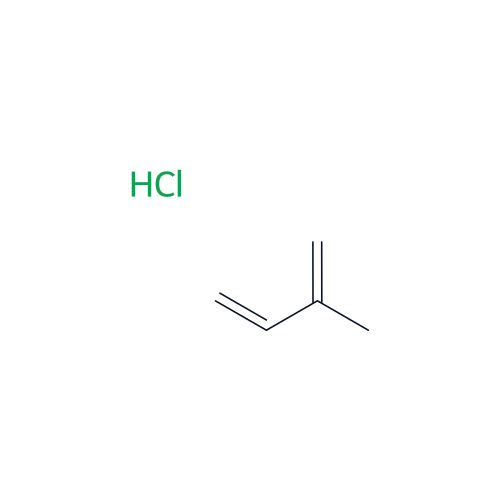
Salt and hydrate forms
Records that share this compound as their parent

Stereoisomers and isotopic forms
Same connectivity, different stereochemistry or isotopes (same InChIKey skeleton)

Similar structures
Nearest neighbours by Morgan fingerprint Tanimoto similarity

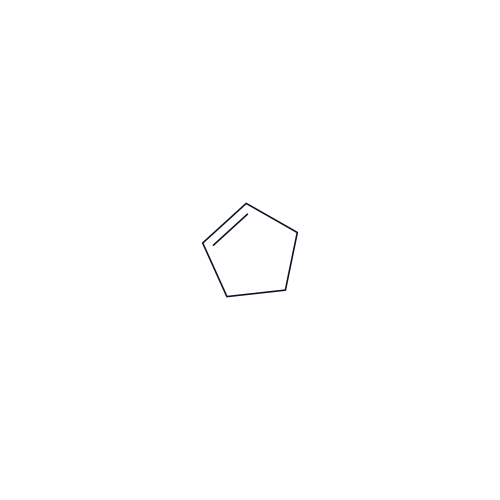
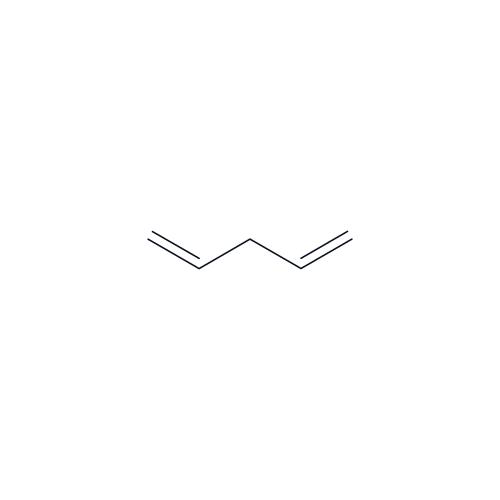
Same formula isomers
Different compounds that share this molecular formula

Frequently asked questions
Quick answers about Isoprene, based on the data on this page
What is Isoprene?
What is the CAS number of Isoprene?
What is the molecular formula and weight of Isoprene?
What is Isoprene used for?
Is Isoprene hazardous?
What is the HS code of Isoprene?
Where can I buy Isoprene?
Where can I buy Isoprene in India?
What is the price of Isoprene?
Guides for buyers
Practical guides that help when you source, ship or handle Isoprene
- Guide, Trade and logisticsShipping dangerous goods: UN numbers, classes and packing groupsHow the UN dangerous goods system works for chemicals, from the nine classes and UN numbers to packing groups, UN packaging marks, labels, documents and segregation.Read
- Guide, SafetyHow to read a safety data sheet in 10 minutesA section by section method to pull the essentials out of any 16 section SDS: identity, hazards, composition, storage, PPE, properties, transport and emergency measures.Read
- Guide, SafetyGHS pictograms, signal words and hazard statements explainedA practical guide to the nine GHS pictograms, the signal words Danger and Warning, H and P statements, and how to read a chemical label in seconds.Read
Get quotes for Isoprene
Embed this structure on your websiteShow code
Paste this code into your page to show the 2D structure of Isoprene with a 3D view, its CAS number where known and a link back to this page. Free to use with the link kept.
<iframe src="https://www.compoundlist.com/embed/structure/isoprene-78-79-5" title="Isoprene structure on CompoundList" width="360" height="420" style="border:1px solid #E7E2DA;border-radius:12px;max-width:100%" loading="lazy" referrerpolicy="strict-origin-when-cross-origin"></iframe>Explore more in Olefins and dienes or HS code 290124