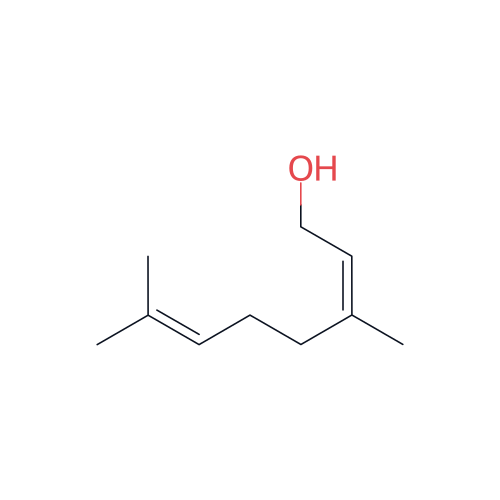
Nerol safety data
GHS classification summary, not a safety data sheet (SDS). Classifications can differ by supplier, grade and concentration. Always check the supplier's SDS.
GHS classification
Pictograms, signal word and hazard classes of the GHS classification
Hazard classes and categories
- Skin Irrit. 2
- Skin Sens. 1
- Eye Dam. 1
- Eye Irrit. 2
Hazard statements
H codes grouped by type. Percentages show the share of classification notifications that report the statement
Health hazards
- H315Causes skin irritation.
- H317May cause an allergic skin reaction.
- H318Causes serious eye damage.
- H319Causes serious eye irritation.
Precautionary statements
P codes for prevention, response, storage and disposal
Prevention
- P261Avoid breathing dust, fume, gas, mist, vapours or spray.
- P264Wash skin thoroughly after handling.
- P264 + P265Wash skin thoroughly after handling. Do not touch eyes.
- P272Contaminated work clothing should not be allowed out of the workplace.
- P280Wear protective gloves, protective clothing, eye protection and face protection.
Response
- P302 + P352If on skin: Wash with plenty of water.
- P305 + P351 + P338If in eyes: Rinse cautiously with water for several minutes. Remove contact lenses, if present and easy to do. Continue rinsing.
- P305 + P354 + P338If in eyes: Immediately rinse with water for several minutes. Remove contact lenses, if present and easy to do. Continue rinsing.
- P317Get medical help.
- P321Specific treatment (see supplemental first aid instructions on the label).
- P332 + P317If skin irritation occurs: Get medical help.
- P333 + P317If skin irritation or rash occurs: Get medical help.
- P337 + P317If eye irritation persists: Get medical help.
- P362 + P364Take off contaminated clothing. And wash it before reuse.
Disposal
- P501Dispose of contents and container in accordance with local regulations.
Handling, storage and disposal
Summaries only, follow the supplier SDS for your grade
Safe handling
Eye/face protection: Safety glasses with side-shields conforming to EN166 Use equipment for eye protection tested and approved under appropriate government standards such as NIOSH (US) or EN 166(EU). Skin protection: Handle with gloves.
Storage
Conditions for safe storage, including any incompatibilities: Keep container tightly closed in a dry and well-ventilated place. Containers which are opened must be carefully resealed and kept upright to prevent leakage.
Disposal
SRP: Recycle any unused portion of the material for its approved use or return it to the manufacturer or supplier. Ultimate disposal of the chemical must consider: the material's impact on air quality, potential migration in air, soil or water, effects on animal, aquatic and plant life, and conformance with environmental and public health regulations. If it is possible or reasonable use an alternative chemical product with less inherent propensity for occupational harm/injury/toxicity or environmental contamination. Product: Offer surplus and non-recyclable solutions to a licensed disposal company. Contact a licensed professional waste disposal service to dispose of this material. Contaminated packaging: Dispose of as unused product.
Exposure limits and toxicity
Occupational exposure limits and toxicity data
A single sensitization test was carried out on 25 volunteers. The material was tested at a concentration of 4% in petrolatum and produced no sensitization reactions. In other study, nerol was utilized in a closed patch test on the back or forearm of 314 subjects for 24-48 hr. Slight erythema was demonstrated in 10 (3.19%) subjects. In an in vitro chromosome aberration test in cultured human lymphocytes nerol was not clastogenic with and without metabolic activation.
Supplier safety data sheets
SDS documents uploaded by suppliers who list this chemical
No supplier has uploaded an SDS for Nerol yet. Suppliers usually send one with their quote. Request quotes
Safety questions
Quick answers about handling Nerol safely
Is Nerol hazardous?
Which GHS pictograms apply to Nerol?
How should Nerol be stored?
Where can I get the SDS for Nerol?
GHS classification summary, not an SDS. Always check the supplier's SDS. Last updated 7 Oct 2026. Report an error