Pcb 128
Also known as 2,2',3,3',4,4'-Hexachlorobiphenyl, 2,3,4,2',3',4'-Hexachlorobiphenyl, Aroclor 1260

Key facts
What buyers check first
- Appearance
- Light yellow, soft, sticky resin
- Boiling point
- 385 to 420
- Density
- 1.555 at 90 °C/4 °C, 1.566 at 15.5 °C/4 °C
- Flash point
- 141.1 °C
- Solubility
- Solubility in water varies because Aroclors are variable mixtures.
- HS code
- 290399
- Category
- Aromatic building blocks
- UN number
- UN 2315
What is Pcb 128?
Plain description, key identifiers and synonyms
Pcb-1260 is a viscous oily liquid. (NTP, 1992)
Identifiers
Registry numbers, names and line notations, tap to copy
- IUPAC name
- 1,2,3-trichloro-4-(2,3,4-trichlorophenyl)benzene
- CAS number
- 38380-07-3 CAS number cross-checkedOther or deprecated CAS: 11096-82-5
- EC numbers
- 680-469-1, 690-182-3
- Molecular formula
- C12H4Cl6
- UNII
- PJ11O9J71Y
- InChIKey
- BTAGRXWGMYTPBY-UHFFFAOYSA-N
- InChI
- InChI=1S/C12H4Cl6/c13-7-3-1-5(9(15)11(7)17)6-2-4-8(14)12(18)10(6)16/h1-4H
- SMILES (canonical and isomeric)
- C1=CC(=C(C(=C1C2=C(C(=C(C=C2)Cl)Cl)Cl)Cl)Cl)Cl
Synonyms
- 2,2',3,3',4,4'-Hexachlorobiphenyl
- 2,3,4,2',3',4'-Hexachlorobiphenyl
- Aroclor 1260
- 2,2',3,3',4,4'-Hexachloro-1,1'-biphenyl
- 1,2,3-trichloro-4-(2,3,4-trichlorophenyl)benzene
- PCB No. 128
- 1,1'-Biphenyl, 2,2',3,3',4,4'-hexachloro-
- Phenoclor DP6
- Arochlor 1260
- Askarel
- Chlorodiphenyl (60% Cl)
- aroclor-1260
- PCB 1260
- Aroclor 1260 100 microg/mL in Hexane
- Aroclor 1260 1000 microg/mL in Hexane
- Aroclor 1260 10 microg/mL in Cyclohexane
- Aroclor 1260 1000 microg/mL in Methanol
- Aroclor 1260 100 microg/mL in Cyclohexane
- Aroclor 1260 1000 microg/mL in Cyclohexane
- Aroclor 1260 50 microg/g in Transformer Oil
- Aroclor 1260, PCB 1260
- ASTM Method D6160 Aroclor 1260 35 microg/mL in Isooctane
- PCB No(Aroclor 1260)158 solution
- 2,2',3,3',4,4'-Hexacb
- PCB No. 128 10 |Ig/mL in Isooctane
Show all 30 synonymsShow fewer synonyms
- PCB No. 128 10 microg/mL in Isooctane
- 2,2'3,3',4,4'-Hexachloro-1,1'-biphenyl
- 2,2',3,3',4,4'-Hexachloro-1,1'-biphenyl #
- D4059 Aroclor 1260, 500 microg/g in Transformer Oil
- ASTM Method D4059 Aroclor 1260 500 microg/g in Transformer Oil
Physical and chemical properties
Measured values and descriptors computed from the structure
Physical and chemical properties
Measured values, check the supplier specification for your grade
| Appearance | Light yellow, soft, sticky resinexp.Measured value |
|---|---|
| Boiling point | 385 to 420exp.Measured value |
| Density | 1.555 at 90 °C/4 °C, 1.566 at 15.5 °C/4 °Cexp.Measured value |
| Flash point | 141.1 °Cexp.Measured value |
| Solubility | Solubility in water varies because Aroclors are variable mixtures.exp.Measured value |
| Vapour pressure | 4.05 × 10⁻⁵ mm Hg at 25 °Cexp.Measured value |
Values vary by grade. Ask suppliers for the COA or TDS of the batch you buy.
Computed descriptors
Calculated from the structure, useful for screening and formulation
| Molecular weight | 360.88 g/molcalc.Computed value |
|---|---|
| Exact mass | 357.8444 Dacalc.Computed value |
| LogP (octanol/water) | 7.27calc.Computed value |
| Topological polar surface area | 0 Ųcalc.Computed value |
| Hydrogen bond donors | 0calc.Computed value |
| Hydrogen bond acceptors | 0calc.Computed value |
| Rotatable bonds | 1calc.Computed value |
| Heavy atoms | 18calc.Computed value |
| Rings | 2calc.Computed value |
| Aromatic rings | 2calc.Computed value |
| Fraction sp3 carbons | 0calc.Computed value |
| Formal charge | 0calc.Computed value |
| Stereocentres | 0calc.Computed value |
| Lipinski rule of five | Passes (1 violation)calc.Computed value |
Calculated for screening. Confirm critical figures with the supplier.
Murcko scaffold
The ring system that remains when every side chain is removed
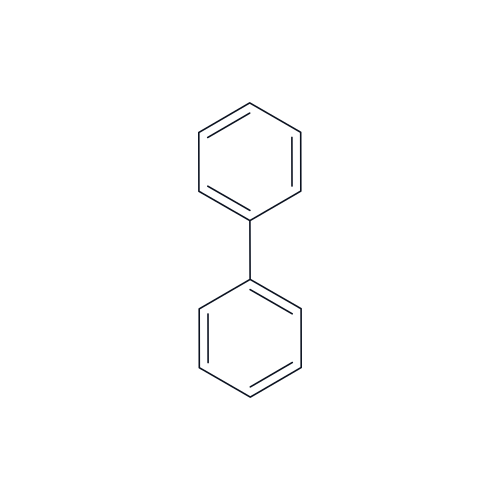
c1ccc(-c2ccccc2)cc1
2 rings, 12 atoms, the Biphenyl ring system.
32,228 other chemicals share this scaffoldSafety and hazards
GHS classification summary, not a safety data sheet
Hazard statements
- H373May cause damage to organs through prolonged or repeated exposure.
- H400Very toxic to aquatic life.
- H410Very toxic to aquatic life with long lasting effects.
Precautionary statements (5)
- P260Do not breathe dust, fume, gas, mist, vapours or spray.
- P273Avoid release to the environment.
- P319Get medical help if you feel unwell.
- P391Collect spillage.
- P501Dispose of contents and container in accordance with local regulations.
- UN number
- UN 2315
GHS classification summary, not a safety data sheet (SDS). Classifications can differ by supplier, grade and concentration. Always check the supplier's SDS.
Full safety data and first aidPcb 128 suppliers
Sponsored listings first, then the documented ranking: membership, verification, replies, completeness, freshness and ratings
Post one free request and suppliers who make or trade Pcb 128 can send you quotes. Your contact details stay private until you accept a quote.
Pcb 128 price
Indicative price range per kg from live supplier offers
Suppliers quote this chemical on request. Send one free request and compare quotes side by side.
Uses and applications
What the substance is used for, by industry and function
Formerly used in electrical transformers, hydraulic fluids, plasticizer in synthetic resins and dedusting agents. Although the production and sale was discontinued in late 1977, it is still present in many of the transformers and capacitors now in use.
As of Jan 1979, Aroclors (including Aroclor 1260) are no longer used in the production of capacitors and transformers. Nevertheless, the life expectancy of transformers containing PCBs is > 30 yrs and the life expectancy of capacitors ranges from 10 to 20 yrs, depending on the electrical application ... In 1981, an estimated 131,200 transformers containing PCBs were in service in the US, representing approx 1% of all operational transformers.
Summary of former end uses for various Aroclors:
Table: Aroclor [Table#3667].
Industries and functions
How it is made
PCBs (were) ... prepared industrially by the chlorination of biphenyl with anhydrous chlorine in the presence of a catalyst such as iron filings or ferric chloride. The products are complex mixtures of chlorobiphenyls, whose degree of chlorination depends principally on the time of contact (12-36 hr) of the biphenyl with anhydrous chlorine. The crude product is blown with air, and a small amount of lime is added to remove hydrogen chloride and ferric chloride. The resulting chlorinated mixtures are batch-distilled to remove color and traces of hydrogen chloride and ferric chloride. (Polychlorinated biphenyls)
The approximate distribution of chlorinated biphenyls in Aroclor 1260 is: <0.3% tri-, <0.3% tetra-, 9.2% penta-, 46.9% hexa-, 36.9% hepta-, 6.3% octa-, and 0.7% nonachlorobiphenyl.
Regulatory status
Inventories, regulations and trade controls that list this substance
No regulatory list memberships are recorded for this substance yet. Always check the rules of the importing and exporting country before trade.
HS code and trade data
Customs classification and reported world trade statistics
Global trade
World import and export statistics for the HS code Pcb 128 is traded under.
Halogenated derivatives of aromatic hydrocarbons, other
- China51.0%
- United States15.9%
- Belgium8.6%
- India * partner reported16.1%
- United States14.7%
- Germany10.9%
* Partner reported figures, a lower bound.
The HS code shown for Pcb 128 is indicative (it was assigned by structure rules). Confirm the classification with your customs broker before shipping.
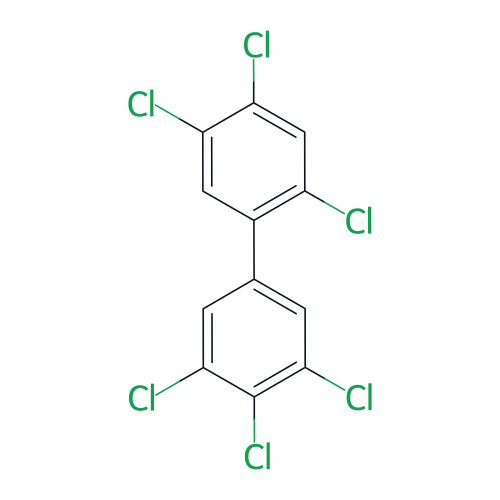
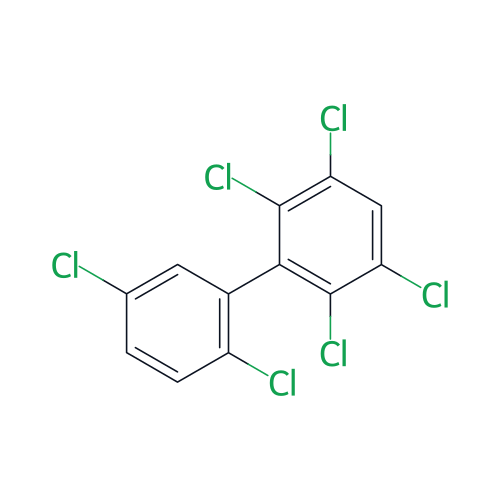
Related chemicals
Parent and salt forms, stereoisomers, similar structures and isomers
Similar structures
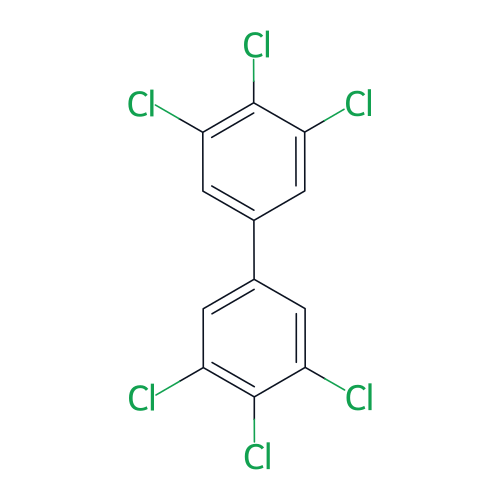
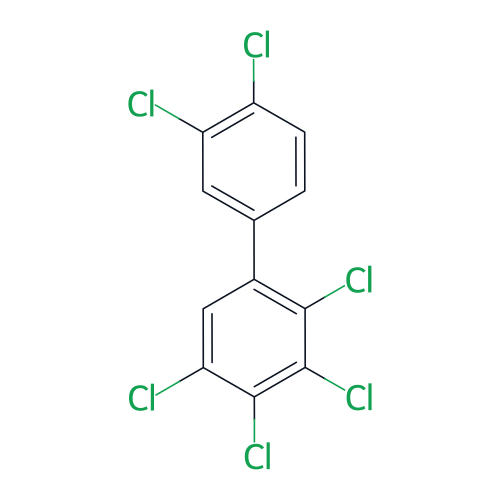
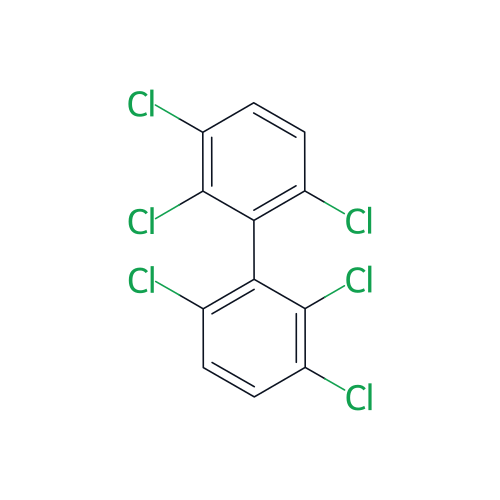
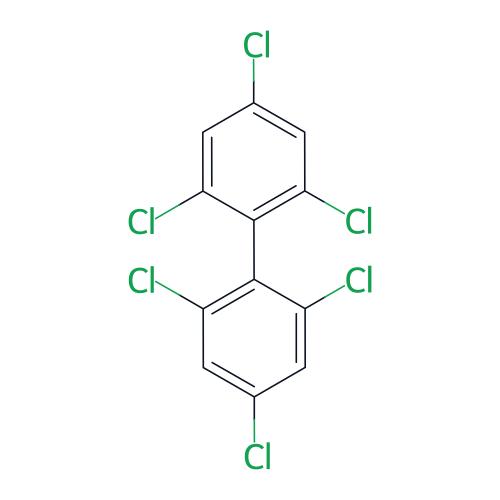
Nearest neighbours by Morgan fingerprint Tanimoto similarity
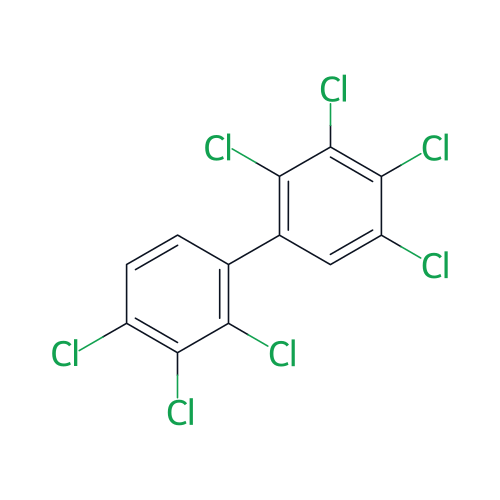
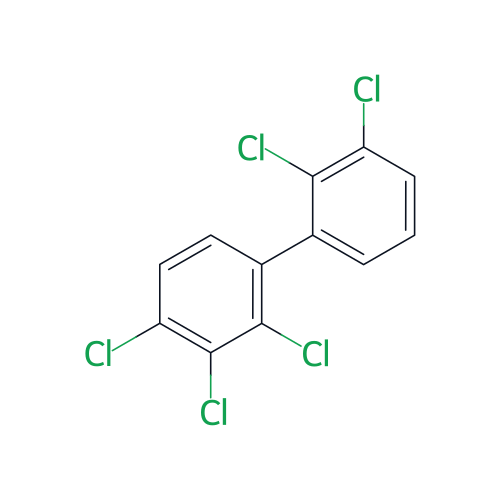

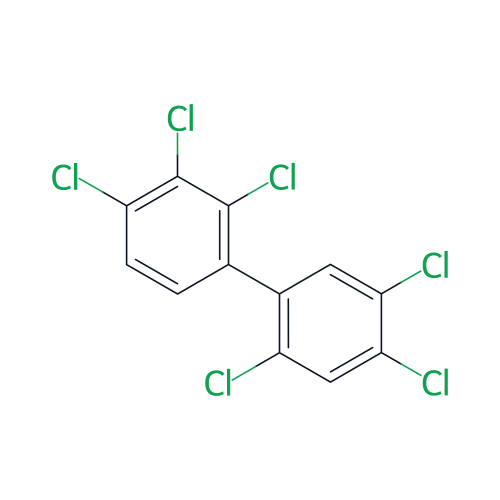


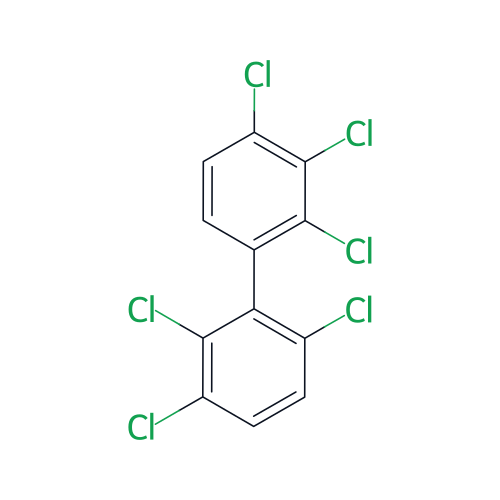

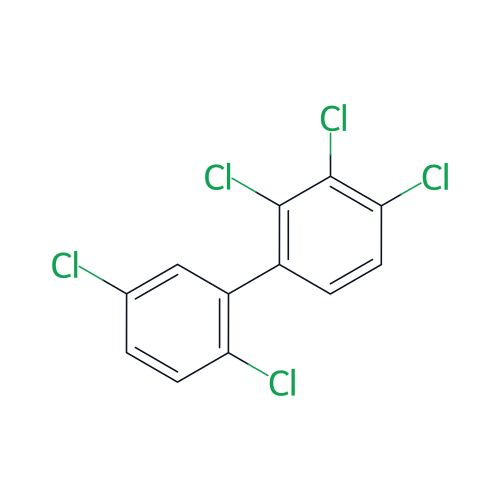
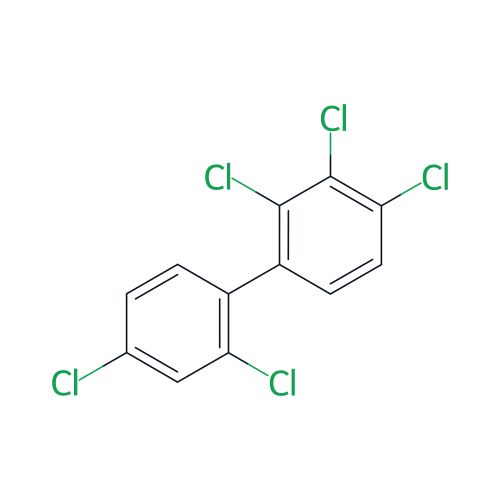
Same formula isomers
Different compounds that share this molecular formula
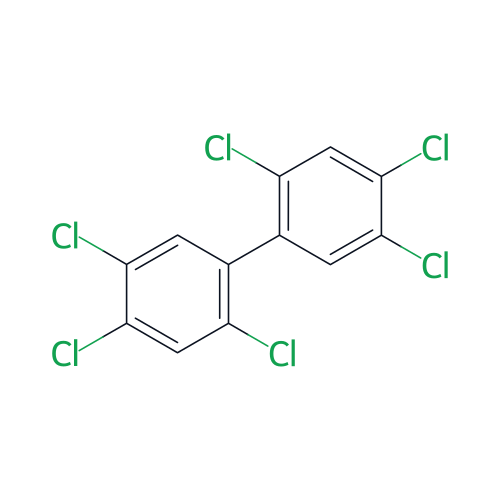



Frequently asked questions
Quick answers about Pcb 128, based on the data on this page
What is Pcb 128?
What is the CAS number of Pcb 128?
What is the molecular formula and weight of Pcb 128?
What is Pcb 128 used for?
Is Pcb 128 hazardous?
What is the HS code of Pcb 128?
Where can I buy Pcb 128?
What is the price of Pcb 128?
Guides for buyers
Practical guides that help when you source, ship or handle Pcb 128
- Guide, SafetyHow to read a safety data sheet in 10 minutesA section by section method to pull the essentials out of any 16 section SDS: identity, hazards, composition, storage, PPE, properties, transport and emergency measures.Read
- Guide, Trade and logisticsShipping dangerous goods: UN numbers, classes and packing groupsHow the UN dangerous goods system works for chemicals, from the nine classes and UN numbers to packing groups, UN packaging marks, labels, documents and segregation.Read
- Guide, SafetyGHS pictograms, signal words and hazard statements explainedA practical guide to the nine GHS pictograms, the signal words Danger and Warning, H and P statements, and how to read a chemical label in seconds.Read
Get quotes for Pcb 128
Embed this structure on your websiteShow code
Paste this code into your page to show the 2D structure of Pcb 128 with a 3D view, its CAS number where known and a link back to this page. Free to use with the link kept.
<iframe src="https://www.compoundlist.com/embed/structure/pcb-128-38380-07-3" title="Pcb 128 structure on CompoundList" width="360" height="420" style="border:1px solid #E7E2DA;border-radius:12px;max-width:100%" loading="lazy" referrerpolicy="strict-origin-when-cross-origin"></iframe>Explore more in Aromatic building blocks or HS code 290399