Trichloroethylene
Also known as Trichloroethene, 1,1,2-Trichloroethene, Ethinyl trichloride
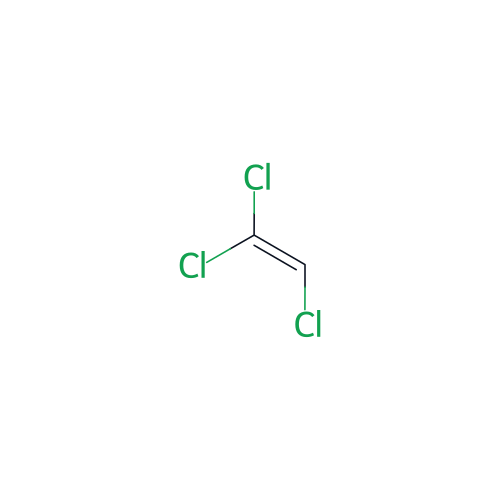
Key facts
What buyers check first
- Appearance
- Colorless liquid (unless dyed blue)
- Melting point
- -84.7 °C
- Boiling point
- 87.2 °C
- Density
- Relative density (water = 1): 1.5 (20 °C)
- Flash point
- >93.3
- HS code
- 290322
- Category
- Chlorinated and fluorinated solvents
- UN number
- UN 1710

What is Trichloroethylene?
Plain description, key identifiers and synonyms
Trichloroethene is a member of the class of chloroethenes that is ethene substituted by chloro groups at positions 1, 1 and 2. It has a role as an inhalation anaesthetic and a mouse metabolite.
Identifiers
Registry numbers, names and line notations, tap to copy
- IUPAC name
- 1,1,2-trichloroethene
- CAS number
- 79-01-6 CAS number cross-checkedOther or deprecated CAS: 123919-09-5
- EC number
- 201-167-4
- Molecular formula
- C2HCl3
- UNII
- 290YE8AR51
- MDL number
- MFCD00000838
- InChIKey
- XSTXAVWGXDQKEL-UHFFFAOYSA-N
- InChI
- InChI=1S/C2HCl3/c3-1-2(4)5/h1H
- SMILES (canonical and isomeric)
- C(=C(Cl)Cl)Cl
Synonyms
- Trichloroethene
- 1,1,2-Trichloroethene
- Ethinyl trichloride
- 1,1,2-Trichloroethylene
- Ethene, trichloro-
- Ethylene trichloride
- Germalgene
- Westrosol
- Densinfluat
- Narkosoid
- Trethylene
- Acetylene trichloride
- Anamenth
- Narcogen
- Trilene
- Trichlorethylene
- Chlorilen
- Chlorylen
- Threthylen
- Trichloran
- Trichloren
- Trielene
- Trielina
- Trieline
- Trimar
Show all 39 synonymsShow fewer synonyms
- Tri-Clene
- triciene
- Trichloraethen
- Benzinol
- Blacosolv
- Blancosolv
- Cecolene
- Circosolv
- Crawhaspol
- Lethurin
- Petzinol
- Threthylene
- Algylen
- Dukeron
Physical and chemical properties
Measured values and descriptors computed from the structure
Physical and chemical properties
Measured values, check the supplier specification for your grade
| Appearance | Colorless liquid (unless dyed blue)exp.Measured value |
|---|---|
| Odour | Ethereal odorexp.Measured value |
| Taste | Sweet burning tasteexp.Measured value |
| Melting point | -84.7 °Cexp.Measured value |
| Boiling point | 87.2 °Cexp.Measured value |
| Density | Relative density (water = 1): 1.5 (20 °C)exp.Measured value |
| Flash point | >93.3exp.Measured value |
| Autoignition temperature | 420 °Cexp.Measured value |
| Solubility | In water, range of 999-1,472 mg/L at 25 °C (average of 1,118 mg/L) /7 measured values/exp.Measured value |
| Vapour pressure | 69 mm Hg at 25 °Cexp.Measured value |
Values vary by grade. Ask suppliers for the COA or TDS of the batch you buy.
Computed descriptors
Calculated from the structure, useful for screening and formulation
| Molecular weight | 131.39 g/molcalc.Computed value |
|---|---|
| Exact mass | 129.9144 Dacalc.Computed value |
| LogP (octanol/water) | 2.5calc.Computed value |
| Topological polar surface area | 0 Ųcalc.Computed value |
| Hydrogen bond donors | 0calc.Computed value |
| Hydrogen bond acceptors | 0calc.Computed value |
| Rotatable bonds | 0calc.Computed value |
| Heavy atoms | 5calc.Computed value |
| Rings | 0calc.Computed value |
| Aromatic rings | 0calc.Computed value |
| Fraction sp3 carbons | 0calc.Computed value |
| Formal charge | 0calc.Computed value |
| Stereocentres | 0calc.Computed value |
| Lipinski rule of five | Passes (0 violations)calc.Computed value |
Calculated for screening. Confirm critical figures with the supplier.
Safety and hazards
GHS classification summary, not a safety data sheet
Hazard statements
- H315Causes skin irritation.
- H319Causes serious eye irritation.
- H336May cause drowsiness or dizziness.
- H341Suspected of causing genetic defects.
- H350May cause cancer.
- H412Harmful to aquatic life with long lasting effects.
Precautionary statements (19)
- P203Obtain, read and follow all safety instructions before use.
- P261Avoid breathing dust, fume, gas, mist, vapours or spray.
- P264Wash skin thoroughly after handling.
- P264 + P265Wash skin thoroughly after handling. Do not touch eyes.
- P271Use only outdoors or in a well-ventilated area.
- P273Avoid release to the environment.
- P280Wear protective gloves, protective clothing, eye protection and face protection.
- P302 + P352If on skin: Wash with plenty of water.
- P304 + P340If inhaled: Remove person to fresh air and keep comfortable for breathing.
- P305 + P351 + P338If in eyes: Rinse cautiously with water for several minutes. Remove contact lenses, if present and easy to do. Continue rinsing.
- P318If exposed or concerned, get medical advice.
- P319Get medical help if you feel unwell.
- P321Specific treatment (see supplemental first aid instructions on the label).
- P332 + P317If skin irritation occurs: Get medical help.
- P337 + P317If eye irritation persists: Get medical help.
- P362 + P364Take off contaminated clothing. And wash it before reuse.
- P403 + P233Store in a well-ventilated place. Keep container tightly closed.
- P405Store locked up.
- P501Dispose of contents and container in accordance with local regulations.
- UN number
- UN 1710
- Transport hazard class
- 6.1
- Packing group
- III
GHS classification summary, not a safety data sheet (SDS). Classifications can differ by supplier, grade and concentration. Always check the supplier's SDS.
Full safety data and first aidTrichloroethylene suppliers
Sponsored listings first, then the documented ranking: membership, verification, replies, completeness, freshness and ratings
- India, ChennaiUnclaimed profileTrichloroethyleneGrade, purity and minimum order on requestPrice on request
- United States, Powell ManufacturerUnclaimed profileTrichloroethyleneGrade, purity and minimum order on requestPrice on request
- France, CourbevoieUnclaimed profileTrichloroethyleneGrade, purity and minimum order on requestPrice on request
- Thailand, SamphanthawongUnclaimed profileTrichloroethyleneGrade, purity and minimum order on requestPrice on request
- United StatesUnclaimed profileTrichloroetheneGrade, purity and minimum order on requestPrice on request
- United StatesUnclaimed profileTrichloroethyleneGrade, purity and minimum order on requestPrice on request
- ChinaUnclaimed profileTrichloroethyleneGrade, purity and minimum order on requestPrice on request
- United States, Fort Worth ManufacturerUnclaimed profileTrichloroethyleneGrade, purity and minimum order on requestPrice on request
- India, Vadodara ManufacturerUnclaimed profileTrichloroethyleneGrade, purity and minimum order on requestPrice on request
- India, Mira BhayandarUnclaimed profileTrichloroethyleneGrade, purity and minimum order on requestPrice on request
Suppliers marked Unclaimed profile have not claimed their profile yet. They are not verified by CompoundList, their offers are price on request and details may have changed, so please confirm them with the supplier. Company representatives can claim a profile with a business email on the company's own website domain. Our team verifies each claim and sends the result by email.
Where suppliers are based
320 suppliers in 43 countries
- United States75
- India66
- China46
- Turkey11
- Canada10
- Thailand10
- and 37 more countries
Send one request to many suppliers
Choose up to 10 suppliers or let us match your request. Compare quotes side by side, free.
Trichloroethylene price
Indicative price range per kg from live supplier offers
Suppliers quote this chemical on request. Send one free request and compare quotes side by side.
Uses and applications
What the substance is used for, by industry and function
Trichloroethylene is used as chemical intermediate for the production of hydrofluorocarbons (e.g., HFC134a, HFC125), monochloroacetic acid, blowing agents, flame retardants, and some agricultural chemicals. The other major use is as solvent for vapor degreasing in the metal industry. ... Trichloroethylene is further used in solvent formulations for rubbers, adhesives, industrial paints, and in the manufacture of lithium-ion batteries.
Read more
In the production of poly(vinyl chloride), it serves as a chain-transfer agent to control the molecular mass distribution.
Metal degreasing, extraction solvent for oils, fats, waxes, solvent dyeing, dry-cleaning, refrigerant and heat-exchange liquid, fumigant, cleaning and drying electronic parts, diluent in paints and adhesives, textile processing, chemical intermediate, aerospace operations (flushing liquid oxygen).
Used as household cleaner, with trichloroethane it is used in most typewriter correction fluid.
The main use of trichloroethylene is in the vapor degreasing of metal parts. Trichloroethylene is used in consumer products such as typewriter correction fluids, paint removers/strippers, adhesives, spot removers, and rug-cleaning fluids.
Industrial uses: Refrigerants, Cleaning agent, Absorbent, Laboratory chemicals, Intermediate, Solvent.
Consumer uses: Solvent, Cleaning agent.
Use classes: Volatile organic compounds.
Pharmacological actions
- Anesthetics, Inhalation
- Solvents
Roles
- anaesthetic
- animal metabolite
- eukaryotic metabolite
- general anaesthetic
- inhalation anaesthetic
- mammalian metabolite
- metabolite
- mouse metabolite
- pharmaceutical
Functional uses
- Solubility enhancer
- Solvent
Pharmacology
Trichloroethylene is a synthetic, light sensitive, volatile, colorless, liquid that is miscible with many non-polar organic solvents. Trichloroethylene is used mainly as a degreaser for metal parts. Upon combustion, it produces irritants and toxic gases. Occupational exposure to trichloroethylene is associated with excess incidences of liver cancer, kidney cancer and non-Hodgkin lymphoma. It is reasonably anticipated to be a human carcinogen. (NCI05)
How it is made
The production of trichloroethylene is mainly based on acetylene or ethylene. The acetylene route comprises acetylene chlorination to 1,1,2,2-tetrachloroethane followed by dehydrochlorination to trichloroethylene. In the ethylene-based processes, ethylene or ethylene-based chlorohydrocarbons, preferably 1,2-dichloroethane, are chlorinated or oxychlorinated and dehydrochlorinated in the same reactor. Tetrachloroethylene is obtained as a byproduct in substantial amounts.
Read more
Some production is based on the catalytic hydrogenation of tetrachloroethylene coming from the chlorinolysis of C1 to C3 chlorohydrocarbons.
Until 1968, about 85% of United States production capacity of trichloroethylene was based on acetylene. The acetylene-based process consists of two steps: acetylene is first chlorinated to 1,1,2,2-tetrachloroethane, with a ferric chloride, phosphorus chloride or antimony chloride catalyst, and the product is then dehydrohalogenated to trichloroethylene. The current method of manufacture is from ethylene or 1,2-dichloroethane. In a process used by one plant in the United States, trichloroethylene is produced by noncatalytic chlorination of ethylene dichloride and other C2 hydrocarbons with a mixture of oxygen and chlorine or hydrogen chloride.
Prepn from sym-tetrachlorethane by elimination of (hydrochloric acid) (by boiling with lime) ..., by passing tetrachloroethane vapor over (calcium chloride) catalyst at 300 °C ..., without catalyst at 450-470 °C...
Regulatory status
Inventories, regulations and trade controls that list this substance
Europe
- EU harmonised classification (CLP Annex VI)Index no: 602-027-00-9
Health and food
- EU Cosmetics Regulation Annex II, prohibited in cosmeticsName: Trichloroethylene, Ref no: 645, Annex ref: II/645
United States
- TSCA inventory (USA)Status: Active in US commerce, Regulatory flags: Section 6 risk management rule, significant new use rule
HS code and trade data
Customs classification and reported world trade statistics
Global trade
World import and export statistics for the HS code Trichloroethylene is traded under.
Unsaturated chlorinated derivatives of acyclic hydrocarbons: trichloroethylene
- China57.2%
- Japan18.9%
- United States10.4%
- South Korea9.8%
- India * partner reported8.8%
- Italy7.6%
* Partner reported figures, a lower bound.
The HS code shown for Trichloroethylene is indicative (it was matched by name in the HS nomenclature). Confirm the classification with your customs broker before shipping.
Related chemicals
Parent and salt forms, stereoisomers, similar structures and isomers
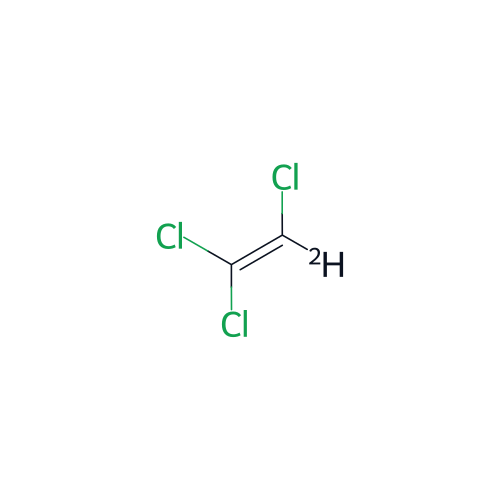
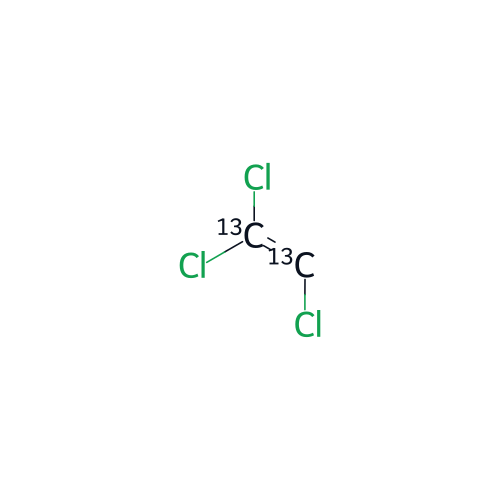
Stereoisomers and isotopic forms
Same connectivity, different stereochemistry or isotopes (same InChIKey skeleton)
Frequently asked questions
Quick answers about Trichloroethylene, based on the data on this page
What is Trichloroethylene?
What is the CAS number of Trichloroethylene?
What is the molecular formula and weight of Trichloroethylene?
What is Trichloroethylene used for?
Is Trichloroethylene hazardous?
What is the HS code of Trichloroethylene?
Where can I buy Trichloroethylene?
Where can I buy Trichloroethylene in India?
What is the price of Trichloroethylene?
Guides for buyers
Practical guides that help when you source, ship or handle Trichloroethylene
- Guide, Trade and logisticsShipping dangerous goods: UN numbers, classes and packing groupsHow the UN dangerous goods system works for chemicals, from the nine classes and UN numbers to packing groups, UN packaging marks, labels, documents and segregation.Read
- Guide, SafetyHow to read a safety data sheet in 10 minutesA section by section method to pull the essentials out of any 16 section SDS: identity, hazards, composition, storage, PPE, properties, transport and emergency measures.Read
- Guide, SafetyGHS pictograms, signal words and hazard statements explainedA practical guide to the nine GHS pictograms, the signal words Danger and Warning, H and P statements, and how to read a chemical label in seconds.Read
Get quotes for Trichloroethylene
Embed this structure on your websiteShow code
Paste this code into your page to show the 2D structure of Trichloroethylene with a 3D view, its CAS number where known and a link back to this page. Free to use with the link kept.
<iframe src="https://www.compoundlist.com/embed/structure/trichloroethylene-79-01-6" title="Trichloroethylene structure on CompoundList" width="360" height="420" style="border:1px solid #E7E2DA;border-radius:12px;max-width:100%" loading="lazy" referrerpolicy="strict-origin-when-cross-origin"></iframe>Explore more in Chlorinated and fluorinated solvents or HS code 290322