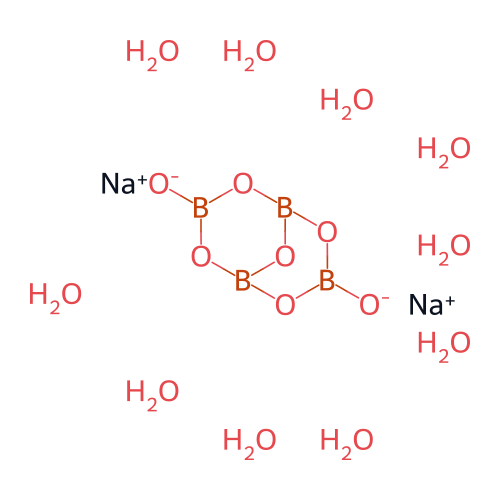
Borax (B4Na2O7.10H2O) safety data
GHS classification summary, not a safety data sheet (SDS). Classifications can differ by supplier, grade and concentration. Always check the supplier's SDS.
GHS classification
Pictograms, signal word and hazard classes of the GHS classification
Hazard classes and categories
- Repr. 1A/1B
Hazard statements
H codes grouped by type. Percentages show the share of classification notifications that report the statement
Health hazards
- H360FDMay damage fertility. May damage the unborn child.
Precautionary statements
P codes for prevention, response, storage and disposal
Prevention
- P203Obtain, read and follow all safety instructions before use.
- P280Wear protective gloves, protective clothing, eye protection and face protection.
Response
- P318If exposed or concerned, get medical advice.
Storage
- P405Store locked up.
Disposal
- P501Dispose of contents and container in accordance with local regulations.
First aid
General first aid measures. Get medical advice if you feel unwell
Handling, storage and disposal
Summaries only, follow the supplier SDS for your grade
Safe handling
General: PREVENT DISPERSION OF DUST! STRICT HYGIENE!
Inhalation: Use local exhaust or breathing protection.
Skin: Protective gloves. Protective clothing.
Eyes: Wear safety spectacles or eye protection in combination with breathing protection.
Ingestion: Do not eat, drink, or smoke during work.
Storage
Well closed. Dry.
Disposal
SRP: Wastewater from contaminant suppression, cleaning of protective clothing/equipment, or contaminated sites should be contained and evaluated for subject chemical or decomposition product concentrations. Concentrations shall be lower than applicable environmental discharge or disposal criteria. Alternatively, pretreatment and/or discharge to a permitted wastewater treatment facility is acceptable only after review by the governing authority and assurance that "pass through" violations will not occur. Due consideration shall be given to remediation worker exposure (inhalation, dermal and ingestion) as well as fate during treatment, transfer and disposal.
Exposure limits and toxicity
Occupational exposure limits and toxicity data
- NIOSH REL, TWA
- 1 mg/m³
- ACGIH TLV, 8-hour TWA
- 2 mg/m³ (inhalable particulate matter)
- ACGIH TLV, STEL
- 6 mg/m³ (inhalable particulate matter)
Short-term exposure: The substance is irritating to the eyes, skin and respiratory tract. The substance may cause effects on the central nervous system and kidneys. This may result in impaired functions. Long-term exposure: Repeated or prolonged contact with skin may cause dermatitis. The substance may have effects on the testes. Animal tests show that this substance possibly causes toxicity to human reproduction or development.
Supplier safety data sheets
SDS documents uploaded by suppliers who list this chemical
No supplier has uploaded an SDS for Borax (B4Na2O7.10H2O) yet. Suppliers usually send one with their quote. Request quotes
Safety questions
Quick answers about handling Borax (B4Na2O7.10H2O) safely
Is Borax (B4Na2O7.10H2O) hazardous?
Which GHS pictograms apply to Borax (B4Na2O7.10H2O)?
How should Borax (B4Na2O7.10H2O) be stored?
Where can I get the SDS for Borax (B4Na2O7.10H2O)?
GHS classification summary, not an SDS. Always check the supplier's SDS. Last updated 7 Oct 2026. Report an error