Boric acid
Also known as Orthoboric acid, Boracic acid, Borofax

Key facts
What buyers check first
- Appearance
- Colorless, transparent crystals or white granules or powder
- Melting point
- 170.9 °C
- Boiling point
- 300 °C
- Density
- 1.5 g/cm³
- Solubility
- Slightly unctuous to touch, volatile with steam, solubility in water increased by hydroc…
- HS code
- 252800
- Category
- Inorganic acids

What is Boric acid?
Plain description, key identifiers and synonyms
Boric acid is a member of boric acids. It has a role as an astringent. It is a conjugate acid of a dihydrogenborate.
Identifiers
Registry numbers, names and line notations, tap to copy
- IUPAC name
- boric acid
- CAS number
- 10043-35-3 CAS number cross-checkedOther or deprecated CAS: 11113-50-1, 13813-79-1
- EC numbers
- 233-139-2, 234-343-4
- Molecular formula
- H3BO3
- UNII
- R57ZHV85D4
- MDL number
- MFCD00011337
- INCI name
- BORIC ACID
- InChIKey
- KGBXLFKZBHKPEV-UHFFFAOYSA-N
- InChI
- InChI=1S/BH3O3/c2-1(3)4/h2-4H
- SMILES (canonical and isomeric)
- B(O)(O)O
Synonyms
- Orthoboric acid
- Boracic acid
- Borofax
- Boron hydroxide
- Boric acid (H3BO3)
- Boron trihydroxide
- Basilit B
- Three Elephant
- Boric acid (BH3O3)
- Trihydroxyborane
- Trihydroxyborone
- Flea Prufe
- Super Flea Eliminator
- Orthoborsaeure
- Borsaeure
- Borsaure
- Orthoboric acid (B(OH)3)
- Dr.'s 1 Flea Terminator DT
- Dr.'s 1 Flea Terminator DFPBO
- Collyrium Eye Wash
- hydrogen orthoborate
- Dr.'s 1 Flea Terminator DF
- B(OH)3
- Boricum acidum
- Dr.'s 1 Flea Terminator DTPBO
Show all 38 synonymsShow fewer synonyms
- trihydroxidoboron
- Orthoboric acid (H3BO3)
- INS NO.284
- Boric acid (h(sub 3)bo(sub 3))
- [B(OH)3]
- (B(OH)3)
- Canagyn
- The Killer
- V-Bella
- Hylafem
- Homeopathic Antifungal
- GYNOX-SOFT
- Hylafem boricum acidum 3x
Physical and chemical properties
Measured values and descriptors computed from the structure
Physical and chemical properties
Measured values, check the supplier specification for your grade
| Appearance | Colorless, transparent crystals or white granules or powderexp.Measured value |
|---|---|
| Odour | Odorlessexp.Measured value |
| Taste | Faintly bitterexp.Measured value |
| Melting point | 170.9 °Cexp.Measured value |
| Boiling point | 300 °Cexp.Measured value |
| Density | 1.5 g/cm³exp.Measured value |
| Solubility | Slightly unctuous to touch, volatile with steam, solubility in water increased by hydrochloric, citric or tartaric acidsexp.Measured value |
| Vapour pressure | 1.6 × 10⁻⁶ mm Hg at 25 °C (2.136 × 10⁻⁴ Pa), log P (in Pa) = 26.83 - 9094/T where T is deg Kexp.Measured value |
Values vary by grade. Ask suppliers for the COA or TDS of the batch you buy.
Computed descriptors
Calculated from the structure, useful for screening and formulation
| Molecular weight | 61.83 g/molcalc.Computed value |
|---|---|
| Exact mass | 62.0175 Dacalc.Computed value |
| LogP (octanol/water) | -2.05calc.Computed value |
| Topological polar surface area | 60.69 Ųcalc.Computed value |
| Hydrogen bond donors | 3calc.Computed value |
| Hydrogen bond acceptors | 3calc.Computed value |
| Rotatable bonds | 0calc.Computed value |
| Heavy atoms | 4calc.Computed value |
| Rings | 0calc.Computed value |
| Aromatic rings | 0calc.Computed value |
| Fraction sp3 carbons | 0calc.Computed value |
| Formal charge | 0calc.Computed value |
| Stereocentres | 0calc.Computed value |
Calculated for screening. Confirm critical figures with the supplier.
Safety and hazards
GHS classification summary, not a safety data sheet
Hazard statements
- H360FDMay damage fertility. May damage the unborn child.
Precautionary statements (5)
- P203Obtain, read and follow all safety instructions before use.
- P280Wear protective gloves, protective clothing, eye protection and face protection.
- P318If exposed or concerned, get medical advice.
- P405Store locked up.
- P501Dispose of contents and container in accordance with local regulations.
GHS classification summary, not a safety data sheet (SDS). Classifications can differ by supplier, grade and concentration. Always check the supplier's SDS.
Full safety data and first aidBoric acid suppliers
Sponsored listings first, then the documented ranking: membership, verification, replies, completeness, freshness and ratings
- India, Mumbai ManufacturerUnclaimed profileBoric AcidGrade, purity and minimum order on requestPrice on request
- United States, West Palm BeachUnclaimed profileBoric AcidGrade, purity and minimum order on requestPrice on request
- United States, TaylorUnclaimed profileBoric AcidGrade, purity and minimum order on requestPrice on request
- Germany, HamburgUnclaimed profileBoric AcidGrade, purity and minimum order on requestPrice on request
- France, CourbevoieUnclaimed profileBoric AcidGrade, purity and minimum order on requestPrice on request
- Belgium, AartselaarUnclaimed profileBoric AcidGrade, purity and minimum order on requestPrice on request
- Poland, WołówUnclaimed profileBoric AcidGrade, purity and minimum order on requestPrice on request
- United StatesUnclaimed profileBoric AcidGrade, purity and minimum order on requestPrice on request
- Price on request
- United StatesUnclaimed profileBoric AcidGrade, purity and minimum order on requestPrice on request
Suppliers marked Unclaimed profile have not claimed their profile yet. They are not verified by CompoundList, their offers are price on request and details may have changed, so please confirm them with the supplier. Company representatives can claim a profile with a business email on the company's own website domain. Our team verifies each claim and sends the result by email.
Where suppliers are based
633 suppliers in 69 countries
- India173
- United States103
- China71
- United Kingdom20
- Germany16
- Thailand13
- and 63 more countries
Send one request to many suppliers
Choose up to 10 suppliers or let us match your request. Compare quotes side by side, free.
Boric acid price
Indicative price range per kg from live supplier offers
Suppliers quote this chemical on request. Send one free request and compare quotes side by side.
Uses and applications
What the substance is used for, by industry and function
Both oil base and water base fracturing fluids are being used in the fracturing industry. Water base, which includes alcohol-water mixtures and low strength acids, make up the majority of treating fluids. The common chemicals added to these fluids are polymers for viscosity development, crosslinkers for viscosity enhancement, pH control chemicals, gel breakers for polymer degradation following the treatment, surfactants, clay stabilizers, alcohol, bactericides, fluid loss additives and friction reducer. (Hydraulic fracturing).
Hydraulic fracturing uses a specially blended liquid which is pumped into a well under extreme pressure causing cracks in rock formations underground. These cracks in the rock then allow oil and natural gas to flow, increasing resource production. ...
Read more
Chemical Name: Boric acid, Chemical Purpose: Maintains fluid viscosity as temperature increases, Product Function: Crosslinker.
For weatherproofing wood and fireproofing fabrics, as a preservative, manufacture of cements, crockery, porcelain, enamels, glass, borates, leather, carpets, hats, soaps, artificial gems, in nickeling baths, cosmetics, printing and dyeing, painting, photography, for impregnating wicks, electric condensers, hardening steel. Also used as insecticide for cockroaches and black carpet beetles.
Industrial uses: Processing aids not otherwise specified, Plating agent, Chemical reaction regulator, Bleaching agent, Fuel agents, pH regulating agent, Binder, Other.
Consumer uses: Chemical reaction regulator, pH regulating agent, Bleaching agent, Tanning agents not otherwise specified, Other, Lubricating agent, Anti-adhesive/cohesive, Adhesion/cohesion promoter.
Industries and functions
Cosmetic ingredient, INCI name BORIC ACID(antimicrobial, buffering, denaturant)
Pharmacological actions
- Insecticides
Roles
- additive
- astringent
- pharmaceutical
- plastic additive
- plastic heat stabilizer
Functional uses
- Binder
- Biocide
- Chelating agent
- Flame retardant
- Lubricating agent
- Stabilizing agent
- pH regulating agent
Cosmetic functions
- Antimicrobial
- Buffering
- Denaturant
Pharmacology
Boric Acid is a weakly acidic hydrate of boric oxide with mild antiseptic, antifungal, and antiviral properties. The exact mechanism of action of boric acid is unknown, generally cytotoxic to all cells. It is used in the treatment of yeast infections and cold sores.
How it is made
Boric acid is manufactured industrially from borate minerals and brines. Alkali and alkaline-earth metal borates, such as borax, kernite, colemanite, ascharite, ulexite, or hydroboracite, react with strong mineral acids to form boric acid. In the United States boric acid is made primarily from sodium borate minerals, whereas in Europe it is made from colemanite imported from Turkey.
(1) By adding hydrochloric or sulfuric acid to a solution of borax and crystallizing.
Read more
(2) From weak borax brines, by extraction with a kerosine solution of chelating agent such as 2-ethyl-1,3-hexanediol, or other polyols. Borates are stripped from the chelate by sulfuric acid
Boric acid is produced mainly from sodium- or calcium-containing borate ores. The mined ore is crushed and ground before being reacted with sulfuric acid in the presence of a hot aqueous recycled liquor containing some boric acid. The resultant slurry contains insoluble gangue and either calcium or sodium sulfate by-product. After separation of unwanted insoluble gangue, recovery of the boric acid product is similar to that for borax.
Regulatory status
Inventories, regulations and trade controls that list this substance
Europe
- EU harmonised classification (CLP Annex VI)Index no: 005-007-00-2[2]
Health and food
- EU cosmetic ingredient inventory
- EU Cosmetics Regulation Annex II, prohibited in cosmeticsName: Boric acid [1], Boric acid [2], Ref no: 1395, Annex ref: II/1395
- Active ingredient in FDA approved drug labels
- Food additive
United States
- Safer Choice ingredient list (USA)
- TSCA inventory (USA)Status: Active in US commerce
HS code and trade data
Customs classification and reported world trade statistics
Global trade
World import and export statistics for the HS code Boric acid is traded under.
Natural boric acid containing not more than 85 % of H3BO3 calculated on the dry weight
* Partner reported figures, a lower bound.
The HS code shown for Boric acid is indicative (it was matched by name in the HS nomenclature). Confirm the classification with your customs broker before shipping.
Related chemicals
Parent and salt forms, stereoisomers, similar structures and isomers
Stereoisomers and isotopic forms
Same connectivity, different stereochemistry or isotopes (same InChIKey skeleton)


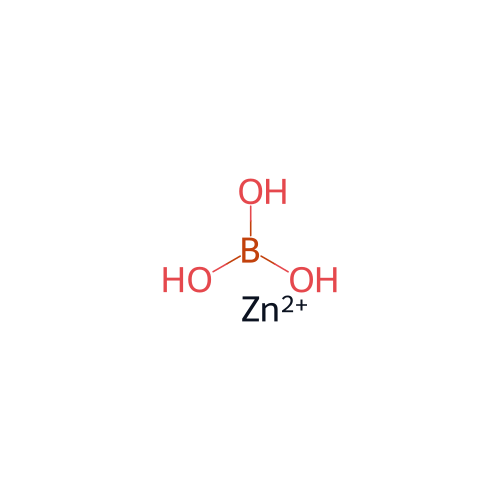
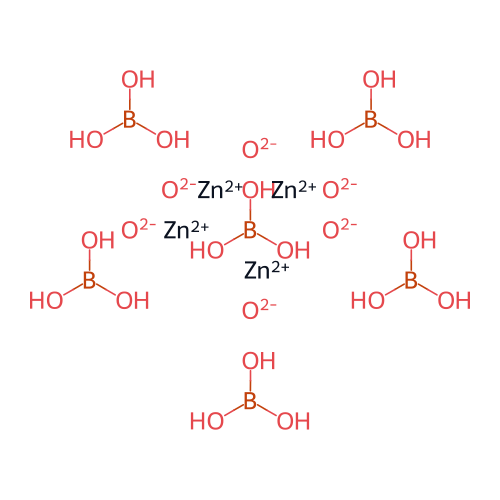
Similar structures
Nearest neighbours by Morgan fingerprint Tanimoto similarity


Frequently asked questions
Quick answers about Boric acid, based on the data on this page
What is Boric acid?
What is the CAS number of Boric acid?
What is the molecular formula and weight of Boric acid?
What is Boric acid used for?
Is Boric acid hazardous?
What is the HS code of Boric acid?
Where can I buy Boric acid?
Where can I buy Boric acid in India?
What is the price of Boric acid?
Guides for buyers
Practical guides that help when you source, ship or handle Boric acid
- Guide, SafetyHow to read a safety data sheet in 10 minutesA section by section method to pull the essentials out of any 16 section SDS: identity, hazards, composition, storage, PPE, properties, transport and emergency measures.Read
- Guide, Trade and logisticsShipping dangerous goods: UN numbers, classes and packing groupsHow the UN dangerous goods system works for chemicals, from the nine classes and UN numbers to packing groups, UN packaging marks, labels, documents and segregation.Read
- Guide, SafetyGHS pictograms, signal words and hazard statements explainedA practical guide to the nine GHS pictograms, the signal words Danger and Warning, H and P statements, and how to read a chemical label in seconds.Read
Get quotes for Boric acid
Embed this structure on your websiteShow code
Paste this code into your page to show the 2D structure of Boric acid with a 3D view, its CAS number where known and a link back to this page. Free to use with the link kept.
<iframe src="https://www.compoundlist.com/embed/structure/boric-acid-10043-35-3" title="Boric acid structure on CompoundList" width="360" height="420" style="border:1px solid #E7E2DA;border-radius:12px;max-width:100%" loading="lazy" referrerpolicy="strict-origin-when-cross-origin"></iframe>Explore more in Inorganic acids or HS code 252800