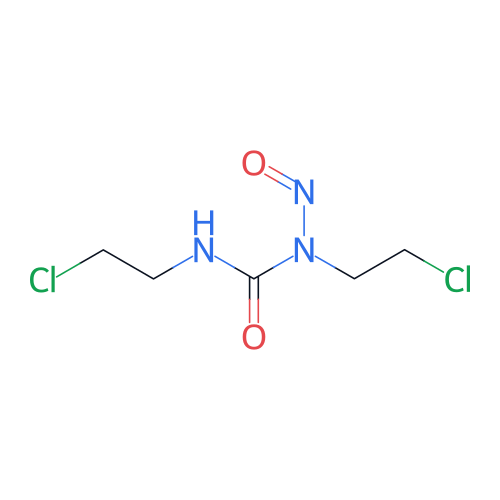
Carmustine safety data
GHS classification summary, not a safety data sheet (SDS). Classifications can differ by supplier, grade and concentration. Always check the supplier's SDS.
GHS classification
Pictograms, signal word and hazard classes of the GHS classification
Hazard classes and categories
- Acute Tox. 1/2 (oral)
- Carc. 1A/1B
- Repr. 1A/1B
Hazard statements
H codes grouped by type. Percentages show the share of classification notifications that report the statement
Health hazards
- H300Fatal if swallowed.
- H350May cause cancer.
- H360May damage fertility or the unborn child.
Precautionary statements
P codes for prevention, response, storage and disposal
Prevention
- P203Obtain, read and follow all safety instructions before use.
- P264Wash skin thoroughly after handling.
- P270Do not eat, drink or smoke when using this product.
- P280Wear protective gloves, protective clothing, eye protection and face protection.
Response
- P301 + P316If swallowed: Get emergency medical help immediately.
- P318If exposed or concerned, get medical advice.
- P321Specific treatment (see supplemental first aid instructions on the label).
- P330Rinse mouth.
Storage
- P405Store locked up.
Disposal
- P501Dispose of contents and container in accordance with local regulations.
First aid
General first aid measures. Get medical advice if you feel unwell
Handling, storage and disposal
Summaries only, follow the supplier SDS for your grade
Safe handling
Handle with gloves. Face shield and safety glasses. Wear self contained breathing apparatus for fire fighting if necessary.
Storage
Carmustine powder must be refrigerated at 2 - 8 °C. Both the powder and its solutions must be protected from light. Carmustine wafers must be stored at a temperature of -20 °C or less. The aluminum foil laminate pouches containing each carmustine wafer should not be opened until immediately prior to the implantation procedure. Unopened foil pouches may be kept at ambient room temperature for up to 6 hours at a time.
Disposal
Dissolve or mix the material with a combustible solvent and burn in a chemical incinerator equipped with an afterburner and scrubber. Observe all federal, state, and local environmental regulations. Contact a licensed professional waste disposal service to dispose of this material. /PRECAUTIONS FOR ANTINEOPLASTIC AGENTS:/ All contaminated disposables should be contained in sealable bags for transfer to larger waste containers. /Antineoplastic agents/
Exposure limits and toxicity
Occupational exposure limits and toxicity data
SYMPTOMS: Symptoms of exposure to this compound may include bone-marrow suppression, delayed onset of leukopenia and thrombocytopenia, cytotoxic effects on the liver, kidneys and central nervous system, nausea, vomiting, flushing of the skin, esophagitis, diarrhea, dyspnea and hepatotoxicity. ACUTE/CHRONIC HAZARDS: When heated to decomposition this compound emits toxic fumes.
Transport information
UN dangerous goods classification for road, sea and air
- UN number
- UN 2811
Shipping rules depend on mode, quantity and packaging. Confirm the classification with the supplier SDS and your freight forwarder.
Supplier safety data sheets
SDS documents uploaded by suppliers who list this chemical
No supplier has uploaded an SDS for Carmustine yet. Suppliers usually send one with their quote. Request quotes
Safety questions
Quick answers about handling Carmustine safely
Is Carmustine hazardous?
Which GHS pictograms apply to Carmustine?
What is the UN number of Carmustine?
How should Carmustine be stored?
Where can I get the SDS for Carmustine?
GHS classification summary, not an SDS. Always check the supplier's SDS. Last updated 7 Oct 2026. Report an error