Cyclonite
Also known as Hexogen, Cyclotrimethylenetrinitramine, Hexahydro-1,3,5-trinitro-1,3,5-triazine
Key facts
What buyers check first
- Appearance
- White, crystalline powder
- Melting point
- 205.5 °C
- Boiling point
- 276 to 280
- Density
- 1.82 g/cm³ at 20 °C
- Flash point
- Explodes
- HS code
- 293369
- Category
- Rodenticides, nematicides and other pesticides
- UN number
- UN 0483
What is Cyclonite?
Plain description, key identifiers and synonyms
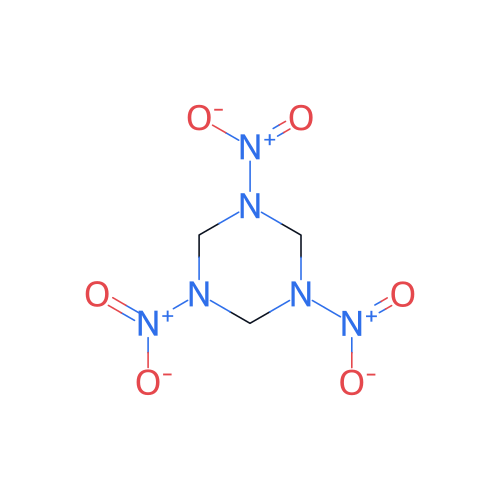
1,3,5-trinitro-1,3,5-triazinane is an N-nitro compound that is 1,3,5-triazinane in which all three of the hydrogens attached to the nitrogens have been replaced by nitro groups. It is widely used in both industrial and military explosives. It has a role as an explosive. It is a member of 1,3,5-triazinanes and a N-nitro compound.
Cyclonite is an explosive chemical compound.
Identifiers
Registry numbers, names and line notations, tap to copy
- IUPAC name
- 1,3,5-trinitro-1,3,5-triazinane
- CAS number
- 121-82-4 CAS number cross-checked
- EC number
- 204-500-1
- Molecular formula
- C3H6N6O6
- UNII
- W91SSV5831
- InChIKey
- XTFIVUDBNACUBN-UHFFFAOYSA-N
- InChI
- InChI=1S/C3H6N6O6/c10-7(11)4-1-5(8(12)13)3-6(2-4)9(14)15/h1-3H2
- SMILES (canonical and isomeric)
- C1N(CN(CN1[N+](=O)[O-])[N+](=O)[O-])[N+](=O)[O-]
Synonyms
- Hexogen
- Cyclotrimethylenetrinitramine
- Hexahydro-1,3,5-trinitro-1,3,5-triazine
- Geksogen
- Trimethylenetrinitramine
- Hexogen 5W
- Heksogen
- Hexogeen
- Hexogen (Explosive)
- 1,3,5-Trinitro-1,3,5-triazacyclohexane
- Trimethyleentrinitramine
- Cyclotrimethylenenitramine
- Cyklonit
- Hexahydro-1,3,5-trinitro-s-triazine
- 1,3,5-Triazine, hexahydro-1,3,5-trinitro-
- 1,3,5-Trinitrohexahydro-s-triazine
- Trinitrotrimethylenetriamine
- PBX(AF) 108
- Trinitrocyclotrimethylene triamine
- sym-Trimethylene trinitramine
- 1,3,5-Triaza-1,3,5-trinitrocyclohexane
- 1,3,5-Trinitrohexahydro-1,3,5-triazine
- CX 84A
- PBXW 108(E)
- A 3 (explosive)
Show all 38 synonymsShow fewer synonyms
- KHP 281
- sym-Trimethylenetrinitramine
- s-Triazine, hexahydro-1,3,5-trinitro-
- Esaidro-1,3,5-trinitro-1,3,5-triazina
- Hexahydro-1,3,5-trinitro-1,3,5-triazin
- Perhydro-1,3,5-trinitro-1,3,5-triazine
- cyclotrimethylene trinitramine
- Hexolite
- 1,3,5-Trinitro-1,3,5-triazinane
- RDX
- Cyclonit
- PE 4
- 1,3,5-Trinitroperhydro-1,3,5-triazine
Physical and chemical properties
Measured values and descriptors computed from the structure
Physical and chemical properties
Measured values, check the supplier specification for your grade
| Appearance | White, crystalline powderexp.Measured value |
|---|---|
| Melting point | 205.5 °Cexp.Measured value |
| Boiling point | 276 to 280exp.Measured value |
| Density | 1.82 g/cm³ at 20 °Cexp.Measured value |
| Flash point | Explodesexp.Measured value |
| Solubility | In water, 59.7 mg/L at 25 °Cexp.Measured value |
| Vapour pressure | 4.10 × 10⁻⁹ mm Hg at 20 °Cexp.Measured value |
Values vary by grade. Ask suppliers for the COA or TDS of the batch you buy.
Computed descriptors
Calculated from the structure, useful for screening and formulation
| Molecular weight | 222.12 g/molcalc.Computed value |
|---|---|
| Exact mass | 222.0349 Dacalc.Computed value |
| LogP (octanol/water) | -1.65calc.Computed value |
| Topological polar surface area | 139.1 Ųcalc.Computed value |
| Hydrogen bond donors | 0calc.Computed value |
| Hydrogen bond acceptors | 6calc.Computed value |
| Rotatable bonds | 3calc.Computed value |
| Heavy atoms | 15calc.Computed value |
| Rings | 1calc.Computed value |
| Aromatic rings | 0calc.Computed value |
| Fraction sp3 carbons | 1calc.Computed value |
| Formal charge | 0calc.Computed value |
| Stereocentres | 0calc.Computed value |
| Lipinski rule of five | Passes (0 violations)calc.Computed value |
Calculated for screening. Confirm critical figures with the supplier.
Murcko scaffold
The ring system that remains when every side chain is removed
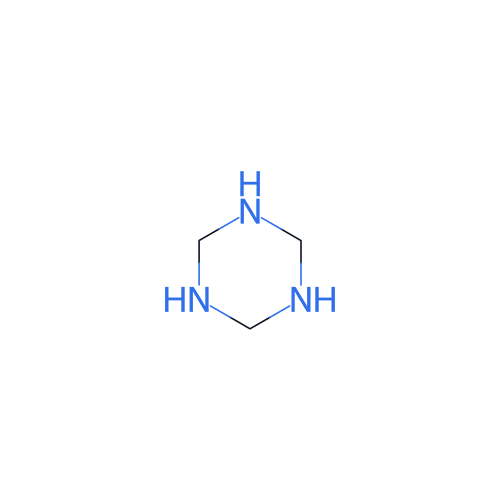
C1NCNCN1
1 ring, 6 atoms, the Cyclotrimethylenetriamine ring system.
96 other chemicals share this scaffoldSafety and hazards
GHS classification summary, not a safety data sheet
Hazard statements
- H201Explosive, mass explosion hazard.
- H301 + H311 + H331Toxic if swallowed. Toxic in contact with skin. Toxic if inhaled.
- H301Toxic if swallowed.
- H311Toxic in contact with skin.
- H315Causes skin irritation.
- H331Toxic if inhaled.
- H370Causes damage to organs.
- H372Causes damage to organs through prolonged or repeated exposure.
- H373May cause damage to organs through prolonged or repeated exposure.
Precautionary statements (29)
- P210Keep away from heat, hot surfaces, sparks, open flames and other ignition sources. No smoking.
- P230Keep wetted with water or another suitable desensitiser.
- P240Ground and bond container and receiving equipment.
- P250Do not subject to grinding, shock or friction.
- P260Do not breathe dust, fume, gas, mist, vapours or spray.
- P261Avoid breathing dust, fume, gas, mist, vapours or spray.
- P262Do not get in eyes, on skin, or on clothing.
- P264Wash skin thoroughly after handling.
- P270Do not eat, drink or smoke when using this product.
- P271Use only outdoors or in a well-ventilated area.
- P280Wear protective gloves, protective clothing, eye protection and face protection.
- P301 + P316If swallowed: Get emergency medical help immediately.
- P302 + P352If on skin: Wash with plenty of water.
- P304 + P340If inhaled: Remove person to fresh air and keep comfortable for breathing.
- P308 + P316If exposed or concerned: Get emergency medical help immediately.
- P316Get emergency medical help immediately.
- P319Get medical help if you feel unwell.
- P321Specific treatment (see supplemental first aid instructions on the label).
- P330Rinse mouth.
- P332 + P317If skin irritation occurs: Get medical help.
- P361 + P364Take off immediately all contaminated clothing. And wash it before reuse.
- P362 + P364Take off contaminated clothing. And wash it before reuse.
- P370 + P380In case of fire: Evacuate area.
- P372Explosion risk.
- P373Do not fight fire when fire reaches explosives.
- P401Store in accordance with local regulations.
- P403 + P233Store in a well-ventilated place. Keep container tightly closed.
- P405Store locked up.
- P501Dispose of contents and container in accordance with local regulations.
- UN number
- UN 0483
- Transport hazard class
- 1.1
GHS classification summary, not a safety data sheet (SDS). Classifications can differ by supplier, grade and concentration. Always check the supplier's SDS.
Full safety data and first aidCyclonite suppliers
Trading restrictions apply to this substance
Cyclonite is prohibited on CompoundList. Listings, quotes and messages are disabled. This page is kept for information only.
Listing and enquiries are not allowed for this substance.
Reference: UN Recommendations on the Transport of Dangerous Goods Class 1 high explosive
Our policy on controlled substancesCyclonite price
Indicative price range per kg from live supplier offers
Prices are not shown for prohibited substances.
Uses and applications
What the substance is used for, by industry and function
High explosive.
It has been widely used as a base charge for detonators and as an ingredient of bursting-charge and plastic explosives by the military.
Industrial uses: Energy Releasers (explosives, motive propellant), Fuel.
Consumer uses: Energy Releasers (explosives, motive propellant).
Industries and functions
Pharmacological actions
- Explosive Agents
- Rodenticides
Roles
- explosive
How it is made
Manufactured by nitrolysis of hexamine with nitric acid alone or with acetic anhydride.
Prepared by treating methenamine with fuming nitric acid
Manufactured by nitrolysis of hexamethylenetetramine.
Regulatory status
Inventories, regulations and trade controls that list this substance
Cyclonite is prohibited on CompoundList. Listings, quotes and messages are disabled. This page is kept for information only.
Listing and enquiries are not allowed for this substance.
Reference: UN Recommendations on the Transport of Dangerous Goods Class 1 high explosive
Our policy on controlled substancesControls
- Explosives or explosive precursor control list
United States
- TSCA inventory (USA)Status: Active in US commerce
HS code and trade data
Customs classification and reported world trade statistics
Global trade
World import and export statistics for the HS code Cyclonite is traded under.
Compounds containing an unfused triazine ring (whether or not hydrogenated) in the…
- United States13.5%
- Brazil9.6%
- Germany9.5%
* Partner reported figures, a lower bound.
The HS code shown for Cyclonite is indicative (it was assigned by structure rules). Confirm the classification with your customs broker before shipping.
Related chemicals
Parent and salt forms, stereoisomers, similar structures and isomers
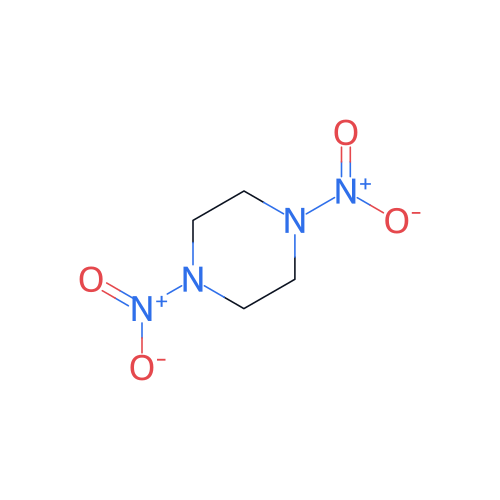
Similar structures
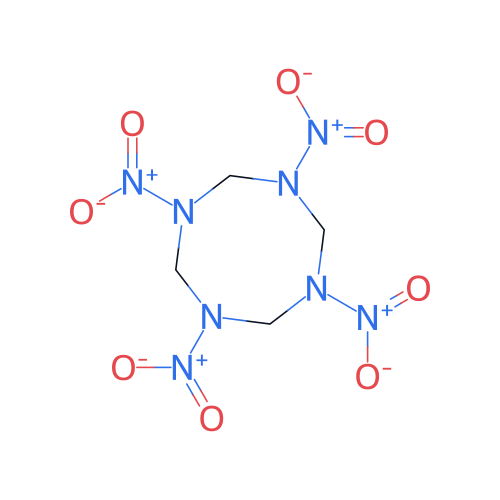
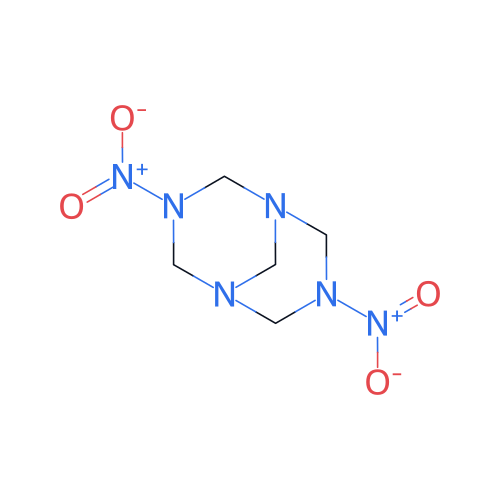
Nearest neighbours by Morgan fingerprint Tanimoto similarity
Frequently asked questions
Quick answers about Cyclonite, based on the data on this page
What is Cyclonite?
What is the CAS number of Cyclonite?
What is the molecular formula and weight of Cyclonite?
What is Cyclonite used for?
Is Cyclonite hazardous?
What is the HS code of Cyclonite?
Can I buy Cyclonite on CompoundList?
Guides for buyers
Practical guides that help when you source, ship or handle Cyclonite
- Guide, SafetyHow to read a safety data sheet in 10 minutesA section by section method to pull the essentials out of any 16 section SDS: identity, hazards, composition, storage, PPE, properties, transport and emergency measures.Read
- Guide, Trade and logisticsShipping dangerous goods: UN numbers, classes and packing groupsHow the UN dangerous goods system works for chemicals, from the nine classes and UN numbers to packing groups, UN packaging marks, labels, documents and segregation.Read
- Guide, SafetyGHS pictograms, signal words and hazard statements explainedA practical guide to the nine GHS pictograms, the signal words Danger and Warning, H and P statements, and how to read a chemical label in seconds.Read
Explore more in Rodenticides, nematicides and other pesticides or HS code 293369