N,N'-Diacetylbenzidine safety data
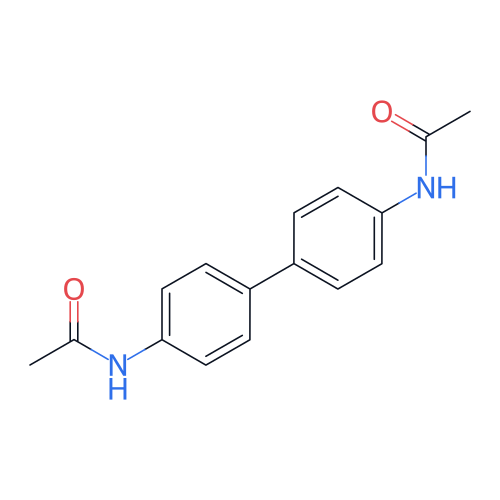
GHS classification summary, not a safety data sheet (SDS). Classifications can differ by supplier, grade and concentration. Always check the supplier's SDS.
GHS classification
Pictograms, signal word and hazard classes of the GHS classification
Hazard classes and categories
- Acute Tox. 4 (oral)
- Acute Tox. 4 (dermal)
- Acute Tox. 4 (inhalation)
- Muta. 2
- Carc. 1A/1B
Hazard statements
H codes grouped by type. Percentages show the share of classification notifications that report the statement
Health hazards
- H302Harmful if swallowed.
- H312Harmful in contact with skin.
- H332Harmful if inhaled.
- H341Suspected of causing genetic defects.
- H350May cause cancer.
Precautionary statements
P codes for prevention, response, storage and disposal
Prevention
- P203Obtain, read and follow all safety instructions before use.
- P261Avoid breathing dust, fume, gas, mist, vapours or spray.
- P264Wash skin thoroughly after handling.
- P270Do not eat, drink or smoke when using this product.
- P271Use only outdoors or in a well-ventilated area.
- P280Wear protective gloves, protective clothing, eye protection and face protection.
Response
- P301 + P317If swallowed: Get medical help.
- P302 + P352If on skin: Wash with plenty of water.
- P304 + P340If inhaled: Remove person to fresh air and keep comfortable for breathing.
- P317Get medical help.
- P318If exposed or concerned, get medical advice.
- P321Specific treatment (see supplemental first aid instructions on the label).
- P330Rinse mouth.
- P362 + P364Take off contaminated clothing. And wash it before reuse.
Storage
- P405Store locked up.
Disposal
- P501Dispose of contents and container in accordance with local regulations.
Handling, storage and disposal
Summaries only, follow the supplier SDS for your grade
Safe handling
General: AVOID ALL CONTACT!
Inhalation: Use closed system or ventilation.
Skin: Protective gloves. Protective clothing.
Eyes: Wear safety spectacles.
Ingestion: Do not eat, drink, or smoke during work. Wash hands before eating.
Storage
Separated from strong oxidants and food and feedstuffs. Well closed. Store in an area without drain or sewer access.
Disposal
PRECAUTIONS FOR "CARCINOGENS": There is no universal method of disposal that has been proved satisfactory for all carcinogenic compounds & specific methods of chem destruction... published have not been tested on all kinds of carcinogen-containing waste.... Summary of avail methods & recommendations... /given/ must be treated as guide only. /Chemical Carcinogens/ PRECAUTIONS FOR "CARCINOGENS": Total destruction... by incineration may be only feasible method for disposal of contaminated laboratory waste from biological expt. However, not all incinerators are suitable.... Most efficient type... is probably the gas-fired type, in which a first-stage combustion with a less than stoichiometric air:fuel ratio is followed by a second stage with excess air.
Exposure limits and toxicity
Occupational exposure limits and toxicity data
Short-term exposure: May cause mechanical irritation to the eyes and respiratory tract. Long-term exposure: The substance may have effects on the blood and kidneys. This may result in the formation of methaemoglobin, anaemia and kidney impairment. This substance is possibly carcinogenic to humans.
Supplier safety data sheets
SDS documents uploaded by suppliers who list this chemical
No supplier has uploaded an SDS for N,N'-Diacetylbenzidine yet. Suppliers usually send one with their quote. Request quotes
Safety questions
Quick answers about handling N,N'-Diacetylbenzidine safely
Is N,N'-Diacetylbenzidine hazardous?
Which GHS pictograms apply to N,N'-Diacetylbenzidine?
How should N,N'-Diacetylbenzidine be stored?
Where can I get the SDS for N,N'-Diacetylbenzidine?
GHS classification summary, not an SDS. Always check the supplier's SDS. Last updated 7 Oct 2026. Report an error