Silicon
Also known as Silicon metal, Defoamer S-10, Silicon, elemental
Key facts
What buyers check first
- Appearance
- Black to gray, lustrous, needle-like crystals or octahedral platelets (cubic system), am…
- Melting point
- 1,410 °C
- Boiling point
- 2,355 °C
- Density
- 2.33 g/cm³ at 25 °C/4 °C
- Solubility
- Soluble in molten alkali oxides, practically insoluble in water
- HS code
- 280461
- Category
- Metals, alloys and elements
- UN number
- UN 1346

What is Silicon?
Plain description, key identifiers and synonyms
Silicon atom is a metalloid atom, a nonmetal atom and a carbon group element atom.
Silicon is a chemical element with symbol Si and atomic number 14.
Identifiers
Registry numbers, names and line notations, tap to copy
- IUPAC name
- silicon
- CAS number
- 7440-21-3 CAS number cross-checkedOther or deprecated CAS: 12597-37-4, 90337-93-2
- EC numbers
- 231-130-8, 232-263-4, 680-457-6, 692-536-2
- Molecular formula
- Si
- UNII
- Z4152N8IUI
- MDL number
- MFCD00011228, MFCD00085311
- INCI name
- SILICON
- InChIKey
- XUIMIQQOPSSXEZ-UHFFFAOYSA-N
- InChI
- InChI=1S/Si
- SMILES (canonical and isomeric)
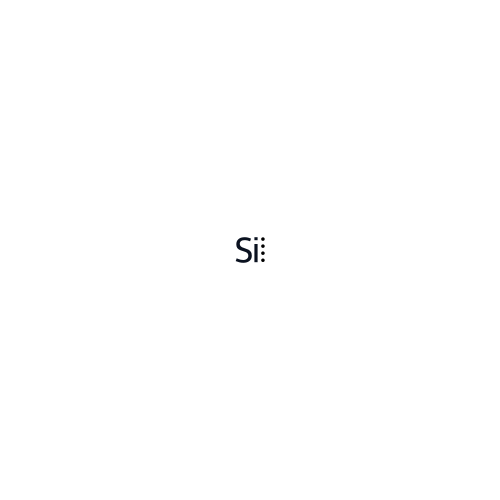
- [Si]
Synonyms
- Silicon metal
- Defoamer S-10
- Silicon, elemental
- Silicium
- Silicon 28
- Elemental silicon
- Meteorite
- Silicium Metallicum
- Meteorite 8133
- Si
- Silicon-28
- Silicone
- Silicon powder
- silicon atom
- 7440-21-3(powder)
- silicio
- Silicon dust
- Silicon powder, crystalline, -325 mesh
- Silicon - Si @ 1000 microg/g in Hydrocarbon Oil
- Silicon Standard: Si @ 1000 microg/mL in H2O, tr. F-
- Silicon Standard: Si @ 10000 microg/mL in H2O, tr. F-
- Silicon Standard: Si @ 5000 microg/g in Hydrocarbon Oil
- Silizium
- Silicon AA Standard: Si @ 1000 microg/mL in H2O, tr. F-
- Silicon element
Show all 37 synonymsShow fewer synonyms
- Silicon chips
- Atomic Silicon
- Element Silicon
- Element:Silicon
- Element-Si
- Element:Si
- Silicon Standard
- Silicon, disks, 15.9mm, thickness 0.38mm, single crystal, n-type, 100%
- Sulfur-Free Silicon Concentrate: Si @ approx. 18 wt% in Hydrocarbons
- Silicon (atomic)
- Silicon Nanopowder
- Si (element)
Physical and chemical properties
Measured values and descriptors computed from the structure
Physical and chemical properties
Measured values, check the supplier specification for your grade
| Appearance | Black to gray, lustrous, needle-like crystals or octahedral platelets (cubic system), amorphous form is dark brownexp.Measured value |
|---|---|
| Melting point | 1,410 °Cexp.Measured value |
| Boiling point | 2,355 °Cexp.Measured value |
| Density | 2.33 g/cm³ at 25 °C/4 °Cexp.Measured value |
| Solubility | Soluble in molten alkali oxides, practically insoluble in waterexp.Measured value |
| Vapour pressure | 1 Pa at 1635 °C, 10 Pa at 1829 °C, 100 Pa at 2066 °C, 1 kPa at 2363 °C, 10 kPa at 2748 °C, 100 kPa at 3264 °Cexp.Measured value |
Values vary by grade. Ask suppliers for the COA or TDS of the batch you buy.
Computed descriptors
Calculated from the structure, useful for screening and formulation
| Molecular weight | 28.09 g/molcalc.Computed value |
|---|---|
| Exact mass | 27.9769 Dacalc.Computed value |
| LogP (octanol/water) | -0.38calc.Computed value |
| Topological polar surface area | 0 Ųcalc.Computed value |
| Hydrogen bond donors | 0calc.Computed value |
| Hydrogen bond acceptors | 0calc.Computed value |
| Rotatable bonds | 0calc.Computed value |
| Heavy atoms | 1calc.Computed value |
| Rings | 0calc.Computed value |
| Aromatic rings | 0calc.Computed value |
| Fraction sp3 carbons | 0calc.Computed value |
| Formal charge | 0calc.Computed value |
| Stereocentres | 0calc.Computed value |
Calculated for screening. Confirm critical figures with the supplier.
Safety and hazards
GHS classification summary, not a safety data sheet
- UN number
- UN 1346
- Transport hazard class
- 4.1
- Packing group
- III
GHS classification summary, not a safety data sheet (SDS). Classifications can differ by supplier, grade and concentration. Always check the supplier's SDS.
Full safety data and first aidSilicon suppliers
Sponsored listings first, then the documented ranking: membership, verification, replies, completeness, freshness and ratings
- Price on request
- United Kingdom ManufacturerUnclaimed profileSiliconGrade, purity and minimum order on requestPrice on request
- Price on request
- China, YantaiUnclaimed profileSiliconGrade, purity and minimum order on requestPrice on request
- China, Hunan Changsha ManufacturerUnclaimed profileSiliconGrade, purity and minimum order on requestPrice on request
- Canada, Guelph ManufacturerUnclaimed profileSiliconGrade, purity and minimum order on requestPrice on request
- Price on request
- ManufacturerUnclaimed profileSiliconGrade, purity and minimum order on requestPrice on request
- China, ChenzhouUnclaimed profileSilicon MetalGrade, purity and minimum order on requestPrice on request
- Japan, Chiyoda-Ku ManufacturerUnclaimed profileSilicon MetalGrade, purity and minimum order on requestPrice on request
Suppliers marked Unclaimed profile have not claimed their profile yet. They are not verified by CompoundList, their offers are price on request and details may have changed, so please confirm them with the supplier. Company representatives can claim a profile with a business email on the company's own website domain. Our team verifies each claim and sends the result by email.
Where suppliers are based
100 suppliers in 17 countries
Send one request to many suppliers
Choose up to 10 suppliers or let us match your request. Compare quotes side by side, free.
Silicon price
Indicative price range per kg from live supplier offers
Suppliers quote this chemical on request. Send one free request and compare quotes side by side.
Uses and applications
What the substance is used for, by industry and function
Silicon-used to make some the earliest photovoltaic (PV) devices-is still the most popular material for solar cells. To be useful as a semiconductor material in solar cells, silicon must be refined to a purity of 99.9999%.
In making silanes and silicones ..., In the manufacturing transistors, silicon diodes and similar semiconductors. For making alloys such as ferrosilicon, silicon bronze, silicon copper. As a reducing agent like aluminum in high temperature reactions.
Semiconductor in solid-state devices (transistors, photovoltaic cells, computer circuitry, rectifiers, etc.), organosilicon compounds, silicon carbide, alloying agent in steels, aluminum, copper, bronze, and iron (ferrosilicon), cermets and special refractories, halogenated silanes, spring steels, deoxidizer in steel manufacture.
Industrial uses: Intermediate, Heat stabilizer, Hardener, Flocculating agent, Flame retardant, Filler, Soil amendments (fertilizers).
Consumer uses: Semiconductor and photovoltaic agent, Other, Alloys, Flocculating agent, Intermediate, Filler, Soil amendments (fertilizers).
Industries and functions
Cosmetic ingredient, INCI name SILICON(abrasive)
Pharmacological actions
- Trace Elements
Functional uses
- Abrasive
- Alloying element
- Anti-adhesive/cohesive
- Defoamer
- Dispersing agent
- Filler
- Flow promoter
- Hardener
- Reducing agent
- Surface modifier
- Waterproofing agent
- Wetting agent (non-aqueous)
Cosmetic functions
- Abrasive
How it is made
Prepared industrially by carbon reduction of silica in an electric arc furnace. Purification by zone refining. Very pure silicon is obtained by decomposition of silicon tetrachloride. ... By thermal decomposition of a chlorosilane.
Amorphous silicon can be prepd as brown powder which can be easily melted or vaporized. ... Czochralski process commonly used to produce single crystals ... For solid-state or semiconductor devices. Hyperpure ...
Read more
Prepd by thermal decomp of ultra-pure trichlorosilane in a hydrogen atmosphere & by vacuum zone float process.
Crystalline silicon is made commercially (96-98% pure) in an electric furnace by heating SiO2 with carbon, followed by zone refining. It can be purified to 99.7% by leaching. The ultrapure semiconductor grade (99.97%) is obtained by reduction of purified silicon tetrachloride or trichlorosilane with purified hydrogen, the silicon is deposited on hot filaments (800 °C) of tantalum or tungsten. In a one-step method, sodium fluorosilicate is reacted with sodium, the heat produced being sufficient to form silicon tetrafluoride, this, when reacted with sodium yields high-purity silicon and sodium fluoride. The process requires no heat except that produced by the original reaction.
Regulatory status
Inventories, regulations and trade controls that list this substance
Health and food
- EU cosmetic ingredient inventory
- Active ingredient in FDA approved drug labels
United States
- TSCA inventory (USA)Status: Active in US commerce
HS code and trade data
Customs classification and reported world trade statistics
Global trade
World import and export statistics for the HS code Silicon is traded under.
Silicon, containing by weight not less than 99,99 % of silicon
- Germany33.9%
- United States30.3%
- China16.9%
* Partner reported figures, a lower bound.
The HS code shown for Silicon is indicative (it was matched by name in the HS nomenclature). Confirm the classification with your customs broker before shipping.
Related chemicals
Parent and salt forms, stereoisomers, similar structures and isomers
Stereoisomers and isotopic forms
Same connectivity, different stereochemistry or isotopes (same InChIKey skeleton)
Similar structures
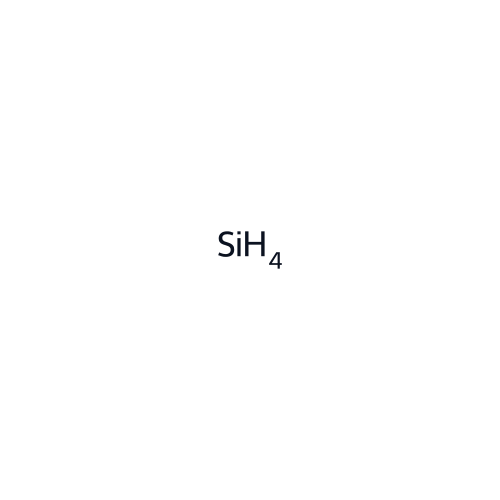
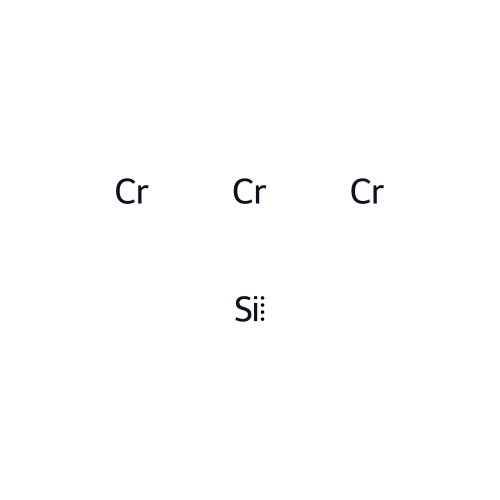
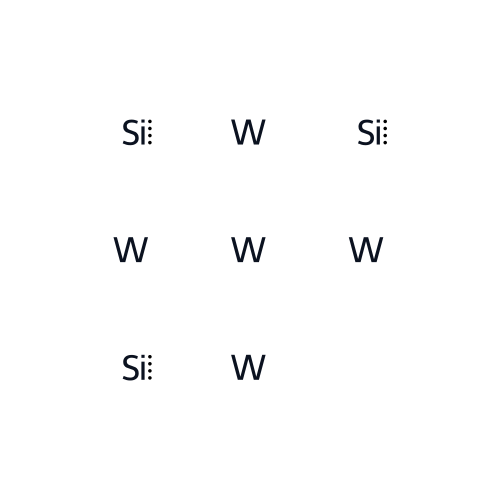
Nearest neighbours by Morgan fingerprint Tanimoto similarity



Frequently asked questions
Quick answers about Silicon, based on the data on this page
What is Silicon?
What is the CAS number of Silicon?
What is the molecular formula and weight of Silicon?
What is Silicon used for?
Is Silicon hazardous?
What is the HS code of Silicon?
Where can I buy Silicon?
Where can I buy Silicon in India?
What is the price of Silicon?
Guides for buyers
Practical guides that help when you source, ship or handle Silicon
- Article, QualityPharma grades explained: IP vs BP vs USP vs EPWhat the Indian, British, US and European pharmacopoeias are, how their monographs differ, what multi grade claims mean and why a grade alone does not make a product fit for medicines.Read
- Article, SourcingHow to write an RFQ that gets fast and accurate quotesWhat suppliers need to quote quickly and comparably: exact product identity, quantity and packing, delivery terms, documents, samples and payment, with a ready to use template.Read
- Guide, Trade and logisticsShipping dangerous goods: UN numbers, classes and packing groupsHow the UN dangerous goods system works for chemicals, from the nine classes and UN numbers to packing groups, UN packaging marks, labels, documents and segregation.Read
Get quotes for Silicon
Embed this structure on your websiteShow code
Paste this code into your page to show the 2D structure of Silicon with a 3D view, its CAS number where known and a link back to this page. Free to use with the link kept.
<iframe src="https://www.compoundlist.com/embed/structure/silicon-7440-21-3" title="Silicon structure on CompoundList" width="360" height="420" style="border:1px solid #E7E2DA;border-radius:12px;max-width:100%" loading="lazy" referrerpolicy="strict-origin-when-cross-origin"></iframe>Explore more in Metals, alloys and elements or HS code 280461