2-Methylhexane safety data
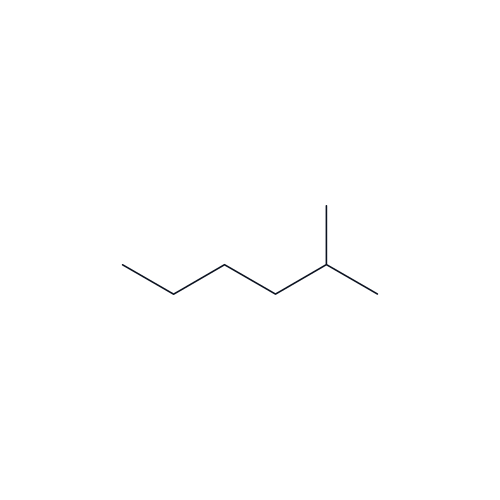
GHS classification summary, not a safety data sheet (SDS). Classifications can differ by supplier, grade and concentration. Always check the supplier's SDS.
GHS classification
Pictograms, signal word and hazard classes of the GHS classification
Hazard classes and categories
- Flam. Liq. 2
- Asp. Tox. 1
- Skin Irrit. 2
- STOT SE 3 (narcotic effects)
- Aquatic Acute 1
- Aquatic Chronic 1
Hazard statements
H codes grouped by type. Percentages show the share of classification notifications that report the statement
Physical hazards
- H225Highly flammable liquid and vapour.
Health hazards
- H304May be fatal if swallowed and enters airways.
- H315Causes skin irritation.
- H336May cause drowsiness or dizziness.
Environmental hazards
- H400Very toxic to aquatic life.
- H410Very toxic to aquatic life with long lasting effects.
Precautionary statements
P codes for prevention, response, storage and disposal
Prevention
- P210Keep away from heat, hot surfaces, sparks, open flames and other ignition sources. No smoking.
- P233Keep container tightly closed.
- P240Ground and bond container and receiving equipment.
- P241Use explosion-proof electrical, ventilating and lighting equipment.
- P242Use non-sparking tools.
- P243Take action to prevent static discharges.
- P261Avoid breathing dust, fume, gas, mist, vapours or spray.
- P264Wash skin thoroughly after handling.
- P271Use only outdoors or in a well-ventilated area.
- P273Avoid release to the environment.
- P280Wear protective gloves, protective clothing, eye protection and face protection.
Response
- P301 + P316If swallowed: Get emergency medical help immediately.
- P302 + P352If on skin: Wash with plenty of water.
- P303 + P361 + P353If on skin (or hair): Take off immediately all contaminated clothing. Rinse skin with water or shower.
- P304 + P340If inhaled: Remove person to fresh air and keep comfortable for breathing.
- P319Get medical help if you feel unwell.
- P321Specific treatment (see supplemental first aid instructions on the label).
- P331Do not induce vomiting.
- P332 + P317If skin irritation occurs: Get medical help.
- P362 + P364Take off contaminated clothing. And wash it before reuse.
- P370 + P378In case of fire: Use appropriate media to extinguish.
- P391Collect spillage.
Storage
- P403 + P233Store in a well-ventilated place. Keep container tightly closed.
- P403 + P235Store in a well-ventilated place. Keep cool.
- P405Store locked up.
Disposal
- P501Dispose of contents and container in accordance with local regulations.
Handling, storage and disposal
Summaries only, follow the supplier SDS for your grade
Safe handling
Fire: NO open flames, NO sparks and NO smoking. Closed system, ventilation, explosion-proof electrical equipment and lighting. Prevent build-up of electrostatic charges (e.g., by grounding). Do NOT use compressed air for filling, discharging, or handling.
Inhalation: Use ventilation, local exhaust or breathing protection.
Skin: Protective gloves.
Eyes: Wear safety spectacles.
Ingestion: Do not eat, drink, or smoke during work.
Storage
Fireproof. Separated from strong oxidants.
Exposure limits and toxicity
Occupational exposure limits and toxicity data
- ACGIH TLV
- 400 ppm as TWA, 500 ppm as STEL
Short-term exposure: If this liquid is swallowed, aspiration into the lungs may result in chemical pneumonitis. The substance may cause effects on the central nervous system at high levels. Long-term exposure: The substance defats the skin, which may cause dryness or cracking.
Transport information
UN dangerous goods classification for road, sea and air
- UN number
- UN 1206
- Transport hazard class
- 3
- Packing group
- II
Shipping rules depend on mode, quantity and packaging. Confirm the classification with the supplier SDS and your freight forwarder.
Supplier safety data sheets
SDS documents uploaded by suppliers who list this chemical
No supplier has uploaded an SDS for 2-Methylhexane yet. Suppliers usually send one with their quote. Request quotes
Safety questions
Quick answers about handling 2-Methylhexane safely
Is 2-Methylhexane hazardous?
Which GHS pictograms apply to 2-Methylhexane?
What is the UN number of 2-Methylhexane?
How should 2-Methylhexane be stored?
Where can I get the SDS for 2-Methylhexane?
GHS classification summary, not an SDS. Always check the supplier's SDS. Last updated 7 Oct 2026. Report an error