Amobarbital
Also known as Isomytal, Barbamil, Barbamyl
Key facts
What buyers check first
- Appearance
- Crystals
- Melting point
- 157 °C
- Solubility
- 1 g dissolves in: 1300 mL water, in 5 mL alcohol, in 17 mL chloroform, in 6 mL ether. Fr…
- HS code
- 293353
- Category
- Heterocyclic building blocks
What is Amobarbital?
Plain description, key identifiers and synonyms
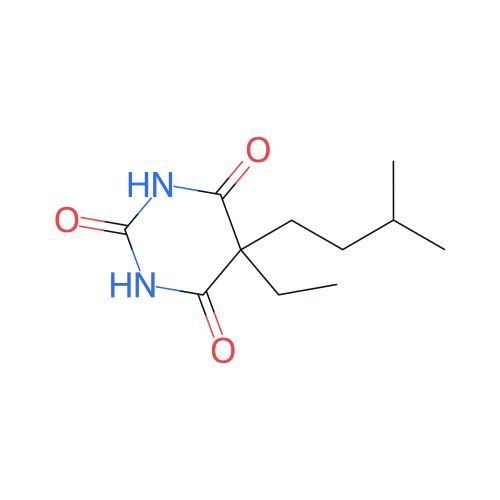
Amobarbital is a member of the class of barbiturates that is pyrimidine-2,4,6(1H,3H,5H)-trione substituted by a 3-methylbutyl and an ethyl group at position 5. Amobarbital has been shown to exhibit sedative and hypnotic properties.
Identifiers
Registry numbers, names and line notations, tap to copy
- IUPAC name
- 5-ethyl-5-(3-methylbutyl)-1,3-diazinane-2,4,6-trione
- CAS number
- 57-43-2 CAS number cross-checked
- EC number
- 200-330-7
- Molecular formula
- C11H18N2O3
- UNII
- GWH6IJ239E
- InChIKey
- VIROVYVQCGLCII-UHFFFAOYSA-N
- InChI
- InChI=1S/C11H18N2O3/c1-4-11(6-5-7(2)3)8(14)12-10(16)13-9(11)15/h7H,4-6H2,1-3H3,(H2,12,13,14,15,16)
- SMILES (canonical and isomeric)
- CCC1(C(=O)NC(=O)NC1=O)CCC(C)C
Synonyms
- Isomytal
- Barbamil
- Barbamyl
- Amobarbitone
- Barbamyl acid
- Pentymalum
- Schiwanox
- Stadadorm
- Amasust
- Amospan
- Binoctal
- Dorlotyn
- Dormytal
- Mylodorm
- Pentymal
- Sednotic
- Amital
- Robarb
- Somnal
- Isomyl
- Sumital
- AMAL
- 5-Ethyl-5-isopentylbarbituric acid
- Isoamylethylbarbituric acid
- Ethylisopentylbarbituric acid
Show all 39 synonymsShow fewer synonyms
- 5-Ethyl-5-isoamylbarbituric acid
- Amobarbitalum
- 5-Isoamyl-5-ethylbarbituric acid
- 5-Ethyl-5-isoamylmalonyl urea
- 5-Ethyl-5-(3-methylbutyl)barbituric acid
- Amobarbital cii
- Barbituric acid, 5-ethyl-5-isopentyl-
- 5-ethyl-5-(3-methylbutyl)-1,3-diazinane-2,4,6-trione
- 5-Ethyl-5-(3-methylbutyl)-2,4,6(1H,3H,5H)-pyrimidinetrione
- 2,4,6(1H,3H,5H)-Pyrimidinetrione, 5-ethyl-5-(3-methylbutyl)-
- 5-ethyl-5-(3-methylbutyl)pyrimidine-2,4,6(1H,3H,5H)-trione
- Barbamylum
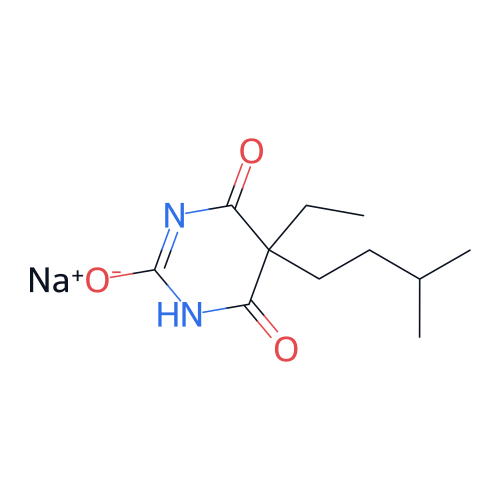
- Amobarbital, Sodium
- Sodium, Amobarbital
Physical and chemical properties
Measured values and descriptors computed from the structure
Physical and chemical properties
Measured values, check the supplier specification for your grade
| Appearance | Crystalsexp.Measured value |
|---|---|
| Odour | Odorlessexp.Measured value |
| Taste | Slightly bitterexp.Measured value |
| Melting point | 157 °Cexp.Measured value |
| Solubility | 1 g dissolves in: 1300 mL water, in 5 mL alcohol, in 17 mL chloroform, in 6 mL ether. Freely soluble in benzene, soluble in alkaline. Insoluble in petroleum ether, aliphatic hydrocarbons.exp.Measured value |
Values vary by grade. Ask suppliers for the COA or TDS of the batch you buy.
Computed descriptors
Calculated from the structure, useful for screening and formulation
| Molecular weight | 226.28 g/molcalc.Computed value |
|---|---|
| Exact mass | 226.1317 Dacalc.Computed value |
| LogP (octanol/water) | 1.18calc.Computed value |
| Topological polar surface area | 75.27 Ųcalc.Computed value |
| Hydrogen bond donors | 2calc.Computed value |
| Hydrogen bond acceptors | 3calc.Computed value |
| Rotatable bonds | 4calc.Computed value |
| Heavy atoms | 16calc.Computed value |
| Rings | 1calc.Computed value |
| Aromatic rings | 0calc.Computed value |
| Fraction sp3 carbons | 0.73calc.Computed value |
| Formal charge | 0calc.Computed value |
| Stereocentres | 0calc.Computed value |
| Lipinski rule of five | Passes (0 violations)calc.Computed value |
Calculated for screening. Confirm critical figures with the supplier.
Murcko scaffold
The ring system that remains when every side chain is removed
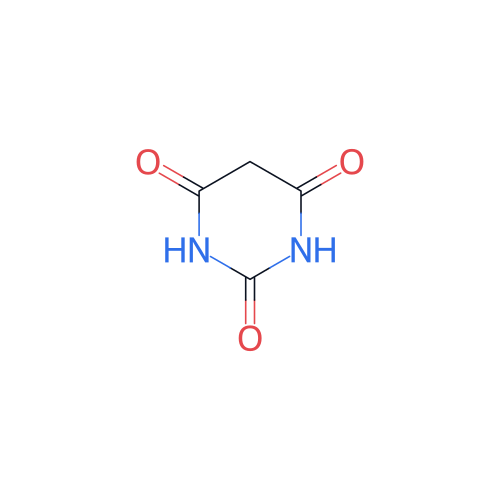
O=C1CC(=O)NC(=O)N1
1 ring, 9 atoms, the Barbituric acid ring system.
747 other chemicals share this scaffoldSafety and hazards
GHS classification summary, not a safety data sheet
Hazard statements
- H301Toxic if swallowed.
Precautionary statements (7)
- P264Wash skin thoroughly after handling.
- P270Do not eat, drink or smoke when using this product.
- P301 + P316If swallowed: Get emergency medical help immediately.
- P321Specific treatment (see supplemental first aid instructions on the label).
- P330Rinse mouth.
- P405Store locked up.
- P501Dispose of contents and container in accordance with local regulations.
GHS classification summary, not a safety data sheet (SDS). Classifications can differ by supplier, grade and concentration. Always check the supplier's SDS.
Full safety data and first aidAmobarbital suppliers
Trading restrictions apply to this substance
Amobarbital is prohibited on CompoundList. Listings, quotes and messages are disabled. This page is kept for information only.
Listing and enquiries are not allowed for this substance.
Reference: UN Convention on Psychotropic Substances 1971, HS 2022 subheading 2933.53 (barbiturates)
Our policy on controlled substancesAmobarbital price
Indicative price range per kg from live supplier offers
Prices are not shown for prohibited substances.
Uses and applications
What the substance is used for, by industry and function
DEA /schedule III /controlled substance.
DEA /schedule II /controlled substance.
Therapeutic category: Sedative, hypnotic.
Therapeutic category (veterinary): Sedative, hypnotic.
Use classes: Pharmaceuticals.
Industries and functions
Pharmacological actions
- GABA Modulators
- Hypnotics and Sedatives
How it is made
A typical method starts with monochloroacetic acid, which is treated with sodium cyanide to form cyanoacetic acid, the latter is reacted with hydrochloric acid in the presence of alcohol, yielding the diethyl ester of malonic acid. This ester, in absolute alcohol solution, is treated with the theoretical quantity of metallic sodium to replace one hydrogen of the CH2 group, then a slight excess of the theoretical amount of an ethylating agent, such as ethyl bromide, is added. The second hydrogen is replaced similarly, using isopentyl bromide as the alkylating agent.
Read more
The diethyl ester of ethyl isopentyl malonic acid thus obtained is heated in an alcoholic solution, in the presence of sodium, with urea. Sodium amobarbital is formed, from which amobarbital is liberated with HCl. The alkylation of the CH2 group of the malonic ester ... may be done in two stages, introducing one alkyl group at a time.
By reacting amobarbital with a solution containing a chemically equivalent quantity of sodium hydroxide or sodium carbonate, evaporating to dryness, and crystallizing the residue from a solution in a suitable solvent such as alcohol. (Amobarbital sodium)
The 5,5-disubstituted barbituric acids are still synthesized by the classical condensation of substituted malonic esters, malonic amides, or cyanoacetic esters with urea, thiourea, guanidine, or dicyanodiamide, followed by the hydrolysis of the resulting imino- or cyanobarbiturate. (5,5-Disubstituted barbituric acids)
Regulatory status
Inventories, regulations and trade controls that list this substance
Amobarbital is prohibited on CompoundList. Listings, quotes and messages are disabled. This page is kept for information only.
Listing and enquiries are not allowed for this substance.
Reference: UN Convention on Psychotropic Substances 1971, HS 2022 subheading 2933.53 (barbiturates)
Our policy on controlled substancesControls
- US DEA controlled substance or listed chemical
- Controlled psychotropic substance
HS code and trade data
Customs classification and reported world trade statistics
Global trade
World import and export statistics for the HS code Amobarbital is traded under.
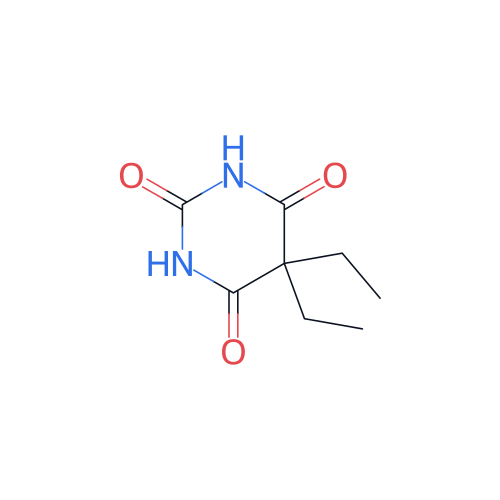
Allobarbital (INN), amobarbital (INN), barbital (INN), butalbital (INN), butobarbital…
- United States19.2%
- Italy16.9%
- Netherlands14.7%
The HS code shown for Amobarbital is indicative (it was matched by name in the HS nomenclature). Confirm the classification with your customs broker before shipping.
Related chemicals
Parent and salt forms, stereoisomers, similar structures and isomers
Salt and hydrate forms
Records that share this compound as their parent
Stereoisomers and isotopic forms
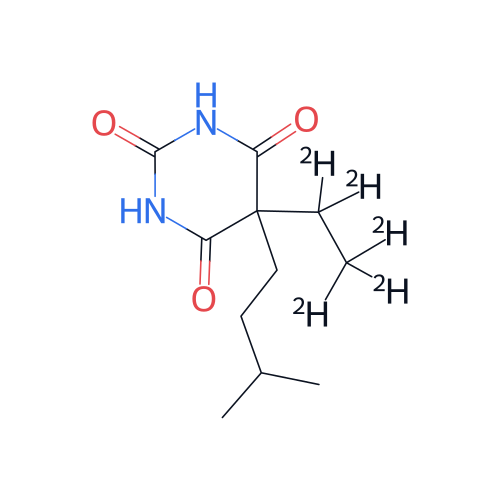
Same connectivity, different stereochemistry or isotopes (same InChIKey skeleton)
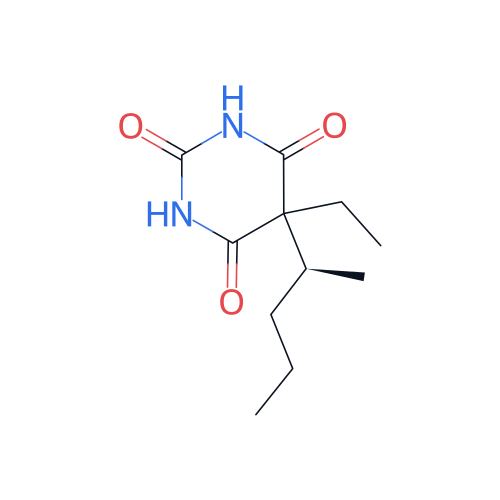
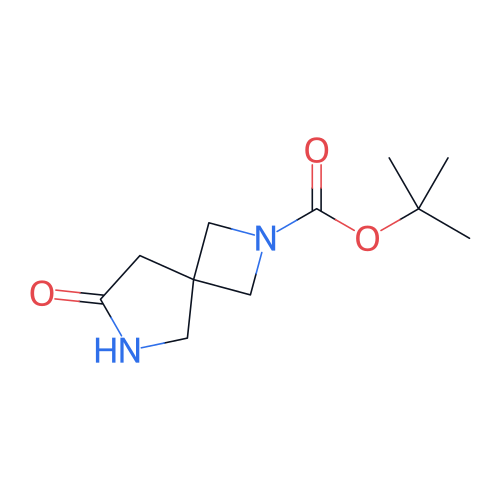
Similar structures
Nearest neighbours by Morgan fingerprint Tanimoto similarity

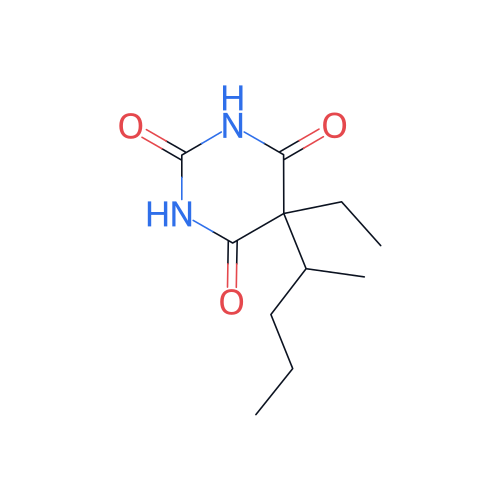
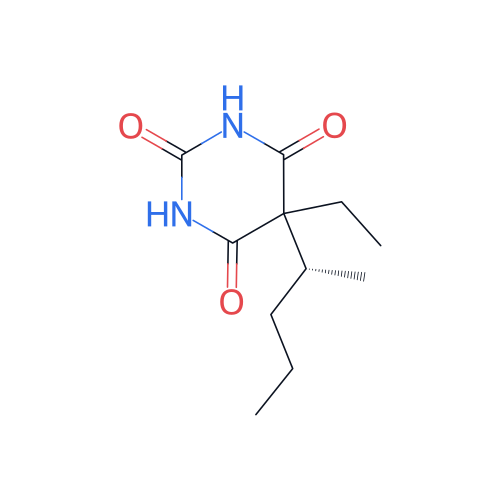
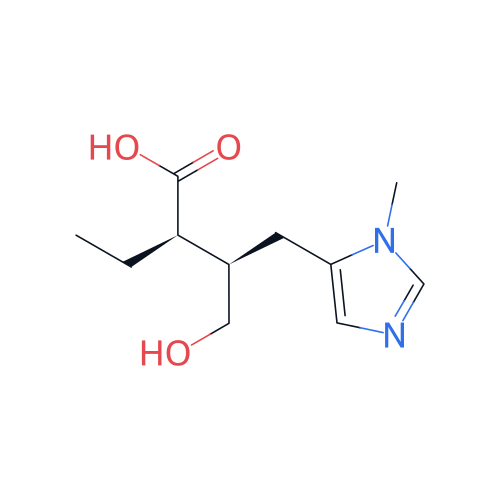
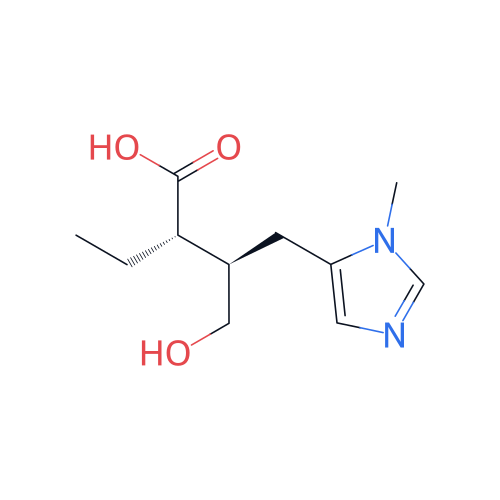
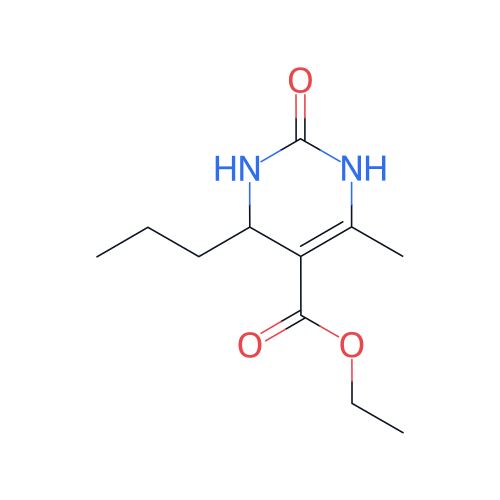
Same formula isomers
Different compounds that share this molecular formula



Frequently asked questions
Quick answers about Amobarbital, based on the data on this page
What is Amobarbital?
What is the CAS number of Amobarbital?
What is the molecular formula and weight of Amobarbital?
What is Amobarbital used for?
Is Amobarbital hazardous?
What is the HS code of Amobarbital?
Can I buy Amobarbital on CompoundList?
Guides for buyers
Practical guides that help when you source, ship or handle Amobarbital
- Guide, SafetyHow to read a safety data sheet in 10 minutesA section by section method to pull the essentials out of any 16 section SDS: identity, hazards, composition, storage, PPE, properties, transport and emergency measures.Read
- Guide, SafetyGHS pictograms, signal words and hazard statements explainedA practical guide to the nine GHS pictograms, the signal words Danger and Warning, H and P statements, and how to read a chemical label in seconds.Read
- Guide, Chemical identityCAS registry numbers explainedWhat a CAS number identifies, how the check digit works, why one chemical can have several numbers and what a CAS number cannot tell you about a product.Read
Explore more in Heterocyclic building blocks or HS code 293353