CAS registry numbers explained
What a CAS number identifies, how the check digit works, why one chemical can have several numbers and what a CAS number cannot tell you about a product.
On this page(9 sections)
If you buy or sell chemicals, you quote CAS numbers every day. They appear on quotes, labels, safety data sheets, customs paperwork and almost every product page on the internet. Yet many people are not sure what a CAS number actually identifies, why one chemical can have several of them, or how to spot a number that is simply wrong. This guide covers all three.
What a CAS number is#
A CAS registry number, often shortened to CAS RN or just CAS, is an identifier assigned by CAS, a division of the American Chemical Society. CAS maintains a registry of chemical substances described in the scientific and patent literature and assigns each distinct substance a number.
A CAS number has three parts separated by hyphens:
- a first part of two to seven digits
- a middle part of exactly two digits
- a final single check digit
For example:
| Substance | CAS number |
|---|---|
| Water | 7732-18-5 |
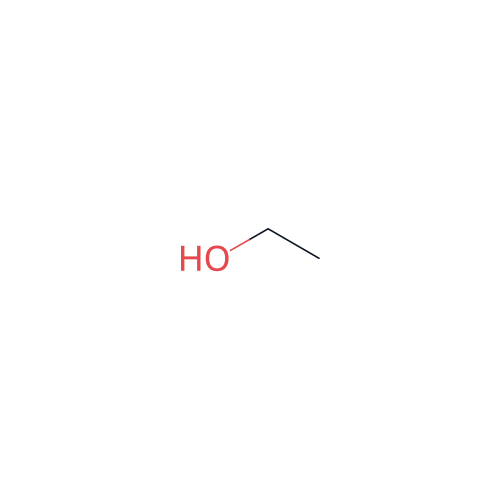
| Ethanol | 64-17-5 |
| Sodium chloride | 7647-14-5 |
| Caffeine | 58-08-2 |
The number itself carries no chemical information. It does not tell you the structure, the class of compound or when it was discovered in any useful way. Numbers are simply assigned in sequence as substances enter the registry. That is a strength, because the number never needs to change when naming rules change.
Why the industry relies on CAS numbers#
Chemical names are messy. One substance can have a systematic IUPAC name, several common names, trade names in different languages and abbreviations used only in one industry. Acetone, propan-2-one and dimethyl ketone are the same compound. Two suppliers can describe the same product in completely different words.
A CAS number cuts through that. It gives buyers, suppliers, regulators and customs officers a short, language independent way to agree on what is being discussed. That is why regulatory inventories, safety data sheets and most procurement systems use CAS numbers as a primary key.
How the check digit works#
The last digit of every CAS number is a check digit that catches most typing mistakes. You can verify it by hand:
- Take all the digits except the check digit.
- Starting from the rightmost of those digits, multiply each by 1, 2, 3 and so on, moving left.
- Add the results.
- The last digit of the sum must equal the check digit.
Take water, 7732-18-5. The digits before the check digit are 7, 7, 3, 2, 1, 8. From the right:
- 8 x 1 = 8
- 1 x 2 = 2
- 2 x 3 = 6
- 3 x 4 = 12
- 7 x 5 = 35
- 7 x 6 = 42
The sum is 105. Its last digit is 5, which matches the check digit, so the number is valid.
A valid check digit does not prove a number belongs to the chemical you think it does. It only proves the number is well formed. If someone swaps two digits, the check usually fails, but a completely different valid number will pass. Always confirm that the CAS number and the name or structure match. CompoundList's search validates the check digit whenever you type a CAS number, and the free tools section includes a CAS checker.
One chemical, several CAS numbers#
This is where most confusion starts. CAS assigns numbers to substances as they are described, and many things that a buyer calls "the same chemical" are distinct substances to the registry.
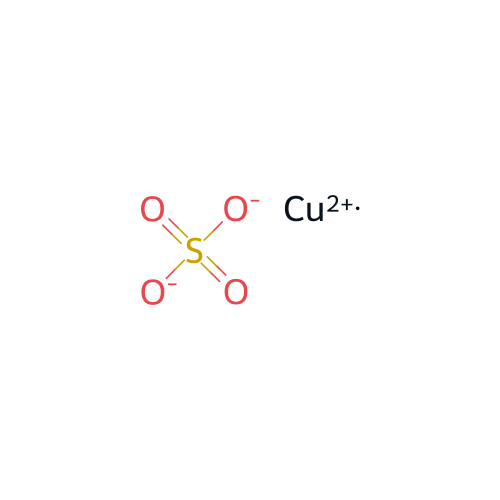
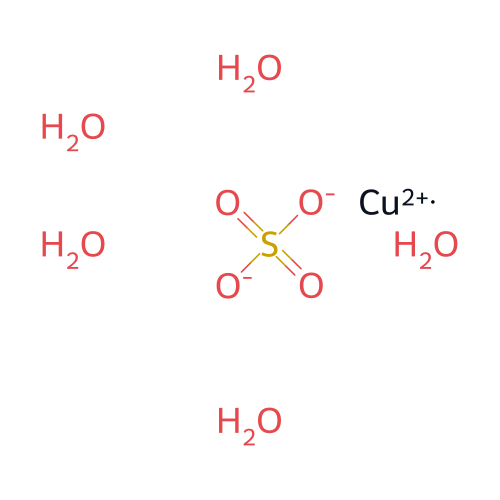
Hydrates and anhydrous forms. Copper sulphate anhydrous is 7758-98-7, while copper sulphate pentahydrate, the familiar blue crystals, is 7758-99-8. The two forms have different molecular weights, so a price per kilogram means something different for each.
Salts and free forms. A drug and its hydrochloride salt have different CAS numbers. So do an acid and its sodium salt.
Stereoisomers. A racemic mixture, each enantiomer and sometimes each diastereomer can each have their own number. For pharmaceuticals this distinction can be critical.
Different descriptions of the same material. Glucose is a good example. D-glucose has one number, specific anomers have others, and the monohydrate sold as dextrose monohydrate has another (5996-10-1).
Mixtures and natural materials. Essential oils, extracts, petroleum fractions and reaction products often have a CAS number that describes a substance of unknown or variable composition rather than one molecule.
When you write a request for quote, give the CAS number for the exact form you need and state it in words too, for example "sodium carbonate, anhydrous (light), CAS 497-19-8". If a supplier quotes a different CAS number, ask why before you compare prices.
Deleted and replaced numbers#
Sometimes CAS finds that two records describe the same substance and merges them. The retired number becomes a deleted or replaced registry number that points to the preferred one. Old SDS and catalogues may still show the retired number. If a CAS number looks unfamiliar or returns nothing useful in a database search, it may be one of these.
Things a CAS number does not tell you#
A CAS number identifies a substance. It does not describe a product. Two drums labelled with the same CAS number can differ in:
- Grade, such as technical, food, pharmacopoeia or reagent grade. See our guide to pharma grades.
- Purity and impurity profile, which depend on the route of manufacture.
- Physical form, such as powder, granules, flakes or solution, and concentration for solutions.
- Regulatory status, which depends on who made it and for which market.
That is why a good specification and a batch certificate of analysis matter more than the CAS number when you are judging quality.
CAS numbers and other identifiers#
CAS numbers are not the only identifiers you will meet, and for some jobs others are better.
| Identifier | What it is | Best for |
|---|---|---|
| EC number | Seven digit EU inventory number, for example 200-578-6 for ethanol | EU regulatory documents and labels |
| InChIKey | 27 character hash of the IUPAC InChI, generated from the structure | Exact structure matching across databases |
| SMILES | Text notation of the structure, such as CCO for ethanol | Drawing and searching structures |
| UN number | Four digit transport identifier | Shipping dangerous goods |
| HS code | Customs tariff classification | Duties and trade statistics |
InChI and InChIKey are open standards that anyone can generate from a structure, which makes them especially useful for software and databases. CompoundList shows CAS numbers on chemical pages where they are available.
Common mistakes to avoid#
- Trusting the name over the number, or the number over the name. Check that they agree. A mismatch means one of them is wrong.
- Ignoring the hydrate or salt form. It changes molecular weight, assay calculations and sometimes the HS code.
- Copying numbers from unreliable websites. Many low quality directories copy errors from one another. Use a primary source such as the supplier's own SDS or an official substance register, then cross check.
- Assuming a number means approval. A substance having a CAS number says nothing about whether it may be sold for a given use in a given country.
How to search by CAS number on CompoundList#
Type or paste a CAS number into the search box at the top of any page. If the check digit is valid and the number is in our database, you go straight to the chemical page with its structure, identifiers, properties, safety summary and suppliers. If the number fails the check digit, we tell you, which often catches a typing mistake before it reaches a supplier.
You can also browse the CAS number index or search by structure if you only have a drawing or a SMILES string. When you are ready to buy, the request for quote form lets you add the CAS number, grade and specification in one place so every supplier quotes the same thing.
Frequently asked questions
How do I check if a CAS number is valid?
Why does the same chemical have more than one CAS number?
Does a CAS number tell me the grade or purity of a product?
About the author
CompoundList Editorial Team
Sourcing and quality guides
The CompoundList editorial team writes practical guides for people who buy and sell chemicals. We focus on the questions that come up every day in sourcing, from checking a supplier to reading a certificate of analysis, and we update articles when standards or market practice change.
How we check our facts. Articles are written from primary sources such as pharmacopoeias, ICC rules, UN and WHO texts and official regulator guidance, then reviewed for accuracy before publication.
Chemicals in this guide
Properties, safety data, HS codes and suppliers for each chemical mentioned


Keep reading
All guidesSafety
How to read a safety data sheet in 10 minutes
A section by section method to pull the essentials out of any 16 section SDS: identity, hazards, composition, storage, PPE, properties, transport and emergency measures.
6 min readRegulation
REACH basics for non EU exporters
What EU REACH requires, why non EU manufacturers use an only representative, tonnage bands, joint registration, exemptions, SDS and label duties, and practical steps.
7 min readTrade and logistics
Shipping dangerous goods: UN numbers, classes and packing groups
How the UN dangerous goods system works for chemicals, from the nine classes and UN numbers to packing groups, UN packaging marks, labels, documents and segregation.
6 min read
Get the CompoundList briefing
One short email a week with new guides, price movements and fresh buy leads. No spam, unsubscribe in one click.