Ampicillin safety data
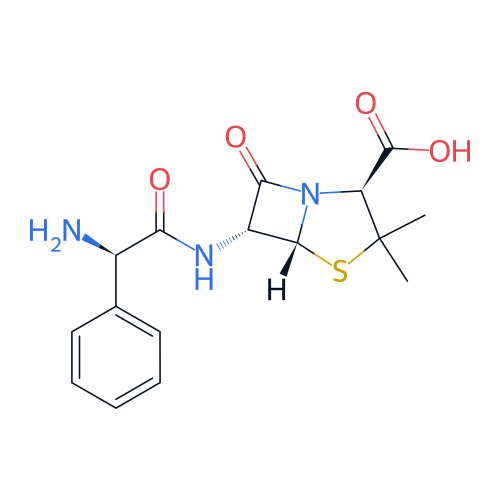
GHS classification summary, not a safety data sheet (SDS). Classifications can differ by supplier, grade and concentration. Always check the supplier's SDS.
GHS classification
Pictograms, signal word and hazard classes of the GHS classification
Hazard classes and categories
- Skin Irrit. 2
- Skin Sens. 1
- Eye Irrit. 2
- Resp. Sens. 1
- STOT SE 3 (respiratory irritation)
- Aquatic Acute 1
- Aquatic Chronic 2
Hazard statements
H codes grouped by type. Percentages show the share of classification notifications that report the statement
Health hazards
- H315Causes skin irritation.
- H317May cause an allergic skin reaction.
- H319Causes serious eye irritation.
- H334May cause allergy or asthma symptoms or breathing difficulties if inhaled.
- H335May cause respiratory irritation.
Environmental hazards
- H400Very toxic to aquatic life.
- H411Toxic to aquatic life with long lasting effects.
Precautionary statements
P codes for prevention, response, storage and disposal
Prevention
- P233Keep container tightly closed.
- P260Do not breathe dust, fume, gas, mist, vapours or spray.
- P261Avoid breathing dust, fume, gas, mist, vapours or spray.
- P264Wash skin thoroughly after handling.
- P264 + P265Wash skin thoroughly after handling. Do not touch eyes.
- P271Use only outdoors or in a well-ventilated area.
- P272Contaminated work clothing should not be allowed out of the workplace.
- P273Avoid release to the environment.
- P280Wear protective gloves, protective clothing, eye protection and face protection.
- P284In case of inadequate ventilation wear respiratory protection.
Response
- P302 + P352If on skin: Wash with plenty of water.
- P304 + P340If inhaled: Remove person to fresh air and keep comfortable for breathing.
- P305 + P351 + P338If in eyes: Rinse cautiously with water for several minutes. Remove contact lenses, if present and easy to do. Continue rinsing.
- P319Get medical help if you feel unwell.
- P321Specific treatment (see supplemental first aid instructions on the label).
- P332 + P317If skin irritation occurs: Get medical help.
- P333 + P317If skin irritation or rash occurs: Get medical help.
- P337 + P317If eye irritation persists: Get medical help.
- P342 + P316If experiencing respiratory symptoms: Get emergency medical help immediately.
- P362 + P364Take off contaminated clothing. And wash it before reuse.
- P391Collect spillage.
Storage
- P403Store in a well-ventilated place.
- P403 + P233Store in a well-ventilated place. Keep container tightly closed.
- P405Store locked up.
Disposal
- P501Dispose of contents and container in accordance with local regulations.
Handling, storage and disposal
Summaries only, follow the supplier SDS for your grade
Storage
Ampicillin capsules and powder for oral suspension should be stored in tight containers @ 15-30 °C. Following reconstitution, oral suspensions of either anhydrous ampicillin or ampicillin trihydrate should preferable be refrigerated @ 2-8 °C but are stable for 7 days @ room temperature or 14 days @ 2-8 °C. Following reconstitution with sterile or bacteriostatic water for injection, ampicillin sodium solutions for IM or direct IV injection should be used within 1 hr after reconstitution and should not be frozen.
Supplier safety data sheets
SDS documents uploaded by suppliers who list this chemical
No supplier has uploaded an SDS for Ampicillin yet. Suppliers usually send one with their quote. Request quotes
Safety questions
Quick answers about handling Ampicillin safely
Is Ampicillin hazardous?
Which GHS pictograms apply to Ampicillin?
How should Ampicillin be stored?
Where can I get the SDS for Ampicillin?
GHS classification summary, not an SDS. Always check the supplier's SDS. Last updated 7 Oct 2026. Report an error