Lilo
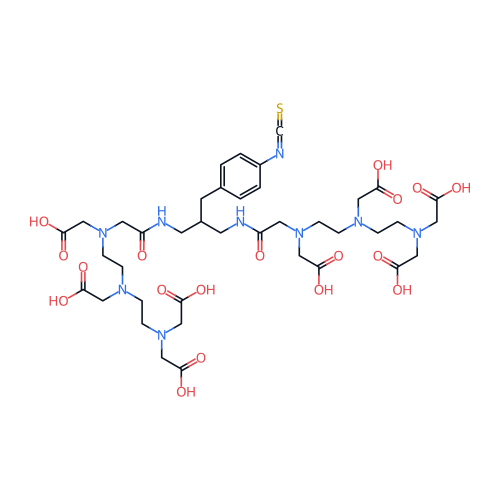
Also known as 1,3-Bis(N-(N-(2-aminoethyl)-2-aminoethyl)-2-aminoacetamido)-2-(4-isothiocyanatobenzyl)propane-N,N,N',N'',N''',N'''',N''''',N'''''-octaaceticacid, 3,6,9,19,22,25-Hexakis(carboxymethyl)-14-((4-isothiocyanatophenyl)methyl)-11,17-dioxo-3,6,9,12,16,19,22,25-octaazaheptacosanedioic acid, 3,6,9,12,16,19,22,25-Octaazaheptacosanedioic acid, 3,6,9,19,22,25-hexakis(carboxymethyl)-14-((4-isothiocyanatophenyl)methyl)-11,17-dioxo-
Key facts
What buyers check first
- CAS number
- 134439-56-8
- Formula
- C39H57N9O18S
- Molar mass
- 972.00 g/mol
- HS code
- 293090
- Category
- Builders and chelating agents
What is Lilo?
Plain description, key identifiers and synonyms
Lilo is a chemical substance with the molecular formula C39H57N9O18S and a molar mass of 972.00 g/mol. Its CAS registry number is 134439-56-8. The IUPAC name is 2-[2-[bis(carboxymethyl)amino]ethyl-[2-[[2-[[2-[[[2-[2-[2-[bis(carboxymethyl)amino]ethyl-(carboxymethyl)amino]ethyl-(carboxymethyl)amino]acetyl]amino]methyl]-3-(4-isothiocyanatophenyl)propyl]amino]-2-oxoethyl]-(carboxymethyl)amino]ethyl]amino]acetic acid.
Identifiers
Registry numbers, names and line notations, tap to copy
- IUPAC name
- 2-[2-[bis(carboxymethyl)amino]ethyl-[2-[[2-[[2-[[[2-[2-[2-[bis(carboxymethyl)amino]ethyl-(carboxymethyl)amino]ethyl-(carboxymethyl)amino]acetyl]amino]methyl]-3-(4-isothiocyanatophenyl)propyl]amino]-2-oxoethyl]-(carboxymethyl)amino]ethyl]amino]acetic acid
- CAS number
- 134439-56-8 CAS number cross-checked
- Molecular formula
- C39H57N9O18S
- InChIKey
- OWFPZFPOOSUIIA-UHFFFAOYSA-N
- InChI
- InChI=1S/C39H57N9O18S/c49-30(16-45(20-34(55)56)9-5-43(18-32(51)52)7-11-47(22-36(59)60)23-37(61)62)40-14-28(13-27-1-3-29(4-2-27)42-26-67)15-41-31(50)17-46(21-35(57)58)10-6-44(19-33(53)54)8-12-48(24-38(63)64)25-39(65)66/h1-4,28H,5-25H2,(H,40,49)(H,41,50)(H,51,52)(H,53,54)(H,55,56)(H,57,58)(H,59,60)(H,61,62)(H,63,64)(H,65,66)
- SMILES (canonical and isomeric)
- C1=CC(=CC=C1CC(CNC(=O)CN(CCN(CCN(CC(=O)O)CC(=O)O)CC(=O)O)CC(=O)O)CNC(=O)CN(CCN(CCN(CC(=O)O)CC(=O)O)CC(=O)O)CC(=O)O)N=C=S
Synonyms
- 1,3-Bis(N-(N-(2-aminoethyl)-2-aminoethyl)-2-aminoacetamido)-2-(4-isothiocyanatobenzyl)propane-N,N,N',N'',N''',N'''',N''''',N'''''-octaaceticacid
- 3,6,9,19,22,25-Hexakis(carboxymethyl)-14-((4-isothiocyanatophenyl)methyl)-11,17-dioxo-3,6,9,12,16,19,22,25-octaazaheptacosanedioic acid
- 3,6,9,12,16,19,22,25-Octaazaheptacosanedioic acid, 3,6,9,19,22,25-hexakis(carboxymethyl)-14-((4-isothiocyanatophenyl)methyl)-11,17-dioxo-
- 3,6,9,19,22,25-Hexakis(carboxymethyl)-14-[(4-isothiocyanatophenyl)methyl]-11,17-dioxo-3,6,9,12,16,19,22,25-octaazaheptacosane-1,27-dioic acid
Physical and chemical properties
Measured values and descriptors computed from the structure
Physical and chemical properties
Measured values, check the supplier specification for your grade
No measured properties are recorded for this substance yet. Ask suppliers for a technical data sheet.
Values vary by grade. Ask suppliers for the COA or TDS of the batch you buy.
Computed descriptors
Calculated from the structure, useful for screening and formulation
| Molecular weight | 972.00 g/molcalc.Computed value |
|---|---|
| Exact mass | 971.3542 Dacalc.Computed value |
| LogP (octanol/water) | -3.7calc.Computed value |
| Topological polar surface area | 388.4 Ųcalc.Computed value |
| Hydrogen bond donors | 10calc.Computed value |
| Hydrogen bond acceptors | 18calc.Computed value |
| Rotatable bonds | 39calc.Computed value |
| Heavy atoms | 67calc.Computed value |
| Rings | 1calc.Computed value |
| Aromatic rings | 1calc.Computed value |
| Fraction sp3 carbons | 0.56calc.Computed value |
| Formal charge | 0calc.Computed value |
| Stereocentres | 0calc.Computed value |
| Lipinski rule of five | Fails (3 violations)calc.Computed value |
Calculated for screening. Confirm critical figures with the supplier.
Murcko scaffold
The ring system that remains when every side chain is removed

Safety and hazards
GHS classification summary, not a safety data sheet
No GHS hazard classification is recorded for this substance yet. That does not mean it is harmless.
GHS classification summary, not a safety data sheet (SDS). Classifications can differ by supplier, grade and concentration. Always check the supplier's SDS.
Lilo suppliers
Sponsored listings first, then the documented ranking: membership, verification, replies, completeness, freshness and ratings
Post one free request and suppliers who make or trade Lilo can send you quotes. Your contact details stay private until you accept a quote.
Lilo price
Indicative price range per kg from live supplier offers
Suppliers quote this chemical on request. Send one free request and compare quotes side by side.
Uses and applications
What the substance is used for, by industry and function
Industries and functions
Regulatory status
Inventories, regulations and trade controls that list this substance
No regulatory list memberships are recorded for this substance yet. Always check the rules of the importing and exporting country before trade.
HS code and trade data
Customs classification and reported world trade statistics
Global trade
World import and export statistics for the HS code Lilo is traded under.
Organo-sulphur compounds, other
- China40.7%
- United States10.9%
- Japan9.3%
- United States13.3%
- Brazil12.6%
- China6.6%
The HS code shown for Lilo is indicative (it was assigned by structure rules). Confirm the classification with your customs broker before shipping.
Related chemicals
Parent and salt forms, stereoisomers, similar structures and isomers
Similar structures
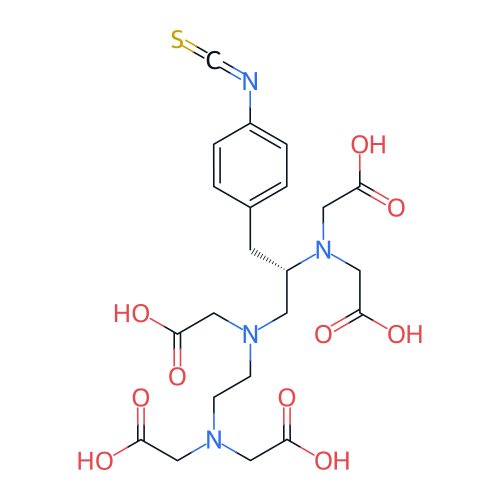
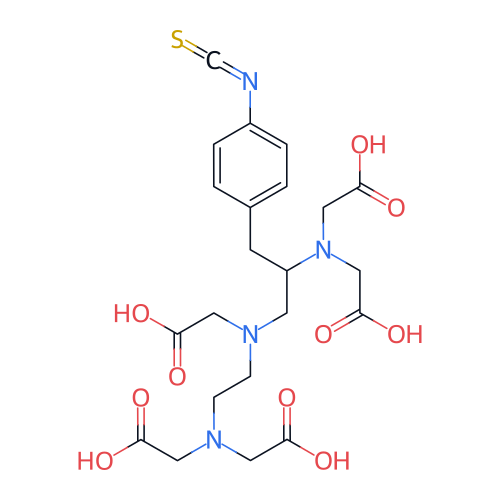
Nearest neighbours by Morgan fingerprint Tanimoto similarity


Frequently asked questions
Quick answers about Lilo, based on the data on this page
What is Lilo?
What is the CAS number of Lilo?
What is the molecular formula and weight of Lilo?
What is Lilo used for?
Is Lilo hazardous?
What is the HS code of Lilo?
Where can I buy Lilo?
What is the price of Lilo?
Guides for buyers
Practical guides that help when you source, ship or handle Lilo
- Article, FormulationHow to choose a cosmetic emulsifierA structured way to choose an emulsifier for creams and lotions: emulsion type, HLB and its limits, emulsifier families, formula fit, stability testing and what to ask suppliers.Read
- Article, SourcingHow to write an RFQ that gets fast and accurate quotesWhat suppliers need to quote quickly and comparably: exact product identity, quantity and packing, delivery terms, documents, samples and payment, with a ready to use template.Read
- Guide, Trade and logisticsHS codes for chemicals and why they matterHow the Harmonized System classifies chemicals, the chapters that matter, the rules for chemically defined compounds and mixtures, and practical steps to find the right code.Read
Get quotes for Lilo
Embed this structure on your websiteShow code
Paste this code into your page to show the 2D structure of Lilo with a 3D view, its CAS number where known and a link back to this page. Free to use with the link kept.
<iframe src="https://www.compoundlist.com/embed/structure/lilo-134439-56-8" title="Lilo structure on CompoundList" width="360" height="420" style="border:1px solid #E7E2DA;border-radius:12px;max-width:100%" loading="lazy" referrerpolicy="strict-origin-when-cross-origin"></iframe>Explore more in Builders and chelating agents or HS code 293090