Soman
Also known as Zoman, PMFP, Pinacolyl methylphosphonofluoridate

Key facts
What buyers check first
- Appearance
- Colorless liquid
- Melting point
- -42 °C
- Boiling point
- 198 °C
- Density
- 1.0222 g/mL at 25 °C
- Solubility
- In water, 2.1 × 10⁺⁴ mg/L at 20 °C
- HS code
- 293149
- Category
- Sulfur and phosphorus compounds
What is Soman?
Plain description, key identifiers and synonyms
Soman is a phosphonic ester.
Identifiers
Registry numbers, names and line notations, tap to copy
- IUPAC name
- 3-[fluoro(methyl)phosphoryl]oxy-2,2-dimethylbutane
- CAS number
- 96-64-0 CAS number cross-checked
- Molecular formula
- C7H16FO2P
- UNII
- 3OF3WXB67Q
- InChIKey
- GRXKLBBBQUKJJZ-UHFFFAOYSA-N
- InChI
- InChI=1S/C7H16FO2P/c1-6(7(2,3)4)10-11(5,8)9/h6H,1-5H3
- SMILES (canonical and isomeric)
- CC(C(C)(C)C)OP(=O)(C)F
Synonyms
- Zoman
- PMFP
- Pinacolyl methylphosphonofluoridate
- Pinacolyl methylfluorophosphonate
- Pinacoloxymethylphosphoryl fluoride
- Methyl pinacolyl phosphonofluoridate
- Methyl pinacolyloxy phosphorylfluoride
- 1,2,2-Trimethylpropyl methylphosphonofluoridate
- Pinacolyl methylphosphonofluoride
- Pynacolyl methylfluorophosphonate
- 3,3-Dimethyl-n-but-2-yl methylphosphonofluoridate
- Phosphonofluoridic acid, methyl-, 1,2,2-trimethylpropyl ester
- Pinacolyloxy methylphosphoryl fluoride
- EA 1210
- Phosphine oxide, fluoromethyl(1,2,2-trimethylpropoxy)-
- Methylphosphonofluoridate, Pinacolyl
- Methylphosphonofluoridic acid 1,2,2-trimethylpropyl ester
- Methylfluorphosphorsaeurepinakolylester
- 1-Methyl-2,2-dimethylpropylmethylphosphonofluoridate
- 2-Butanol, 3,3-dimethyl-, methylphosphonofluoridate
- Methylphosphonofluoridic acid, 3,3-dimethyl-2-butyl ester
- 1,2,2-Trimethylpropylester kyseliny methylfluorfosfonove
- 3-(fluoro(methyl)phosphoryl)oxy-2,2-dimethyl-butane
- 3-[fluoro(methyl)phosphoryl]oxy-2,2-dimethyl-butane
- g-Series nerve agent gd
Show all 33 synonymsShow fewer synonyms
- 3,3-dimethylbutan-2-yl methylphosphonofluoridate
- 3-[fluoro(methyl)phosphoryl]oxy-2,2-dimethylbutane
- O-Pinacolyl methylphosphonofluoridate
- Gd (chemical warfare agent)
- (R)-Methylphosphonofluoridic acid 1,2,2-trimethylpropyl ester
- 1,2,2-Trimethylpropoxyfluorophosphine oxide
- 1,2,2-Trimethylpropyl methylphosphonofluoridoate #
- Phosphonofluoridic acid, p-methyl-, 1,2,2-trimethylpropyl ester
Physical and chemical properties
Measured values and descriptors computed from the structure
Physical and chemical properties
Measured values, check the supplier specification for your grade
| Appearance | Colorless liquidexp.Measured value |
|---|---|
| Odour | Evolves odorless gasexp.Measured value |
| Melting point | -42 °Cexp.Measured value |
| Boiling point | 198 °Cexp.Measured value |
| Density | 1.0222 g/mL at 25 °Cexp.Measured value |
| Solubility | In water, 2.1 × 10⁺⁴ mg/L at 20 °Cexp.Measured value |
| Vapour pressure | 0.41 mm Hg at 25 °Cexp.Measured value |
Values vary by grade. Ask suppliers for the COA or TDS of the batch you buy.
Computed descriptors
Calculated from the structure, useful for screening and formulation
| Molecular weight | 182.18 g/molcalc.Computed value |
|---|---|
| Exact mass | 182.0872 Dacalc.Computed value |
| LogP (octanol/water) | 3.23calc.Computed value |
| Topological polar surface area | 26.3 Ųcalc.Computed value |
| Hydrogen bond donors | 0calc.Computed value |
| Hydrogen bond acceptors | 2calc.Computed value |
| Rotatable bonds | 2calc.Computed value |
| Heavy atoms | 11calc.Computed value |
| Rings | 0calc.Computed value |
| Aromatic rings | 0calc.Computed value |
| Fraction sp3 carbons | 1calc.Computed value |
| Formal charge | 0calc.Computed value |
| Stereocentres | 2calc.Computed value |
| Lipinski rule of five | Passes (0 violations)calc.Computed value |
Calculated for screening. Confirm critical figures with the supplier.
Safety and hazards
GHS classification summary, not a safety data sheet
No GHS hazard classification is recorded for this substance yet. That does not mean it is harmless.
GHS classification summary, not a safety data sheet (SDS). Classifications can differ by supplier, grade and concentration. Always check the supplier's SDS.
Soman suppliers
Trading restrictions apply to this substance
Soman is prohibited on CompoundList. Listings, quotes and messages are disabled. This page is kept for information only.
Listing and enquiries are not allowed for this substance.
Reference: OPCW Chemical Weapons Convention Schedule 1
Our policy on controlled substancesSoman price
Indicative price range per kg from live supplier offers
Prices are not shown for prohibited substances.
Uses and applications
What the substance is used for, by industry and function
Chemical warfare agent.
Military nerve gas.
Soman (military designation GD) is one of the nerve agents, which are the most toxic of the known chemical warfare agents. It has an odor like camphor or rotting fruit. Exposure to soman can cause death in minutes. A fraction of an ounce (1 to 10 mL) of soman on the skin can be fatal. Nerve agents are chemically similar to organophosphate pesticides and exert their effects by interfering with the normal function of the nervous system.
Industries and functions
Pharmacological actions
- Chemical Warfare Agents
- Cholinesterase Inhibitors
- Convulsants
Pharmacology
G-Series Nerve Agent GD is a man-made highly toxic organic phosphate nerve agent that is a clear, colorless liquid that gives off a colorless vapor and smells like camphor or rotting fruit, and is absorbed into the body by inhalation, ingestion, skin contact, or eye contact. GD inhibits acetylcholinesterase, increasing the neurotransmitter acetylcholine at central and peripheral neuronal synapses.
How it is made
Synthesis: DC (methylphosphonyl dichloride), hydrogen fluoride, and pinacolyl alcohol.
Regulatory status
Inventories, regulations and trade controls that list this substance
Soman is prohibited on CompoundList. Listings, quotes and messages are disabled. This page is kept for information only.
Listing and enquiries are not allowed for this substance.
Reference: OPCW Chemical Weapons Convention Schedule 1
Our policy on controlled substancesControls
- Chemical Weapons Convention Schedule 1
HS code and trade data
Customs classification and reported world trade statistics
Global trade
World import and export statistics for the HS code Soman is traded under.
Non-halogenated organo-phosphorous derivatives, other
- China54.9%
- United States25.4%
- Germany5.1%
- United States20.9%
- Argentina14.9%
- Brazil14.3%
The HS code shown for Soman is indicative (it was assigned by structure rules). Confirm the classification with your customs broker before shipping.
Related chemicals
Parent and salt forms, stereoisomers, similar structures and isomers
Stereoisomers and isotopic forms
Same connectivity, different stereochemistry or isotopes (same InChIKey skeleton)


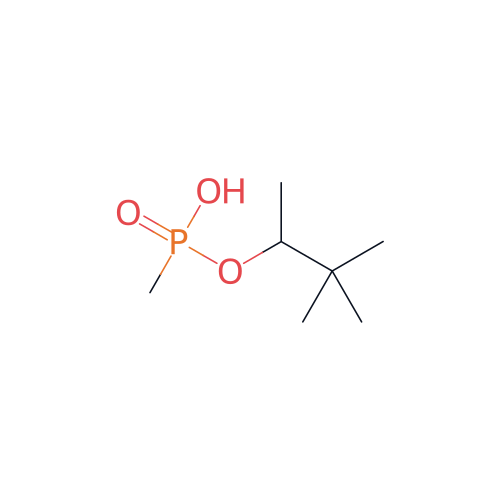
Similar structures
Nearest neighbours by Morgan fingerprint Tanimoto similarity

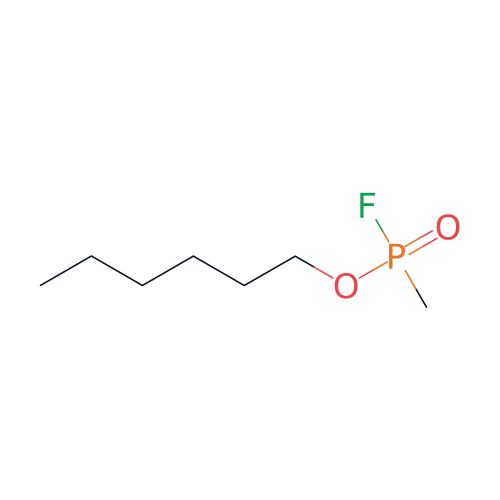
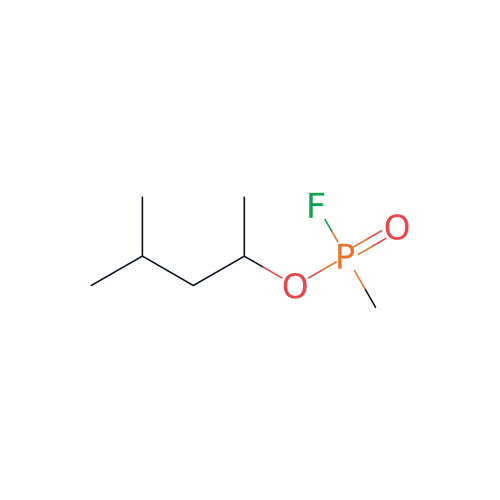
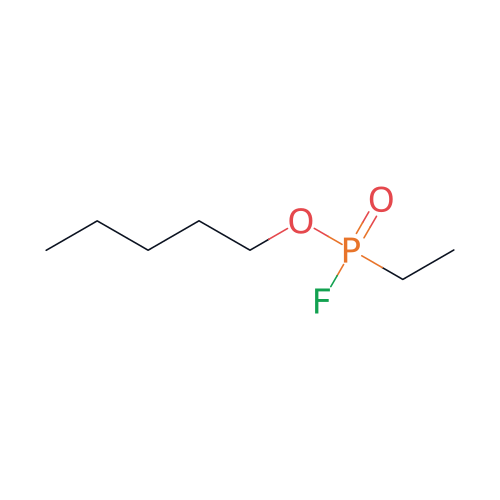
Same formula isomers
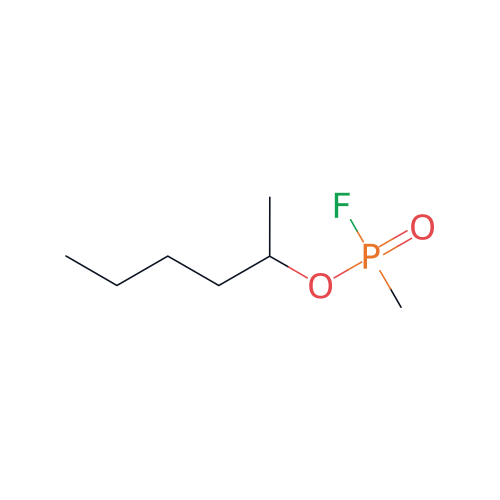
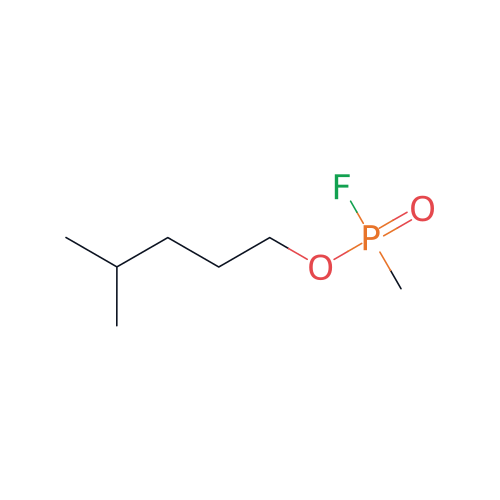
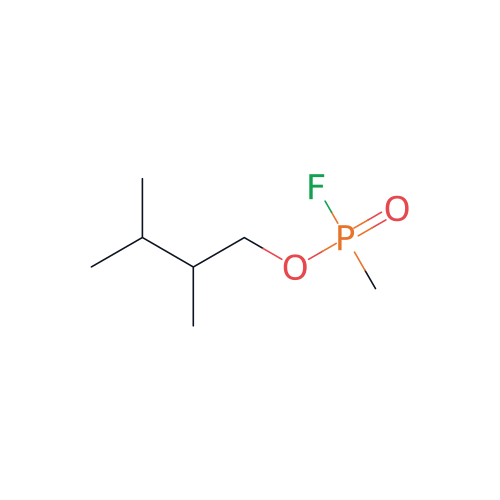
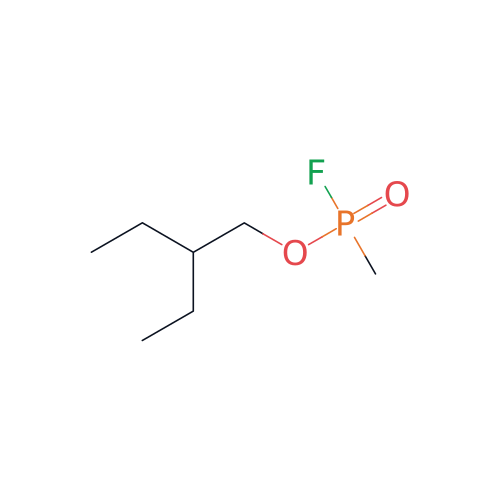
Different compounds that share this molecular formula




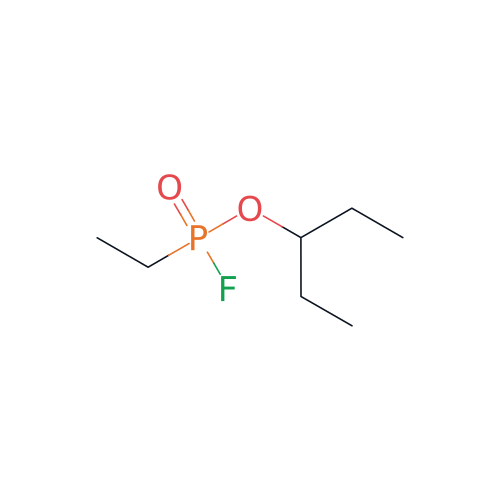
Frequently asked questions
Quick answers about Soman, based on the data on this page
What is Soman?
What is the CAS number of Soman?
What is the molecular formula and weight of Soman?
What is Soman used for?
Is Soman hazardous?
What is the HS code of Soman?
Can I buy Soman on CompoundList?
Guides for buyers
Practical guides that help when you source, ship or handle Soman
- Guide, Trade and logisticsHS codes for chemicals and why they matterHow the Harmonized System classifies chemicals, the chapters that matter, the rules for chemically defined compounds and mixtures, and practical steps to find the right code.Read
- Guide, Chemical identityCAS registry numbers explainedWhat a CAS number identifies, how the check digit works, why one chemical can have several numbers and what a CAS number cannot tell you about a product.Read
- Guide, RegulationImporting chemicals into India: documents and complianceThe registrations, import policy checks, product specific licences, duties and documents you need to import chemicals into India, step by step.Read
Explore more in Sulfur and phosphorus compounds or HS code 293149