Salts and minerals
Copper sulfate vs zinc sulfate
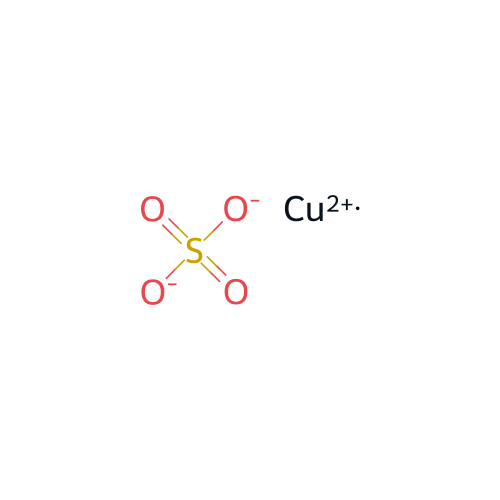
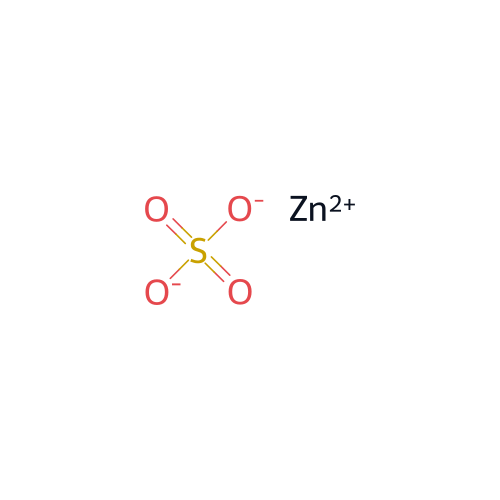
Copper sulfate (CuO4S, CAS 7758-98-7) and zinc sulfate (O4SZn, CAS 7733-02-0) are both listed under sulfates and sulfur salts.
Copper sulfate has a molar mass of 159.61 g/mol, zinc sulfate 161.45 g/mol.
Measured melting points are 590 °C for copper sulfate and 680 °C for zinc sulfate.
Copper sulfate carries the GHS signal word Warning, zinc sulfate Danger.
On CompoundList, 579 suppliers list copper sulfate and 401 suppliers list zinc sulfate.
Data last updated 7 October 2026
 |  | |
|---|---|---|
| Identity | ||
| Name in our database | Copper sulfate | Zinc sulfate |
| CAS number | 7758-98-7 | 7733-02-0 |
| Molecular formula | CuO4S | O4SZn |
| Molar mass | 159.61 g/mol | 161.45 g/mol |
| IUPAC name | copper sulfate | zinc sulfate |
| EC number | 231-847-6 | 231-793-3 |
| Physical properties | ||
| Appearance | Grayish-white to greenish-white rhombic crystals or amorphous powder /SRP: somewhat wet/ | Colorless, orthorhombic crystals |
| Melting point | 590 °C | 680 °C |
| Boiling point | 650 °C | Not recorded |
| Density | 3.6 g/cm³ | 3.8 g/cm³ |
| Solubility | In water, 243 g/l @ 0 °C. | 54.480 lb/100 lb water /Heptahydrate/ |
| LogP (octanol/water)Computed from the structure | -1.34 | -1.34 |
| Safety (GHS) | ||
| Signal word | Warning | Danger |
| Pictograms | ||
| Hazard statements |
|
|
| UN number | UN 3288 | UN 3077 |
| Uses and classification | ||
| Uses and functions |
|
|
| Category | Inorganic chemicals › Sulfates and sulfur salts | Inorganic chemicals › Sulfates and sulfur salts |
| HS code | 283325Of copper | 283329Sulphates, alums, peroxosulphates (persulphates), other |
| Market on CompoundList | ||
| Suppliers | 579 suppliers | 401 suppliers |
| Supplier countries | 59 countries, most in India, United States, China | 49 countries, most in India, China, United States |
| Price rangeOnly prices set by suppliers who manage their own profile | Price on request | Price on request |
Measured and computed values as shown on each chemical page, plus live listings on CompoundList. Details may have changed, please confirm them with the supplier. Safety data is a summary, not an SDS.
Copper sulfate
More comparisons
Other common chemical pairs, compared the same way.
- Sodium carbonate vs sodium bicarbonate
- Sodium chloride vs potassium chloride
- Calcium chloride vs magnesium chloride
- Magnesium sulfate vs magnesium chloride
- Magnesium oxide vs magnesium hydroxide
- Calcium carbonate vs calcium hydroxide
- Sodium metabisulfite vs sodium bisulfite
- Sodium nitrite vs sodium nitrate