C10H6ClNO2
172 compounds have this formula on CompoundList.
- Molar mass
- 207.61g/mol
- Monoisotopic mass
- 207.0087Da
- Atoms
- 20
- Elements
- 5
- Rings plus double bonds
- 8
The formula C10H6ClNO2 describes a molecule made of 10 carbon atoms, 6 hydrogen atoms, 1 chlorine atom, 1 nitrogen atom and 2 oxygen atoms. It is written in Hill notation: carbon first, then hydrogen, then the other elements in alphabetical order. The formula tells you which atoms are present, not how they are connected, which is why several different chemicals can share it.
Elemental composition
- C Carbon × 1057.85%12.011 × 10 = 120.110 g/mol
- H Hydrogen × 62.91%1.008 × 6 = 6.048 g/mol
- Cl Chlorine × 117.08%35.45 × 1 = 35.450 g/mol
- N Nitrogen × 16.75%14.007 × 1 = 14.007 g/mol
- O Oxygen × 215.41%15.999 × 2 = 31.998 g/mol
Compounds with the formula C10H6ClNO2
Isomers we list, best known first. Open one to see its structure, properties, safety data and suppliers.
Showing 101 to 172 of 172 compounds

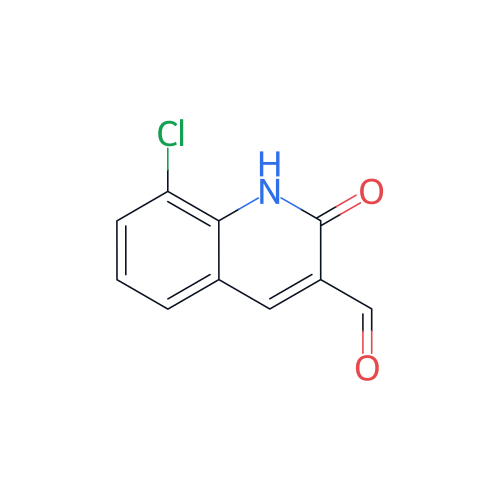

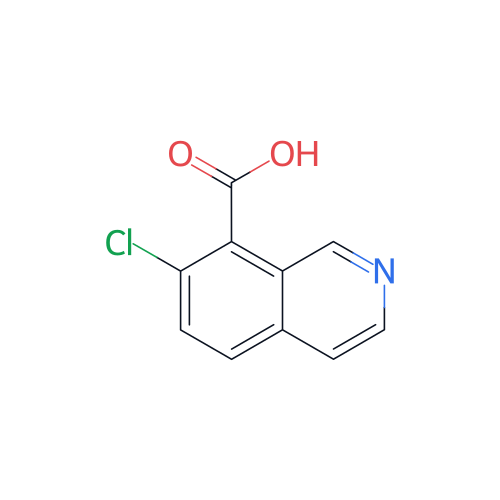

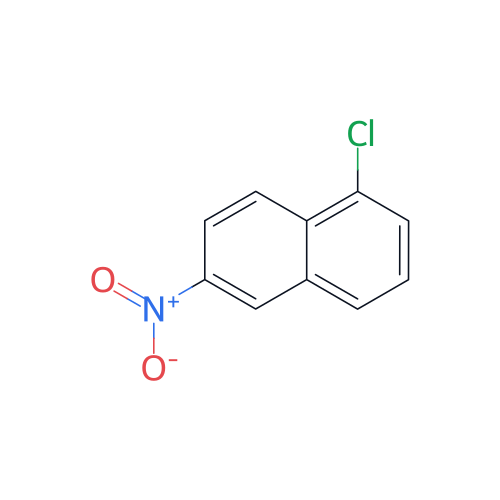
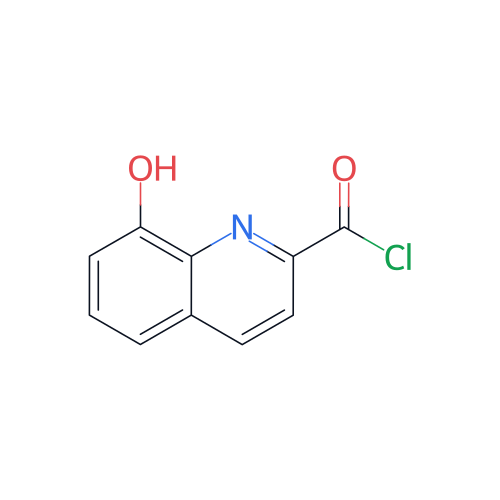
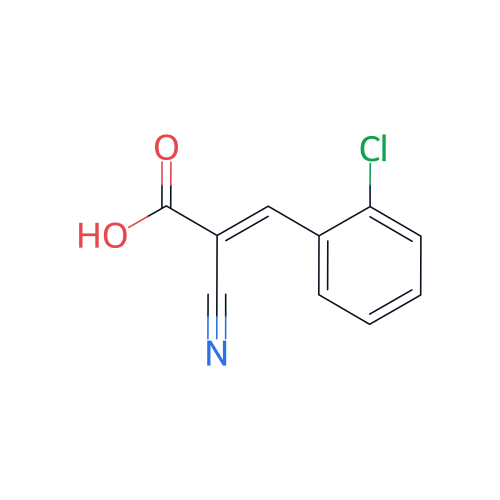

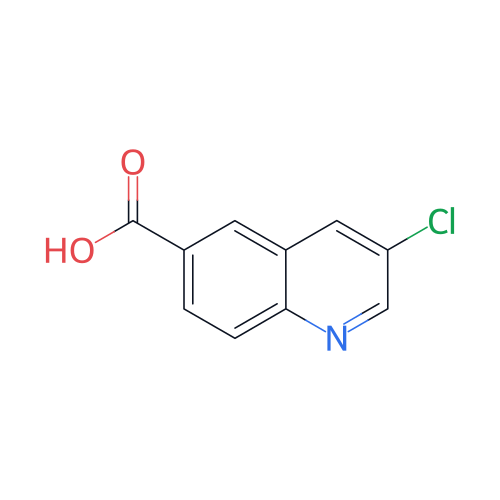


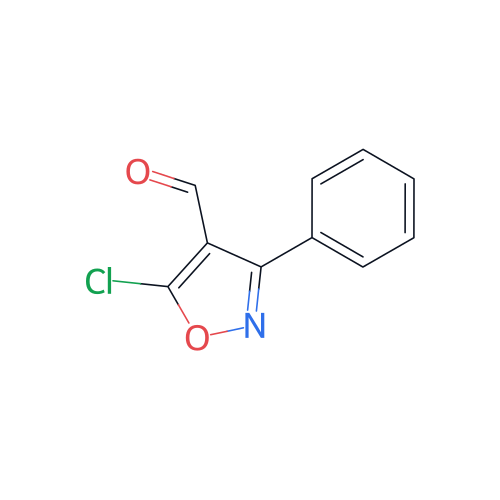
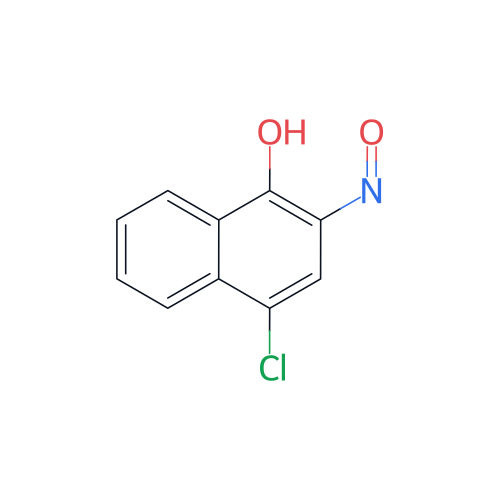
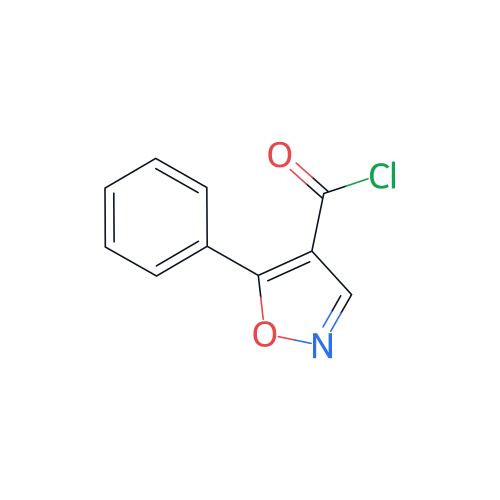
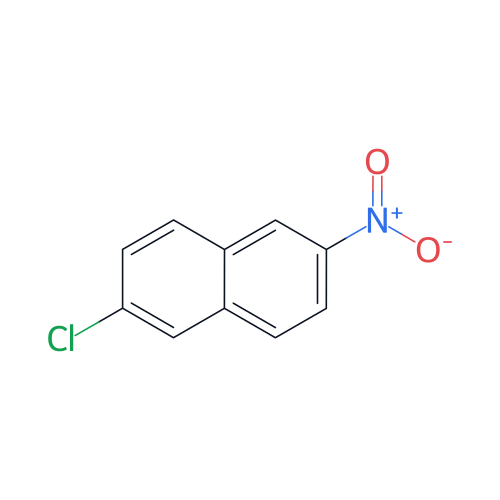
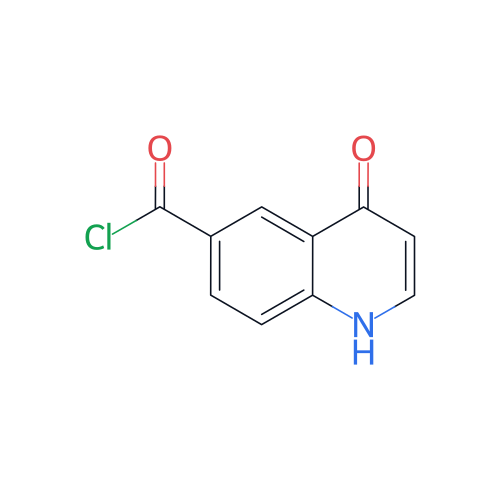
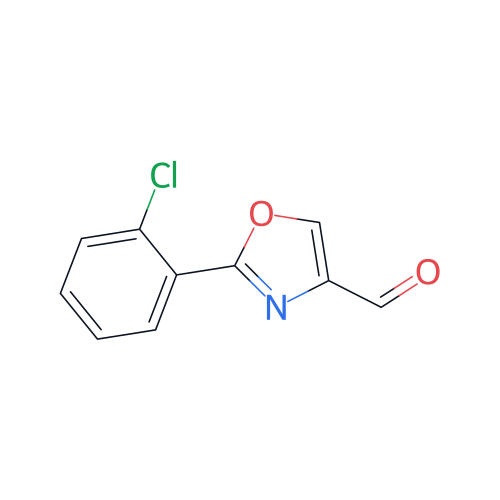
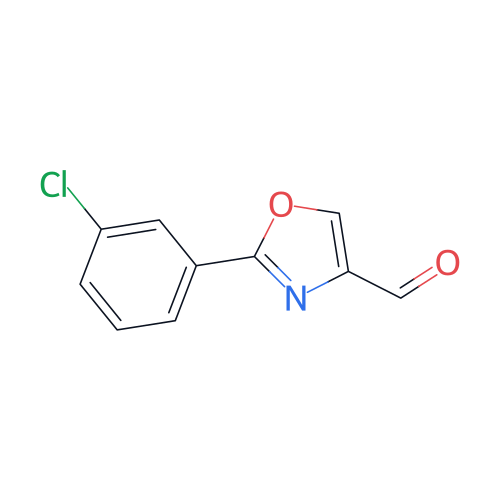

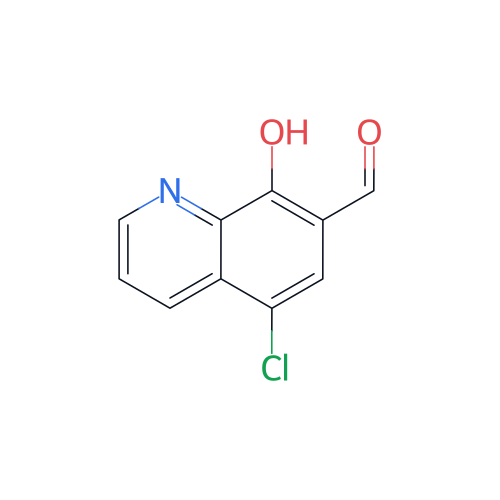

- 4-Chloroisoquinoline-8-carboxylic acid1823324-56-6C10H6ClNO2
- 1-Chloro-7-nitronaphthalene102153-58-2C10H6ClNO2
- 2-Propenoic acid, 3-(2-chlorophenyl)-2-cyano-10487-66-8C10H6ClNO2
- 2-Chloro-1-nitronaphthalene4185-63-1C10H6ClNO2
- 2-Chloro-6-hydroxyquinoline-3-carbaldehyde741705-20-4C10H6ClNO2
- 3-Chloroquinoline-4-carboxylic acid1824481-91-5C10H6ClNO2
- 5-(Pyridin-2-yl)furan-2-carbonyl chloride554453-73-5C10H6ClNO2
- 5-Chloroisoquinoline-4-carboxylic acid1368270-12-5C10H6ClNO2
- 1,2-Dihydro-2-oxo-3-quinolinecarbonyl chloride1261810-33-6C10H6ClNO2
- 5-Chloroisoquinoline-6-carboxylic acid1824145-47-2C10H6ClNO2
- 6-Chloroquinoline-7-carboxylic acid2226197-95-9C10H6ClNO2
- 4,5-Dihydrooxazole-5-one, 4-chloromethylene-2-phenyl-89363-86-0C10H6ClNO2
- 1-Chloro-3-nitronaphthalene53526-29-7C10H6ClNO2
- 3-(4-Chlorophenyl)-1H-pyrrole-2,5-dione21724-87-8C10H6ClNO2
- 7-Chloro-2-nitrosonaphthalen-1-ol56820-59-8C10H6ClNO2
- 3-(2-Chlorophenyl)-1H-pyrrole-2,5-dione21724-91-4C10H6ClNO2
- 2-Chloro-7-nitronaphthalene56961-38-7C10H6ClNO2
- 4-Chloroisoquinoline-1-carboxylic acid1179149-31-5C10H6ClNO2
- 7-Chloro-6-quinolinecarboxylic acid1379311-06-4C10H6ClNO2
- 3-Chloro-1-nitrosonaphthalen-2-ol6639-33-4C10H6ClNO2
- (4-Chlorophenyl)(1,2-oxazol-3-yl)methanone113076-08-7C10H6ClNO2
- 3-Chloroisoquinoline-8-carboxylic acid1337880-43-9C10H6ClNO2
- 7-Hydroxyquinoline-3-carbonyl chloride1261845-43-5C10H6ClNO2
- 5-(6-Chloropyridin-2-yl)furan-2-carbaldehyde2436316-82-2C10H6ClNO2
- 5-(5-Chloro-2-pyridinyl)furan-2-carbaldehyde342601-07-4C10H6ClNO2
- 5-(6-Chloropyridin-3-yl)furan-2-carbaldehyde403657-28-3C10H6ClNO2
- 6-Chloro-3-methylquinoline-5,8-dione160196-24-7C10H6ClNO2
- 8-Hydroxyquinoline-5-carbonyl chloride166242-16-6C10H6ClNO2
- 7-Chloro-1H-2-benzazepine-1,3(2H)-dione56820-68-9C10H6ClNO2
- 8-Chloro-1H-2-benzazepine-1,3(2H)-dione56820-61-2C10H6ClNO2
- 5-(5-Chloro-3-pyridinyl)furan-2-carbaldehyde342601-03-0C10H6ClNO2
- 2-(2-Chlorophenyl)-1,3-oxazole-5-carbaldehyde951030-60-7C10H6ClNO2
- (E)-3-(2-Chloro-3-cyanophenyl)acrylic acid1262012-15-6C10H6ClNO2
- (E)-4-(Chloromethylene)-2-phenyloxazol-5(4H)-one89363-85-9C10H6ClNO2
- 7-Chloro-1-oxo-3,4-dihydro-1H-2-benzopyran-3-carbonitrile1594475-10-1C10H6ClNO2
- 5-Chloro-1-oxo-3,4-dihydro-1H-2-benzopyran-3-carbonitrile1602393-91-8C10H6ClNO2
- 8-Chloro-1-oxo-3,4-dihydro-1H-2-benzopyran-3-carbonitrile1598138-51-2C10H6ClNO2
- 6-Chloro-1-oxo-3,4-dihydro-1H-2-benzopyran-3-carbonitrile1599317-88-0C10H6ClNO2
- 8-Chloroisoquinoline-1-carboxylic acid1416714-06-1C10H6ClNO2
- (3-Chlorophenyl)(isoxazol-3-yl)methanone2580477-98-9C10H6ClNO2
- 6-Chloroisoquinoline-4-carboxylic acid2384172-06-7C10H6ClNO2
- 7-Chloroisoquinoline-5-carboxylic acid1368079-58-6C10H6ClNO2
- 3-(4-Chloro-3-cyanophenyl)acrylic acid1262012-18-9C10H6ClNO2
- 4-Hydroxyquinoline-5-carbonyl chloride1261544-20-0C10H6ClNO2
- 8-Chloro-4-oxochromane-7-carbonitrile1273664-35-9C10H6ClNO2
- 6-Hydroxyquinoline-3-carbonyl chloride1261810-63-2C10H6ClNO2
- 8-Hydroxyquinoline-3-carbonyl chloride1261810-79-0C10H6ClNO2
- 5-Hydroxyquinoline-3-carbonyl chloride1261810-53-0C10H6ClNO2
Frequently asked questions
What is the molar mass of C10H6ClNO2?
The molar mass of C10H6ClNO2 is 207.61 g/mol, calculated from standard atomic weights for 10 carbon atoms, 6 hydrogen atoms, 1 chlorine atom, 1 nitrogen atom and 2 oxygen atoms. The monoisotopic mass is 207.0087 Da.
How many compounds have the formula C10H6ClNO2?
CompoundList lists 172 compounds with the molecular formula C10H6ClNO2, including (5e)-5-[(2-Chlorophenyl)imino]furan-2(5H)-one, 8-Chloro-2-hydroxyquinoline-3-carbaldehyde, 1-Hydroxyisoquinoline-4-carbonyl chloride. Compounds that share a formula are isomers. They contain the same atoms arranged differently, so their properties, uses and prices can be very different.
What is the degree of unsaturation of C10H6ClNO2?
C10H6ClNO2 has a degree of unsaturation of 8. That is the total number of rings and pi bonds (a double bond counts as one, a triple bond as two) in any structure with this formula.