C13H17NO3
1,739 compounds have this formula on CompoundList.
- Molar mass
- 235.28g/mol
- Monoisotopic mass
- 245.1836Da
- Atoms
- 34
- Elements
- 4
- Rings plus double bonds
- 6
The formula C13H17NO3 describes a molecule made of 13 carbon atoms, 17 hydrogen atoms, 1 nitrogen atom and 3 oxygen atoms. It is written in Hill notation: carbon first, then hydrogen, then the other elements in alphabetical order. The formula tells you which atoms are present, not how they are connected, which is why several different chemicals can share it.
Elemental composition
- C Carbon × 1366.36%12.011 × 13 = 156.143 g/mol
- H Hydrogen × 177.28%1.008 × 17 = 17.136 g/mol
- N Nitrogen × 15.95%14.007 × 1 = 14.007 g/mol
- O Oxygen × 320.40%15.999 × 3 = 47.997 g/mol
Compounds with the formula C13H17NO3
Isomers we list, best known first. Open one to see its structure, properties, safety data and suppliers.
Showing 901 to 1,000 of 1,739 compounds
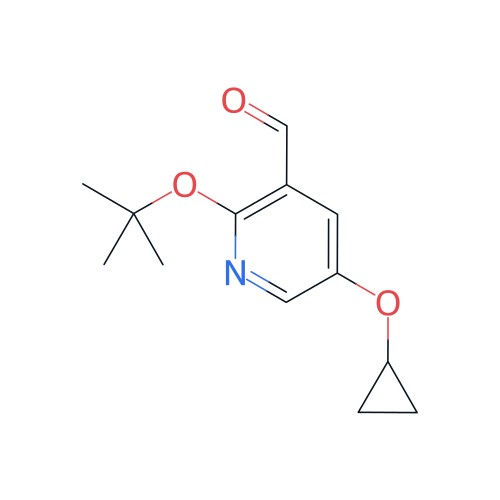


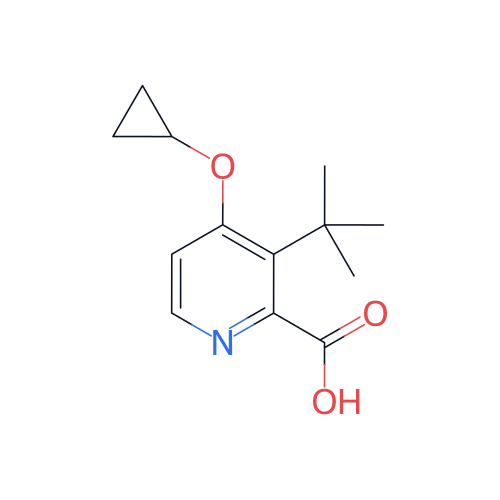
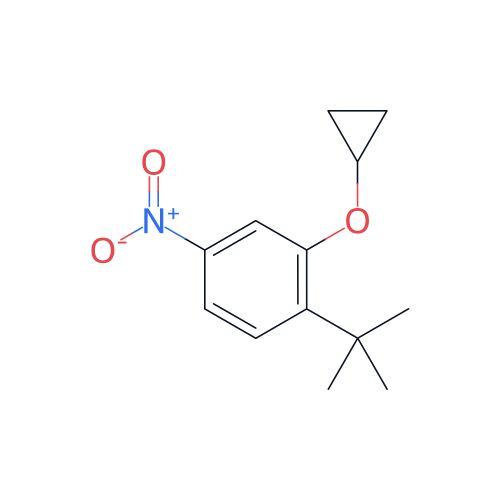
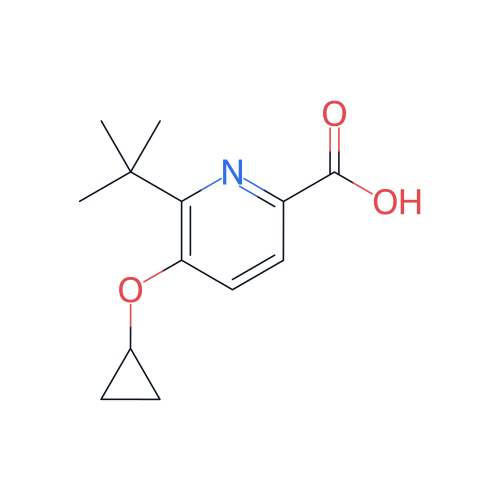
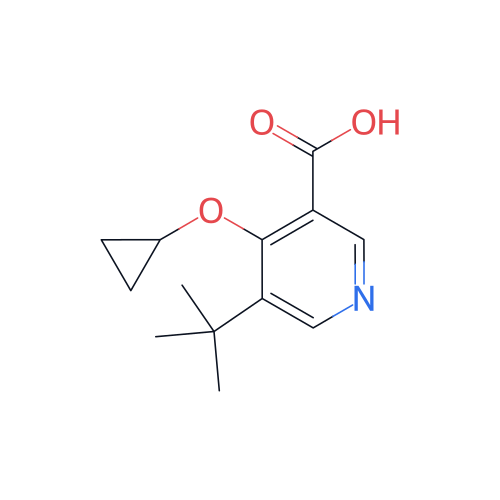
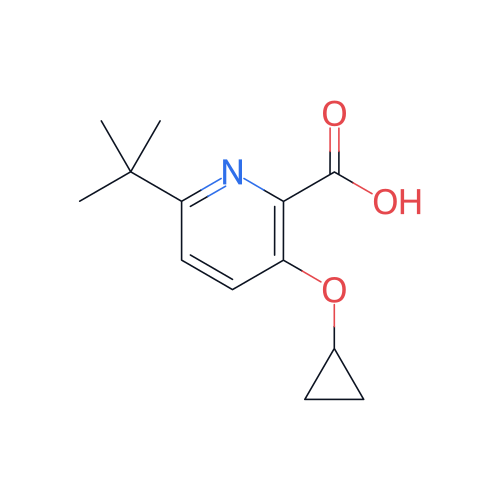

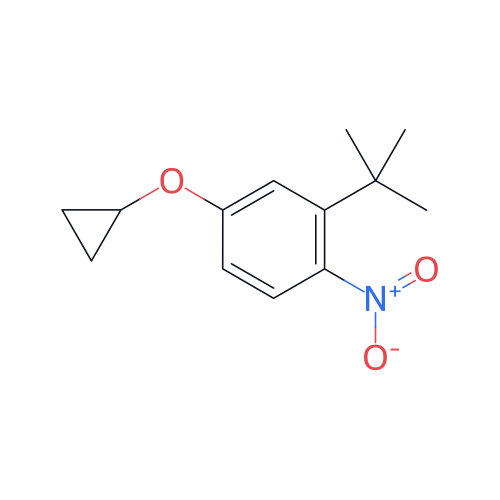

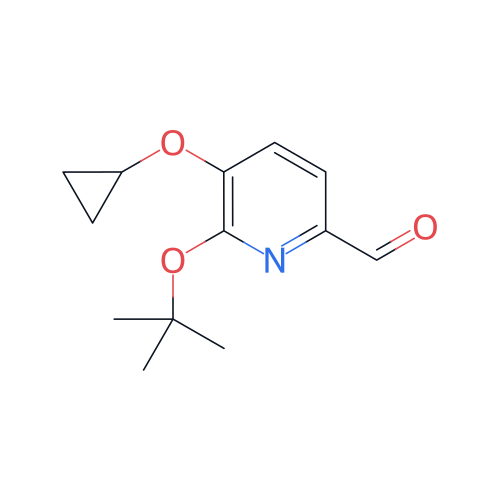

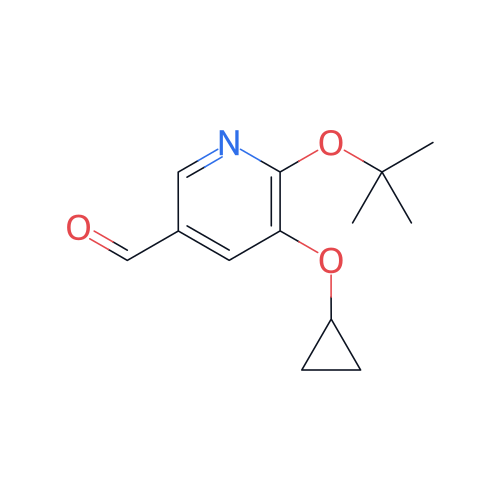

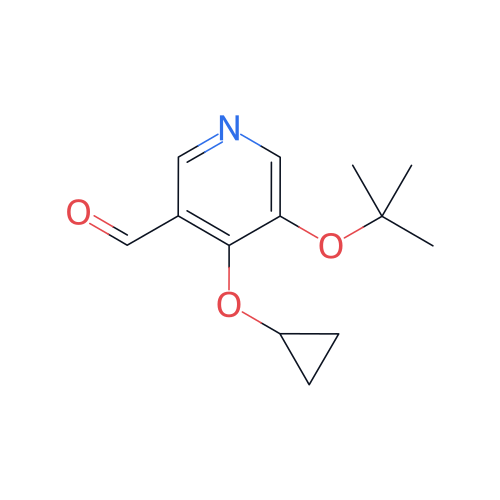


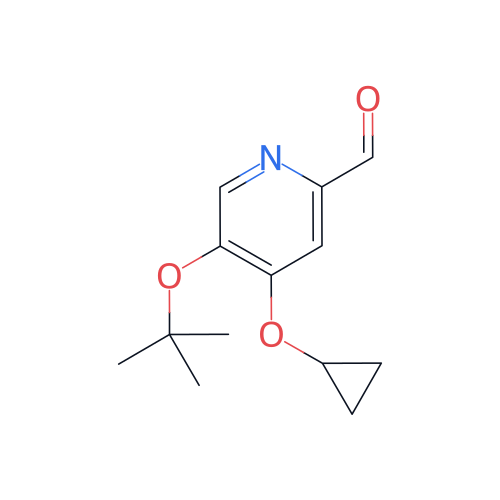

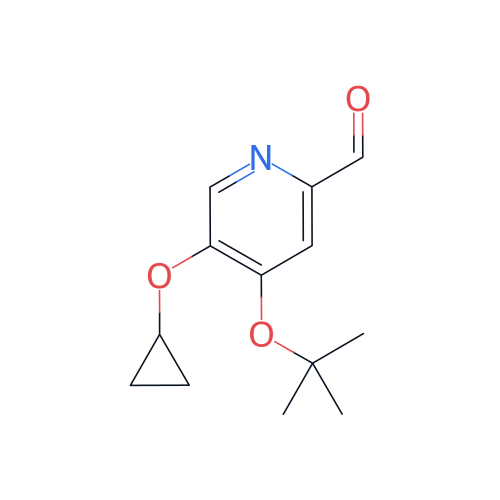
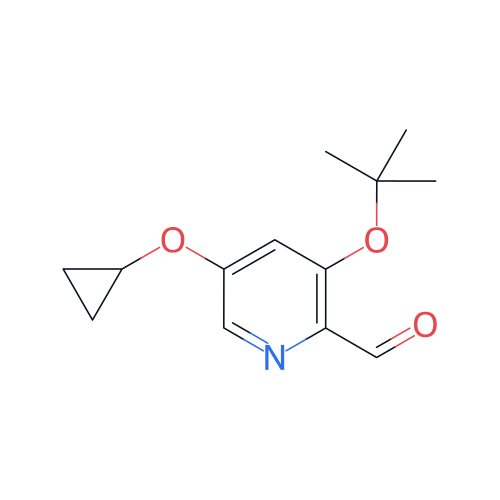

- 3-tert-Butoxy-4-cyclopropoxypicolinaldehyde1243344-82-2C13H17NO3
- 2-Amino-2-(4-cyclopentyloxyphenyl)acetic acid1270306-56-3C13H17NO3
- 2-Amino-2-(3-cyclopentyloxyphenyl)acetic acid1270308-74-1C13H17NO3
- (3S)-3-(2,3-Dimethylphenyl)-3-acetamidopropanoic acid1391532-85-6C13H17NO3
- Ethyl 1-amino-6-methoxy-2,3-dihydro-1H-indene-1-carboxylate1522575-91-2C13H17NO3
- tert-Butyl 3,4-dihydro-2H-1,4-benzoxazine-8-carboxylate1555726-44-7C13H17NO3
- (3-Hydroxy-2-methylphenyl)(4-hydroxypiperidin-1-yl)methanone1556005-97-0C13H17NO3
- 2,2-Dimethyl-2-[(1-phenylethyl)carbamoyl]acetic acid1510888-59-1C13H17NO3
- 4-Methoxy-3-[(1-methyl-3-pyrrolidinyl)oxy]benzaldehyde158429-05-1C13H17NO3
- 4-(5,5-Dimethylmorpholin-2-yl)benzoic acid1536312-40-9C13H17NO3
- 2-(5,5-Dimethylmorpholin-2-yl)benzoic acid1533603-48-3C13H17NO3
- 5-(3-Methoxyphenyl)-1-methylpyrrolidine-3-carboxylic acid1781823-31-1C13H17NO3
- 5-(4-Methoxyphenyl)-1-methylpyrrolidine-3-carboxylic acid1782896-35-8C13H17NO3
- Methyl 5-amino-2-(cyclobutylmethoxy)benzoate1780708-85-1C13H17NO3
- tert-Butyl N-(2-formyl-5-methylphenyl)carbamate1779881-00-3C13H17NO3
- Benzyl N-[1-(hydroxymethyl)cyclobutyl]carbamate144877-12-3C13H17NO3
- Ethyl 3-(4-aminophenyl)-2-ethoxy-2-propenoate539814-14-7C13H17NO3
- Benzyl 3-oxonorleucinate781614-04-8C13H17NO3
- 2-Hydroxyethyl 3-[4-(dimethylamino)phenyl]-2-propenoate851232-79-6C13H17NO3
- 2-(Benzo[d][1,3]dioxol-5-yl)-N,N-diethylacetamide1624706-49-5C13H17NO3
- tert-Butyl N-(3-formylphenyl)-N-methylcarbamate2770501-76-1C13H17NO3
- 3-(Isobutylcarbamoyl)-5-methylbenzoic acid2036979-14-1C13H17NO3
- rac-Benzyl N-[(1R,2S)-2-(hydroxymethyl)cyclobutyl]carbamate1443928-97-9C13H17NO3
- Benzyl N-[1-(hydroxymethyl)cyclopropyl]-N-methylcarbamate1445884-19-4C13H17NO3
- Methyl (2R,3S)-2-(4-methoxyphenyl)pyrrolidine-3-carboxylate1314641-04-7C13H17NO3
- 2-Methoxy-4,5-dimethyl-I(3)-oxobenzenebutanamide1225738-92-0C13H17NO3
- 2-(4-Methoxy-3-methylphenyl)-2-oxo-N-propylacetamide1268135-97-2C13H17NO3
- 2,2-Dimethyl-2-{[(1R)-1-phenylethyl]carbamoyl}acetic acid1799660-37-9C13H17NO3
- (2R)-2-Amino-2-(4-cyclopentyloxyphenyl)acetic acid1269982-89-9C13H17NO3
- (2R)-2-Amino-2-(3-cyclopentyloxyphenyl)acetic acid1269948-48-2C13H17NO3
- Cyclohexanecarboxylic acid, 1-(3-methoxy-2-pyridinyl)-1500812-38-3C13H17NO3
- Cyclohexanecarboxylic acid, 1-(5-methoxy-2-pyridinyl)-1516282-45-3C13H17NO3
- Cyclohexanecarboxylic acid, 1-(6-methoxy-2-pyridinyl)-1510035-65-0C13H17NO3
- Ethyl 1-methyl-2-oxo-1,2,5,6,7,8-hexahydroquinoline-3-carboxylate1420794-33-7C13H17NO3
- 1,7,7-Trimethyl-2-oxo-1,2,5,6,7,8-hexahydroquinoline-3-carboxylic acid1420791-44-1C13H17NO3
- 6-((1-Ethylcyclobutyl)methoxy)nicotinic acid1427014-73-0C13H17NO3
- (2S,6S)-4-Benzyl-6-methylmorpholine-2-carboxylic acid1932178-65-8C13H17NO3
- 3-(8-Methoxy-1,2,3,4-tetrahydroquinolin-5-yl)propanoic acid1706432-71-4C13H17NO3
- 3-Hydroxy-6-[(2-oxocycloheptyl)methyl]-2(1H)-pyridinone24387-39-1C13H17NO3
- Ethyl 2-methyl-2-[methyl(phenyl)carbamoyl]acetate1174045-74-9C13H17NO3
- Ethyl (4S)-4-phenyl-3-oxazolidineacetate1015788-00-7C13H17NO3
- 4-Methoxypiperidin-1-yl benzoate1510821-52-9C13H17NO3
- 2-(3-Methoxypiperidin-1-yl)benzoic acid1976877-41-4C13H17NO3
- 7-Methoxy-3H-spiro[[1]benzofuran-2,4'-piperidin]-3-ol1784440-00-1C13H17NO3
- N-Allyloxycarbonyl-L-phenylalaninol154659-29-7C13H17NO3
- 3-Amino-2-(cyclohexyloxy)benzoic acid1369923-34-1C13H17NO3
- N-Allyloxycarbonyl-D-phenylalaninol1282623-46-4C13H17NO3
- 2-(4-Hydroxy-3-methylpiperidin-1-yl)benzoic acid1778369-89-3C13H17NO3
- 4-(4-Hydroxy-3-methylpiperidin-1-yl)benzoic acid1777555-60-8C13H17NO3
- 2-Amino-3-(cyclohexyloxy)benzoic acid1550626-50-0C13H17NO3
- Methyl 2-amino-3-(cyclopentyloxy)benzoate1547866-78-3C13H17NO3
- Methyl 4-[3-(hydroxymethyl)-1-pyrrolidinyl]benzoate1892559-11-3C13H17NO3
- Methyl 4-((2S,4S)-4-hydroxypiperidin-2-yl)benzoate1644667-73-1C13H17NO3
- Methyl 5-(hydroxymethyl)-2-(pyrrolidin-1-yl)benzoate1870852-29-1C13H17NO3
- 4-Formyl-N-(2-isopropoxyethyl)benzamide1061567-05-2C13H17NO3
- 4-Isopropyl-2,3,4,5-tetrahydrobenzo[f][1,4]oxazepine-7-carboxylic acid2098010-47-8C13H17NO3
- 3-(4-(Methoxymethyl)indolin-1-yl)propanoic acid2097984-67-1C13H17NO3
- 3-(5-(Methoxymethyl)indolin-1-yl)propanoic acid2097985-27-6C13H17NO3
- 3-(Diethylcarbamoyl)-5-methylbenzoic acid2038125-89-0C13H17NO3
- 2-(Acetamidomethyl)-2-phenylbutanoic acid100609-89-0C13H17NO3
- 3-[4-(Dimethylamino)phenyl]-2,2-dimethyl-3-oxopropanoic acid2059933-60-5C13H17NO3
- 3-[3-(Dimethylamino)phenyl]-2,2-dimethyl-3-oxopropanoic acid2060059-90-5C13H17NO3
- 5-Acetamido-5-phenylpentanoic acid1081550-64-2C13H17NO3
- Benzyl methyl(4-oxobutyl)carbamate1823242-86-9C13H17NO3
- 4-Benzyl-1,4-oxazepane-3-carboxylic Acid1262408-08-1C13H17NO3
- Benzyl 1,4-oxazepane-4-carboxylate1877950-30-5C13H17NO3
- Benzyl 3-methoxy-3-methylazetidine-1-carboxylate1858879-78-3C13H17NO3
- Benzyl 3-hydroxy-2,2-dimethylazetidine-1-carboxylate2091328-37-7C13H17NO3
- Ethyl 6-methoxy-1,2,3,4-tetrahydroisoquinoline-4-carboxylate1375066-30-0C13H17NO3
- 5-(Methoxymethyl)-2-(pyrrolidin-1-yl)benzoic acid1870852-31-5C13H17NO3
- 4-Methyl-3-(4-morpholinylmethyl)benzoic acid1226974-20-4C13H17NO3
- Benzyl 3-(hydroxymethyl)-3-methylazetidine-1-carboxylate2169192-35-0C13H17NO3
- (E)-N-[(2-Hydroxyphenyl)methylidene]-L-isoleucine849091-98-1C13H17NO3
- Benzyl N-[2-(1-hydroxycyclopropyl)ethyl]carbamate2271472-27-4C13H17NO3
- 1-[2-Amino-1-(4-hydroxyphenyl)ethyl]cyclobutane-1-carboxylic acid2059970-53-3C13H17NO3
- 1-[2-Amino-1-(2-hydroxyphenyl)ethyl]cyclobutane-1-carboxylic acid2060021-03-4C13H17NO3
Frequently asked questions
What is the molar mass of C13H17NO3?
The molar mass of C13H17NO3 is 235.28 g/mol, calculated from standard atomic weights for 13 carbon atoms, 17 hydrogen atoms, 1 nitrogen atom and 3 oxygen atoms. The monoisotopic mass is 245.1836 Da.
How many compounds have the formula C13H17NO3?
CompoundList lists 1,739 compounds with the molecular formula C13H17NO3, including 2-tert-Butoxy-5-cyclopropoxynicotinaldehyde, 2-tert-Butyl-5-cyclopropoxynicotinic acid, 3-tert-Butyl-5-cyclopropoxyisonicotinic acid. Compounds that share a formula are isomers. They contain the same atoms arranged differently, so their properties, uses and prices can be very different.
What is the degree of unsaturation of C13H17NO3?
C13H17NO3 has a degree of unsaturation of 6. That is the total number of rings and pi bonds (a double bond counts as one, a triple bond as two) in any structure with this formula.