Bacillomycin safety data
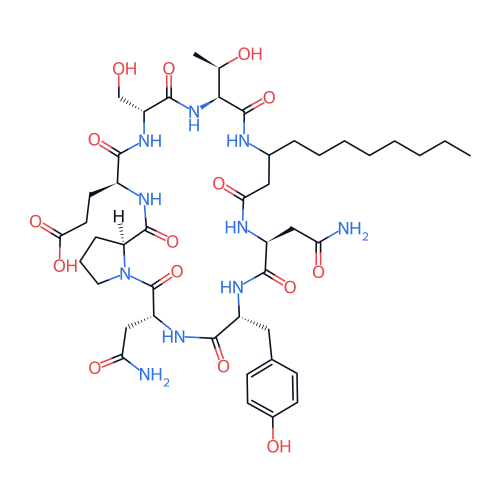
GHS classification summary, not a safety data sheet (SDS). Classifications can differ by supplier, grade and concentration. Always check the supplier's SDS.
GHS classification
Pictograms, signal word and hazard classes of the GHS classification
Hazard classes and categories
- Skin Irrit. 2
- Eye Dam. 1
- Resp. Sens. 1
- STOT SE 3 (respiratory irritation)
Hazard statements
H codes grouped by type. Percentages show the share of classification notifications that report the statement
Health hazards
- H315Causes skin irritation.
- H318Causes serious eye damage.
- H334May cause allergy or asthma symptoms or breathing difficulties if inhaled.
- H335May cause respiratory irritation.
Precautionary statements
P codes for prevention, response, storage and disposal
Prevention
- P233Keep container tightly closed.
- P260Do not breathe dust, fume, gas, mist, vapours or spray.
- P261Avoid breathing dust, fume, gas, mist, vapours or spray.
- P264Wash skin thoroughly after handling.
- P264 + P265Wash skin thoroughly after handling. Do not touch eyes.
- P271Use only outdoors or in a well-ventilated area.
- P280Wear protective gloves, protective clothing, eye protection and face protection.
- P284In case of inadequate ventilation wear respiratory protection.
Response
- P302 + P352If on skin: Wash with plenty of water.
- P304 + P340If inhaled: Remove person to fresh air and keep comfortable for breathing.
- P305 + P354 + P338If in eyes: Immediately rinse with water for several minutes. Remove contact lenses, if present and easy to do. Continue rinsing.
- P317Get medical help.
- P319Get medical help if you feel unwell.
- P321Specific treatment (see supplemental first aid instructions on the label).
- P332 + P317If skin irritation occurs: Get medical help.
- P342 + P316If experiencing respiratory symptoms: Get emergency medical help immediately.
- P362 + P364Take off contaminated clothing. And wash it before reuse.
Storage
- P403Store in a well-ventilated place.
- P403 + P233Store in a well-ventilated place. Keep container tightly closed.
- P405Store locked up.
Disposal
- P501Dispose of contents and container in accordance with local regulations.
First aid
General first aid measures. Get medical advice if you feel unwell
Handling, storage and disposal
Summaries only, follow the supplier SDS for your grade
Safe handling
Skin: Wear appropriate personal protective clothing to prevent skin contact.
Eyes: Wear appropriate eye protection to prevent eye contact.
Wash skin: When contaminated
Remove: When wet or contaminated
Change: Workers whose clothing may have become contaminated should change into uncontaminated clothing before leaving the work premises.
Storage
Alcalase 2.4L (Prod Code P4860) is is stable for at least one year when stored at 2-8 °C and 3 months when stored at 25 °C. Subtilisin A (Prod Code P5380) will lose less than 10% of its activity per year if stored at 4 °C. Long-term storage in excess of 20 °C is to be avoided.
Disposal
SRP: Wastewater from contaminant suppression, cleaning of protective clothing/equipment, or contaminated sites should be contained and evaluated for subject chemical or decomposition product concentrations. Concentrations shall be lower than applicable environmental discharge or disposal criteria. Alternatively, pretreatment and/or discharge to a permitted wastewater treatment facility is acceptable only after review by the governing authority and assurance that "pass through" violations will not occur. Due consideration shall be given to remediation worker exposure (inhalation, dermal and ingestion) as well as fate during treatment, transfer and disposal.
Exposure limits and toxicity
Occupational exposure limits and toxicity data
- NIOSH REL, STEL
- 0.00006 mg/m³ [60 minutes]
- ACGIH TLV, ceiling
- 0.00006 mg/m³
Supplier safety data sheets
SDS documents uploaded by suppliers who list this chemical
No supplier has uploaded an SDS for Bacillomycin yet. Suppliers usually send one with their quote. Request quotes
Safety questions
Quick answers about handling Bacillomycin safely
Is Bacillomycin hazardous?
Which GHS pictograms apply to Bacillomycin?
How should Bacillomycin be stored?
Where can I get the SDS for Bacillomycin?
GHS classification summary, not an SDS. Always check the supplier's SDS. Last updated 7 Oct 2026. Report an error