Sodium oxide
Also known as Disodium monoxide, Na2O, Sodium oxide (Na2O)
Key facts
What buyers check first
- Physical form
- Granules
- Melting point
- 1,275 °C
- Density
- 2.3 g/cm³
- Solubility
- Solubility in water: reaction
- HS code
- 281530
- Category
- Oxides and peroxides
- UN number
- UN 1825
What is Sodium oxide?
Plain description, key identifiers and synonyms
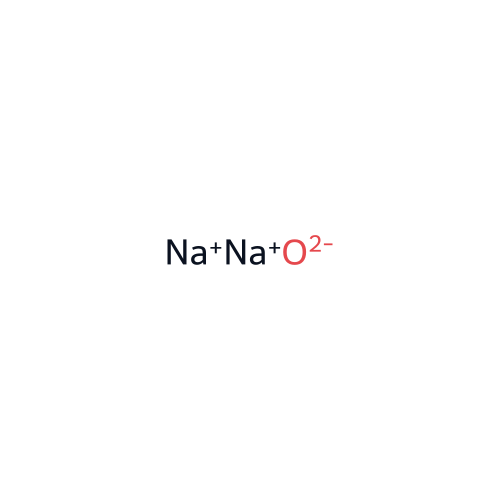
Sodium oxide is a chemical substance with the molecular formula Na2O and a molar mass of 61.98 g/mol. Its CAS registry number is 1313-59-3. The IUPAC name is disodium, oxygen(2-).
Identifiers
Registry numbers, names and line notations, tap to copy
- IUPAC name
- disodium, oxygen(2-)
- CAS number
- 1313-59-3 CAS number cross-checked
- EC numbers
- 215-208-9, 235-641-7
- Molecular formula
- Na2O
- UNII
- 3075U8R23D
- MDL number
- MFCD00046201
- INCI name
- SODIUM OXIDE
- InChIKey
- KKCBUQHMOMHUOY-UHFFFAOYSA-N
- InChI
- InChI=1S/2Na.O/q2*+1;-2
- SMILES (canonical and isomeric)
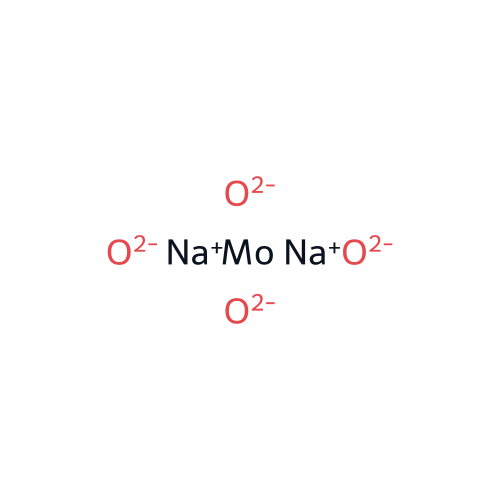
- [O-2].[Na+].[Na+]
Synonyms
- Disodium monoxide
- Na2O
- Sodium oxide (Na2O)
- Natrum Oxydatum
- Disodium oxide
- disodium, oxygen(2-)
- Sodium oxide, 80%
Physical and chemical properties
Measured values and descriptors computed from the structure
Physical and chemical properties
Measured values, check the supplier specification for your grade
| Physical form | Granulesexp.Measured value |
|---|---|
| Melting point | 1,275 °Cexp.Measured value |
| Density | 2.3 g/cm³exp.Measured value |
| Solubility | Solubility in water: reactionexp.Measured value |
Values vary by grade. Ask suppliers for the COA or TDS of the batch you buy.
Computed descriptors
Calculated from the structure, useful for screening and formulation
| Molecular weight | 61.98 g/molcalc.Computed value |
|---|---|
| Exact mass | 61.9745 Dacalc.Computed value |
| LogP (octanol/water) | -6.11calc.Computed value |
| Topological polar surface area | 28.5 Ųcalc.Computed value |
| Hydrogen bond donors | 0calc.Computed value |
| Hydrogen bond acceptors | 0calc.Computed value |
| Rotatable bonds | 0calc.Computed value |
| Heavy atoms | 3calc.Computed value |
| Rings | 0calc.Computed value |
| Aromatic rings | 0calc.Computed value |
| Fraction sp3 carbons | 0calc.Computed value |
| Formal charge | 0calc.Computed value |
| Stereocentres | 0calc.Computed value |
| Components | 3calc.Computed value |
Calculated for screening. Confirm critical figures with the supplier.
Safety and hazards
GHS classification summary, not a safety data sheet
Hazard statements
- H314Causes severe skin burns and eye damage.
- H318Causes serious eye damage.
Precautionary statements (14)
- P260Do not breathe dust, fume, gas, mist, vapours or spray.
- P264Wash skin thoroughly after handling.
- P264 + P265Wash skin thoroughly after handling. Do not touch eyes.
- P280Wear protective gloves, protective clothing, eye protection and face protection.
- P301 + P330 + P331If swallowed: Rinse mouth. Do not induce vomiting.
- P302 + P361 + P354If on skin: Take off immediately all contaminated clothing. Immediately rinse with water for several minutes.
- P304 + P340If inhaled: Remove person to fresh air and keep comfortable for breathing.
- P305 + P354 + P338If in eyes: Immediately rinse with water for several minutes. Remove contact lenses, if present and easy to do. Continue rinsing.
- P316Get emergency medical help immediately.
- P317Get medical help.
- P321Specific treatment (see supplemental first aid instructions on the label).
- P363Wash contaminated clothing before reuse.
- P405Store locked up.
- P501Dispose of contents and container in accordance with local regulations.
- UN number
- UN 1825
- Transport hazard class
- 8
- Packing group
- II
GHS classification summary, not a safety data sheet (SDS). Classifications can differ by supplier, grade and concentration. Always check the supplier's SDS.
Full safety data and first aidSodium oxide suppliers
Sponsored listings first, then the documented ranking: membership, verification, replies, completeness, freshness and ratings
- IndiaUnclaimed profileSodium oxideGrade, purity and minimum order on requestPrice on request
- United States, HoustonUnclaimed profileSodium oxideGrade, purity and minimum order on requestPrice on request
- United States, New YorkUnclaimed profileSodium oxideGrade, purity and minimum order on requestPrice on request
- United States, Charlotte ManufacturerUnclaimed profileSodium oxideGrade, purity and minimum order on requestPrice on request
- United States, Columbia ManufacturerUnclaimed profileSodium oxideGrade, purity and minimum order on requestPrice on request
- United States, Florham Park ManufacturerUnclaimed profileSodium oxideGrade, purity and minimum order on requestPrice on request
- United States, CantonUnclaimed profileSodium oxideGrade, purity and minimum order on requestPrice on request
- United States, Los AngelesUnclaimed profileSodium oxideGrade, purity and minimum order on requestPrice on request
- United States, St. Louis ManufacturerUnclaimed profileSodium oxideGrade, purity and minimum order on requestPrice on request
- United States, Millport ManufacturerUnclaimed profileSodium oxideGrade, purity and minimum order on requestPrice on request
Suppliers marked Unclaimed profile have not claimed their profile yet. They are not verified by CompoundList, their offers are price on request and details may have changed, so please confirm them with the supplier. Company representatives can claim a profile with a business email on the company's own website domain. Our team verifies each claim and sends the result by email.
Where suppliers are based
28 suppliers in 4 countries
Send one request to many suppliers
Choose up to 10 suppliers or let us match your request. Compare quotes side by side, free.
Sodium oxide price
Indicative price range per kg from live supplier offers
Suppliers quote this chemical on request. Send one free request and compare quotes side by side.
Uses and applications
What the substance is used for, by industry and function
Industrial uses: Other, Processing aids not otherwise specified, Stabilizing agent, Catalyst, Filler, Absorbent, Dehydrating agent (desiccant), Adsorbent.
Consumer uses: Filler, Catalyst, Dehydrating agent (desiccant), Adsorbent, Intermediate, Other, Abrasives.
Cosmetic ingredient, INCI name SODIUM OXIDE(buffering)
Functional uses
- Adsorbent
- Binder
- Flux agent
- pH regulating agent
Cosmetic functions
- Buffering
Regulatory status
Inventories, regulations and trade controls that list this substance
Health and food
- EU cosmetic ingredient inventory
- Active ingredient in FDA approved drug labels
United States
- TSCA inventory (USA)Status: Active in US commerce
HS code and trade data
Customs classification and reported world trade statistics
Global trade
World import and export statistics for the HS code Sodium oxide is traded under.
Peroxides of sodium or potassium
- China31.6%
- France * partner reported23.9%
- United States12.7%
- United States22.5%
- Germany10.0%
- South Africa9.9%
* Partner reported figures, a lower bound.
The HS code shown for Sodium oxide is indicative (it was assigned by structure rules). Confirm the classification with your customs broker before shipping.
Related chemicals
Parent and salt forms, stereoisomers, similar structures and isomers
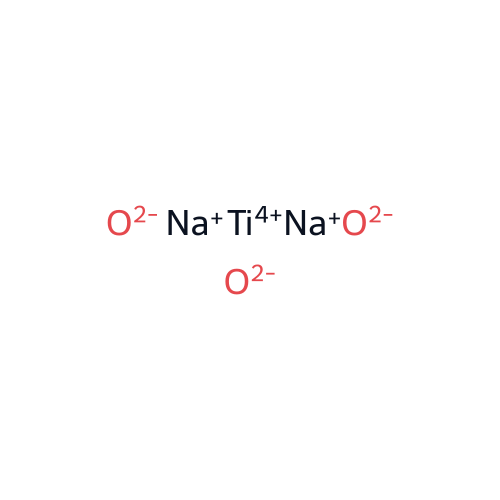
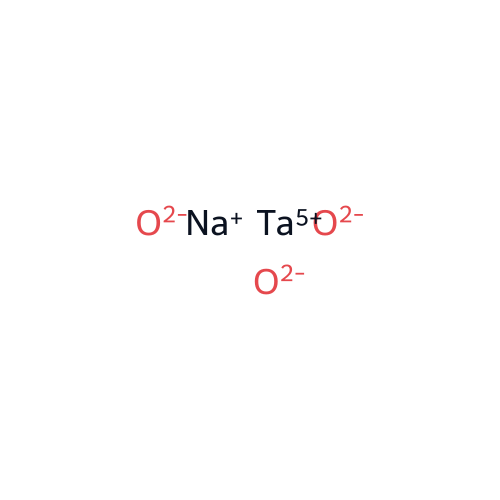
Similar structures
Nearest neighbours by Morgan fingerprint Tanimoto similarity


Frequently asked questions
Quick answers about Sodium oxide, based on the data on this page
What is Sodium oxide used for?
Is Sodium oxide hazardous?
Guides for buyers
Practical guides that help when you source, ship or handle Sodium oxide
- Guide, SafetyHow to read a safety data sheet in 10 minutesA section by section method to pull the essentials out of any 16 section SDS: identity, hazards, composition, storage, PPE, properties, transport and emergency measures.Read
- Guide, Trade and logisticsShipping dangerous goods: UN numbers, classes and packing groupsHow the UN dangerous goods system works for chemicals, from the nine classes and UN numbers to packing groups, UN packaging marks, labels, documents and segregation.Read
- Guide, SafetyGHS pictograms, signal words and hazard statements explainedA practical guide to the nine GHS pictograms, the signal words Danger and Warning, H and P statements, and how to read a chemical label in seconds.Read
Get quotes for Sodium oxide
Embed this structure on your websiteShow code
Paste this code into your page to show the 2D structure of Sodium oxide with a 3D view, its CAS number where known and a link back to this page. Free to use with the link kept.
<iframe src="https://www.compoundlist.com/embed/structure/sodium-oxide-1313-59-3" title="Sodium oxide structure on CompoundList" width="360" height="420" style="border:1px solid #E7E2DA;border-radius:12px;max-width:100%" loading="lazy" referrerpolicy="strict-origin-when-cross-origin"></iframe>Explore more in Oxides and peroxides or HS code 281530