Cosmetic and personal care ingredients
Niacinamide vs niacin
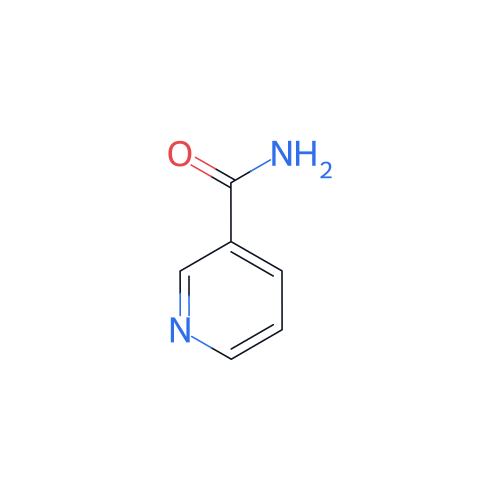
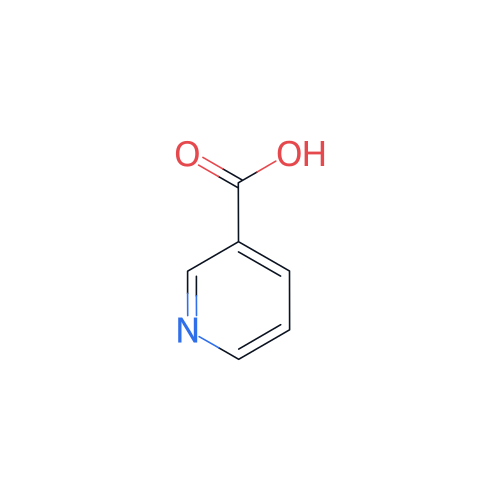
Niacinamide (C6H6N2O, CAS 98-92-0) and niacin (C6H5NO2, CAS 59-67-6) are both listed under vitamins and nutraceutical actives.
Niacinamide has a molar mass of 122.13 g/mol, niacin 123.11 g/mol.
Measured melting points are 128.8 °C for niacinamide and 237 °C for niacin.
Both carry the GHS signal word Warning.
On CompoundList, 318 suppliers list niacinamide and 244 suppliers list niacin.
Data last updated 7 October 2026
 |  | |
|---|---|---|
| Identity | ||
| Name in our database | Nicotinamide | Nicotinic acid |
| CAS number | 98-92-0 | 59-67-6 |
| Molecular formula | C6H6N2O | C6H5NO2 |
| Molar mass | 122.13 g/mol | 123.11 g/mol |
| IUPAC name | pyridine-3-carboxamide | pyridine-3-carboxylic acid |
| EC number | 202-713-4 | 200-441-0 |
| Physical properties | ||
| Appearance | White, powder, needles from benzene | Needles from alcohol or water |
| Melting point | 128.8 °C | 237 °C |
| Boiling point | 157 °C | Sublimes |
| Density | 1.400 g/cm³ at 25 °C | 1.473 g/cm³ at 25 °C |
| Flash point | 182 °C | 193 °C |
| Solubility | In water, 5 × 10⁺⁵ mg/L at 25 °C | In water, 1.8 × 10⁺⁴ mg/L at 20 °C |
| LogP (octanol/water)Computed from the structure | 0.18 | 0.78 |
| Safety (GHS) | ||
| Signal word | Warning | Warning |
| Pictograms | ||
| Hazard statements |
|
|
| Uses and classification | ||
| Uses and functions |
|
|
| Category | Pharmaceuticals and APIs › Vitamins and nutraceutical actives | Pharmaceuticals and APIs › Vitamins and nutraceutical actives |
| HS code | 293629Vitamins and their derivatives, unmixed, other vitamins and their derivatives | 293979Alkaloids, natural or reproduced by synthesis, and their salts, ethers, esters and other… |
| Market on CompoundList | ||
| Suppliers | 318 suppliers | 244 suppliers |
| Supplier countries | 40 countries, most in China, India, United States | 32 countries, most in China, United States, India |
| Price rangeOnly prices set by suppliers who manage their own profile | Price on request | Price on request |
Measured and computed values as shown on each chemical page, plus live listings on CompoundList. Details may have changed, please confirm them with the supplier. Safety data is a summary, not an SDS.
More comparisons
Other common chemical pairs, compared the same way.
- Sodium lauryl sulfate vs sodium laureth sulfate
- Titanium dioxide vs zinc oxide
- Avobenzone vs oxybenzone
- Retinol vs retinyl palmitate
- Salicylic acid vs glycolic acid
- Lactic acid vs glycolic acid
- Hydroquinone vs kojic acid
- Benzoyl peroxide vs salicylic acid
- Cetyl alcohol vs stearyl alcohol
- Squalane vs squalene