Cosmetic and personal care ingredients
Squalane vs squalene
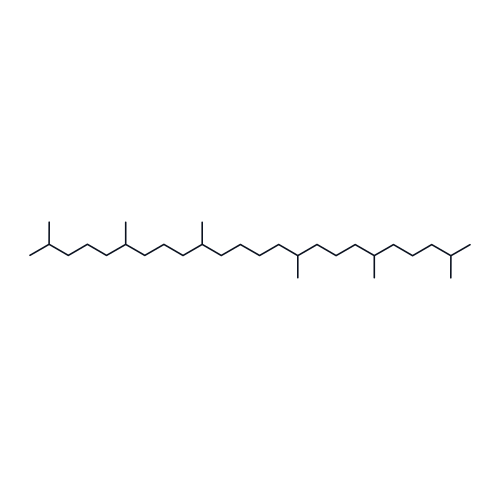
Squalane (C30H62, CAS 111-01-3) and squalene (C30H50, CAS 111-02-4) are both listed under emollients.
Squalane has a molar mass of 422.83 g/mol, squalene 410.73 g/mol.
Measured boiling points are 350 °C for squalane and 421.3 °C for squalene.
Squalene carries the GHS signal word Danger, while no signal word is recorded for squalane in our records.
On CompoundList, 84 suppliers list squalane and 92 suppliers list squalene.
Data last updated 7 October 2026
 |  | |
|---|---|---|
| Identity | ||
| Name in our database | Squalane | Squalene |
| CAS number | 111-01-3 | 111-02-4 |
| Molecular formula | C30H62 | C30H50 |
| Molar mass | 422.83 g/mol | 410.73 g/mol |
| IUPAC name | 2,6,10,15,19,23-hexamethyltetracosane | (6E,10E,14E,18E)-2,6,10,15,19,23-hexamethyltetracosa-2,6,10,14,18,22-hexaene |
| EC number | 203-825-6 | 203-826-1 |
| Physical properties | ||
| Appearance | Liquid | Oil, crystals from ether/methanol (-5 °C) |
| Melting point | Not recorded | -4.8 °C |
| Boiling point | 350 °C | 421.3 °C |
| Density | 0.8115 @ 15 °C | 0.8584 g/cm³ at 20 °C |
| Flash point | Not recorded | 110 °C |
| Solubility | Not recorded | Practically insoluble in water. |
| LogP (octanol/water)Computed from the structure | 11.08 | 10.6 |
| Safety (GHS) | ||
| Signal word | Not recorded | Danger |
| Pictograms | Not recorded | |
| Hazard statements | Not recorded |
|
| Uses and classification | ||
| Uses and functions |
|
|
| Category | Cosmetic ingredients › Emollients | Cosmetic ingredients › Emollients |
| HS code | 290110Saturated | 290129Unsaturated, other |
| Market on CompoundList | ||
| Suppliers | 84 suppliers | 92 suppliers |
| Supplier countries | 13 countries, most in China, United States, Germany | 17 countries, most in China, United States, Germany |
| Price rangeOnly prices set by suppliers who manage their own profile | Price on request | Price on request |
Measured and computed values as shown on each chemical page, plus live listings on CompoundList. Details may have changed, please confirm them with the supplier. Safety data is a summary, not an SDS.
More comparisons
Other common chemical pairs, compared the same way.
- Sodium lauryl sulfate vs sodium laureth sulfate
- Titanium dioxide vs zinc oxide
- Avobenzone vs oxybenzone
- Niacinamide vs niacin
- Retinol vs retinyl palmitate
- Salicylic acid vs glycolic acid
- Lactic acid vs glycolic acid
- Hydroquinone vs kojic acid
- Benzoyl peroxide vs salicylic acid
- Cetyl alcohol vs stearyl alcohol