Chloroethane safety data
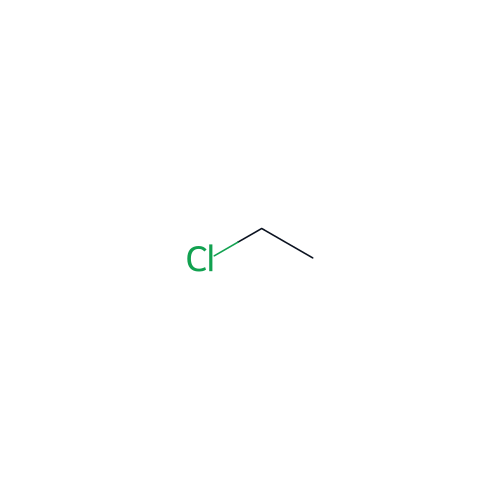
GHS classification summary, not a safety data sheet (SDS). Classifications can differ by supplier, grade and concentration. Always check the supplier's SDS.
GHS classification
Pictograms, signal word and hazard classes of the GHS classification
health, fire, reactivity
Hazard classes and categories
- Flam. Gas 1
- Carc. 2
- Aquatic Chronic 3
Hazard statements
H codes grouped by type. Percentages show the share of classification notifications that report the statement
Physical hazards
- H220Extremely flammable gas.
Health hazards
- H351Suspected of causing cancer.
Environmental hazards
- H412Harmful to aquatic life with long lasting effects.
Precautionary statements
P codes for prevention, response, storage and disposal
Prevention
- P203Obtain, read and follow all safety instructions before use.
- P210Keep away from heat, hot surfaces, sparks, open flames and other ignition sources. No smoking.
- P222Do not allow contact with air.
- P273Avoid release to the environment.
- P280Wear protective gloves, protective clothing, eye protection and face protection.
Response
- P318If exposed or concerned, get medical advice.
- P377Leaking gas fire: do not extinguish, unless leak can be stopped safely.
- P381In case of leakage, eliminate all ignition sources.
Storage
- P403Store in a well-ventilated place.
- P405Store locked up.
Disposal
- P501Dispose of contents and container in accordance with local regulations.
First aid
General first aid measures. Get medical advice if you feel unwell
Handling, storage and disposal
Summaries only, follow the supplier SDS for your grade
Safe handling
Fire: NO open flames, NO sparks and NO smoking. Closed system, ventilation, explosion-proof electrical equipment and lighting. Prevent build-up of electrostatic charges (e.g., by grounding) if in liquid state. Use non-sparking handtools.
General: STRICT HYGIENE!
Inhalation: Use ventilation, local exhaust or breathing protection.
Skin: Cold-insulating gloves. Protective clothing.
Eyes: Wear face shield or eye protection in combination with breathing protection.
Ingestion: Do not eat, drink, or smoke during work.
Storage
Fireproof.
Disposal
Ethyl chloride is a waste chemical stream constituent which may be subjected to ultimate disposal by controlled incineration. Incineration of ethyl chloride, preferably after mixing with another combustible fuel. Care must be exercised to assure complete combustion to prevent the formation of phosgene. An acid scrubber is necessary to remove the halo acids produced. Ethyl chloride boils @ 12 °C, therefore it is commonly a gas at ambient temp, and will be in pressurized cylinders. Thermal destruction methods may be difficult to apply unless a gas feed to the incinerator can be arranged. (Peer-review conclusions of an IRPTC expert consultation (May 1985))
Exposure limits and toxicity
Occupational exposure limits and toxicity data
- OSHA PEL, 8-hour TWA
- 1000 ppm (2600 mg/m³)
- ACGIH TLV, 8-hour TWA
- 100 ppm
- IDLH
- 3800 ppm (10% LEL)
Short-term exposure: The substance is mildly irritating to the eyes, skin and respiratory tract. Rapid evaporation of the liquid may cause frostbite. The substance may cause effects on the central nervous system. Exposure far above the OEL could cause unconsciousness, cardiac dysrhythmia and death.
Transport information
UN dangerous goods classification for road, sea and air
- UN number
- UN 1037
- Transport hazard class
- 2.1
Shipping rules depend on mode, quantity and packaging. Confirm the classification with the supplier SDS and your freight forwarder.
Supplier safety data sheets
SDS documents uploaded by suppliers who list this chemical
No supplier has uploaded an SDS for Chloroethane yet. Suppliers usually send one with their quote. Request quotes
Safety questions
Quick answers about handling Chloroethane safely
Is Chloroethane hazardous?
Which GHS pictograms apply to Chloroethane?
What is the UN number of Chloroethane?
How should Chloroethane be stored?
Where can I get the SDS for Chloroethane?
GHS classification summary, not an SDS. Always check the supplier's SDS. Last updated 7 Oct 2026. Report an error