Zineb
Also known as Tritoftorol, Parzate, Cynkotox
Key facts
What buyers check first
- Appearance
- Powder or crystals from chloroform + alcohol
- Melting point
- 157 °C
- Boiling point
- Decomposes
- Density
- Approx 1.74 at 20 °C
- Flash point
- 90 °C
- HS code
- 293020
- Category
- Fungicides
- UN number
- UN 2771
What is Zineb?
Plain description, key identifiers and synonyms
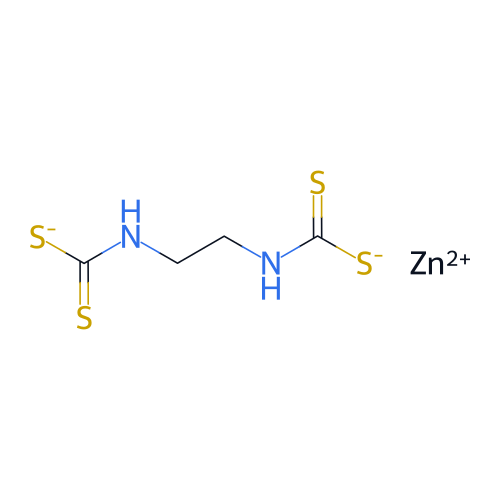
Zineb is a polymeric complex of zinc with the ethylene bis(dithiocarbamate) anionic ligand. Formerly used as an agricultural fungicide for the control of downy mildews and rusts, its use is no longer permitted in the US or the EU. It has a role as an antifungal agrochemical. It is a macromolecule, a zinc coordination entity and a dithiocarbamate salt. It contains an ethylenebis(dithiocarbamate).
Identifiers
Registry numbers, names and line notations, tap to copy
- IUPAC name
- zinc N-[2-(sulfidocarbothioylamino)ethyl]carbamodithioate
- CAS number
- 12122-67-7 CAS number cross-checked
- EC number
- 235-180-1
- Molecular formula
- C4H6N2S4Zn
- UNII
- X1FSB1OZPT
- InChIKey
- AMHNZOICSMBGDH-UHFFFAOYSA-L
- InChI
- InChI=1S/C4H8N2S4.Zn/c7-3(8)5-1-2-6-4(9)10;/h1-2H2,(H2,5,7,8)(H2,6,9,10);/q;+2/p-2
- SMILES (canonical and isomeric)
- C(CNC(=S)[S-])NC(=S)[S-].[Zn+2]
Synonyms
- Tritoftorol
- Parzate
- Cynkotox
- Novozir
- Cineb
- Clortocaffaro
- Aaphytora
- Aphytora
- Asporum
- Blightox
- Blizene
- Bombardier
- Carbadine
- Crittox
- Deikusol
- Devizeb
- Dithane Z-78
- Ditiamina
- Hexathane
- Kupratsin
- Lipotan
- Lirotan
- Lonacol
- Perosin
- Perozin
Show all 38 synonymsShow fewer synonyms
- Perozine
- Taloberg
- Tanazon
- Thiodow
- Tiezene
- Zebenide
- Zinosan
- Daisen
- Dipher
- Discon
- Funjeb
- Kypzin
- Micide
Physical and chemical properties
Measured values and descriptors computed from the structure
Physical and chemical properties
Measured values, check the supplier specification for your grade
| Appearance | Powder or crystals from chloroform + alcoholexp.Measured value |
|---|---|
| Odour | Practically odorlessexp.Measured value |
| Melting point | 157 °Cexp.Measured value |
| Boiling point | Decomposesexp.Measured value |
| Density | Approx 1.74 at 20 °Cexp.Measured value |
| Flash point | 90 °Cexp.Measured value |
| Autoignition temperature | 149 °Cexp.Measured value |
| Solubility | In water, about 10 mg/L at 25 °Cexp.Measured value |
| Vapour pressure | VP: 1.0 × 10⁻⁷ mm Hg at 25 °Cexp.Measured value |
Values vary by grade. Ask suppliers for the COA or TDS of the batch you buy.
Computed descriptors
Calculated from the structure, useful for screening and formulation
| Molecular weight | 275.76 g/molcalc.Computed value |
|---|---|
| Exact mass | 273.8705 Dacalc.Computed value |
| LogP (octanol/water) | -0.17calc.Computed value |
| Topological polar surface area | 24.06 Ųcalc.Computed value |
| Hydrogen bond donors | 2calc.Computed value |
| Hydrogen bond acceptors | 4calc.Computed value |
| Rotatable bonds | 3calc.Computed value |
| Heavy atoms | 11calc.Computed value |
| Rings | 0calc.Computed value |
| Aromatic rings | 0calc.Computed value |
| Fraction sp3 carbons | 0.5calc.Computed value |
| Formal charge | 0calc.Computed value |
| Stereocentres | 0calc.Computed value |
| Components | 2calc.Computed value |
| Lipinski rule of five | Passes (0 violations)calc.Computed value |
Calculated for screening. Confirm critical figures with the supplier.
Safety and hazards
GHS classification summary, not a safety data sheet
Hazard statements
- H317May cause an allergic skin reaction.
- H335May cause respiratory irritation.
Precautionary statements (13)
- P261Avoid breathing dust, fume, gas, mist, vapours or spray.
- P271Use only outdoors or in a well-ventilated area.
- P272Contaminated work clothing should not be allowed out of the workplace.
- P280Wear protective gloves, protective clothing, eye protection and face protection.
- P302 + P352If on skin: Wash with plenty of water.
- P304 + P340If inhaled: Remove person to fresh air and keep comfortable for breathing.
- P319Get medical help if you feel unwell.
- P321Specific treatment (see supplemental first aid instructions on the label).
- P333 + P317If skin irritation or rash occurs: Get medical help.
- P362 + P364Take off contaminated clothing. And wash it before reuse.
- P403 + P233Store in a well-ventilated place. Keep container tightly closed.
- P405Store locked up.
- P501Dispose of contents and container in accordance with local regulations.
- UN number
- UN 2771
- Transport hazard class
- 6.1
- Packing group
- III
GHS classification summary, not a safety data sheet (SDS). Classifications can differ by supplier, grade and concentration. Always check the supplier's SDS.
Full safety data and first aidZineb suppliers
Sponsored listings first, then the documented ranking: membership, verification, replies, completeness, freshness and ratings
- ChinaUnclaimed profileZinebGrade, purity and minimum order on requestPrice on request
- India, Rajkot ManufacturerUnclaimed profileZinebGrade, purity and minimum order on requestPrice on request
- India, Rajkot ManufacturerUnclaimed profileZinebGrade, purity and minimum order on requestPrice on request
- India, Ahmedabad ManufacturerUnclaimed profileZinebGrade, purity and minimum order on requestPrice on request
Suppliers marked Unclaimed profile have not claimed their profile yet. They are not verified by CompoundList, their offers are price on request and details may have changed, so please confirm them with the supplier. Company representatives can claim a profile with a business email on the company's own website domain. Our team verifies each claim and sends the result by email.
Send one request to many suppliers
Choose up to 10 suppliers or let us match your request. Compare quotes side by side, free.
Zineb price
Indicative price range per kg from live supplier offers
Suppliers quote this chemical on request. Send one free request and compare quotes side by side.
Uses and applications
What the substance is used for, by industry and function
The active ingredient is no longer contained in any registered pesticide products ... "cancelled.".
/Formerly used in US/ as fungicide on fruits, vegetables, field crops and a large number of ornamental plants and for treatment of many seeds. In paints and on fabrics, leather, linen, painted surfaces, surfaces to be painted and paper, plastics and wood surfaces.
Control of downy mildews in vines, hops, lettuce, onions, spinach, brassicas, oilseed, rape, tobacco, and ornamentals, rusts in currants, berry fruit, plums, vegetables, and ornamentals (especially carnations and chrysanthemums), red fire disease on vines, potato and tomato blights, leaf spot diseases on currants, berry fruit, olives, and celery, anthracnose on beans, vines, and citrus fruit, scab on apples and pears, shot-hole on stone fruit, Cercospora on bananas, tulip fire, Botrytis, needle cast in forestry, etc.
Agricultural fungicide.
Industries and functions
Pharmacological actions
- Fungicides, Industrial
Roles
- agrochemical
- antifungal agent
- antifungal agrochemical
- antimicrobial agent
- fungicide
- pesticide
Functional uses
- Biocide
How it is made
Reaction of ethylene diamine and carbon disulfide in the presence of alkali, followed by addition of zinc sulfate to precipitate Zineb
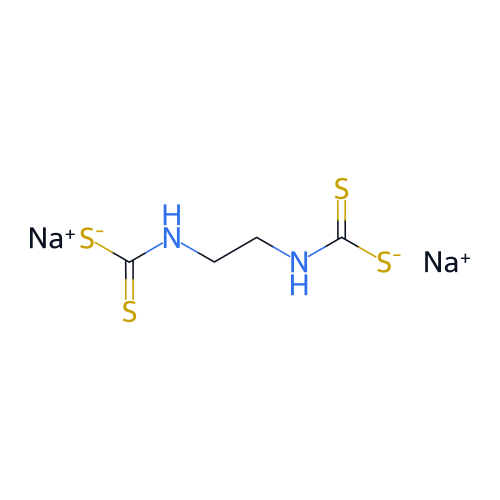
Zineb is produced by mixing ethylenebis(dithiocarbamate) with an aqueous zinc sulfate solution, or by reaction of Nabam with a solution of zinc salts.
Reaction of sodium ethylenebisdithiocarbamate with zinc sulfate or other zinc salts. In practical application as a fungicide these reactants are mixed in the presence of lime, the zineb is not formed until after reaction of the carbon dioxide of the air with the film of the other chemicals on the leaf or fruit.
Regulatory status
Inventories, regulations and trade controls that list this substance
Europe
- EU harmonised classification (CLP Annex VI)Index no: 006-078-00-2
HS code and trade data
Customs classification and reported world trade statistics
Global trade
World import and export statistics for the HS code Zineb is traded under.
Thiocarbamates and dithiocarbamates
- India * partner reported12.2%
- Australia12.1%
- United States7.1%
* Partner reported figures, a lower bound.
The HS code shown for Zineb is indicative (it was assigned by structure rules). Confirm the classification with your customs broker before shipping.
Related chemicals
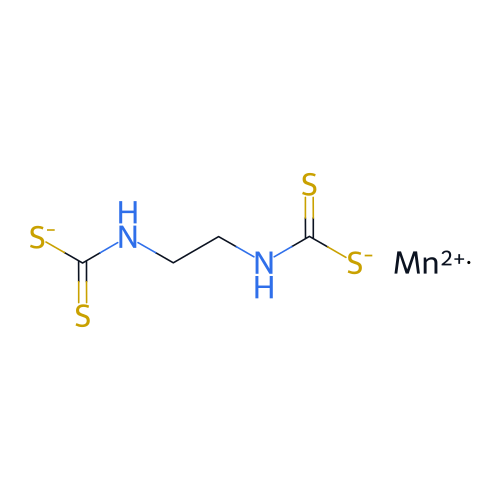
Parent and salt forms, stereoisomers, similar structures and isomers
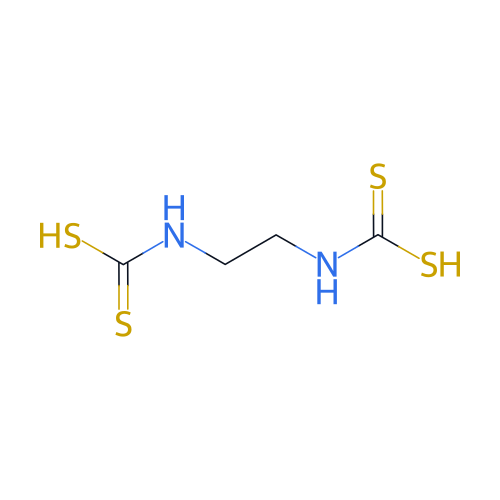
Parent compound
The neutral parent of this salt, hydrate or mixture
Similar structures
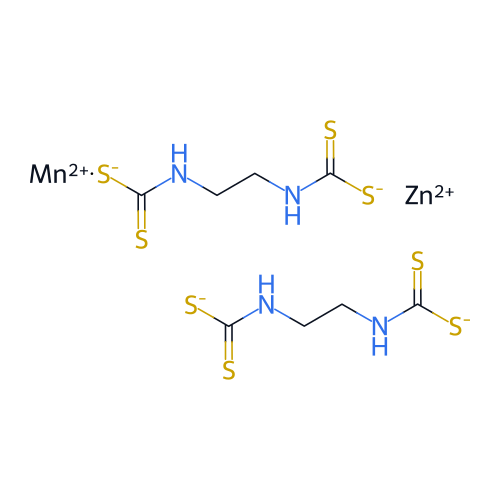
Nearest neighbours by Morgan fingerprint Tanimoto similarity

Frequently asked questions
Quick answers about Zineb, based on the data on this page
What is Zineb?
What is the CAS number of Zineb?
What is the molecular formula and weight of Zineb?
What is Zineb used for?
Is Zineb hazardous?
What is the HS code of Zineb?
Where can I buy Zineb?
Where can I buy Zineb in India?
What is the price of Zineb?
Guides for buyers
Practical guides that help when you source, ship or handle Zineb
- Guide, SafetyHow to read a safety data sheet in 10 minutesA section by section method to pull the essentials out of any 16 section SDS: identity, hazards, composition, storage, PPE, properties, transport and emergency measures.Read
- Guide, Trade and logisticsShipping dangerous goods: UN numbers, classes and packing groupsHow the UN dangerous goods system works for chemicals, from the nine classes and UN numbers to packing groups, UN packaging marks, labels, documents and segregation.Read
- Guide, SafetyGHS pictograms, signal words and hazard statements explainedA practical guide to the nine GHS pictograms, the signal words Danger and Warning, H and P statements, and how to read a chemical label in seconds.Read
Get quotes for Zineb
Embed this structure on your websiteShow code
Paste this code into your page to show the 2D structure of Zineb with a 3D view, its CAS number where known and a link back to this page. Free to use with the link kept.
<iframe src="https://www.compoundlist.com/embed/structure/zineb-12122-67-7" title="Zineb structure on CompoundList" width="360" height="420" style="border:1px solid #E7E2DA;border-radius:12px;max-width:100%" loading="lazy" referrerpolicy="strict-origin-when-cross-origin"></iframe>Explore more in Fungicides or HS code 293020