Acids and bases
Sodium hydroxide vs potassium hydroxide
Sodium hydroxide (HNaO, CAS 1310-73-2) and potassium hydroxide (HKO, CAS 1310-58-3) are both listed under hydroxides and bases.
Sodium hydroxide has a molar mass of 40.00 g/mol, potassium hydroxide 56.11 g/mol.
Measured boiling points are 1,388 °C for sodium hydroxide and 1,327 °C for potassium hydroxide.
Both carry the GHS signal word Danger.
On CompoundList, 1,399 suppliers list sodium hydroxide and 706 suppliers list potassium hydroxide.
Data last updated 7 October 2026
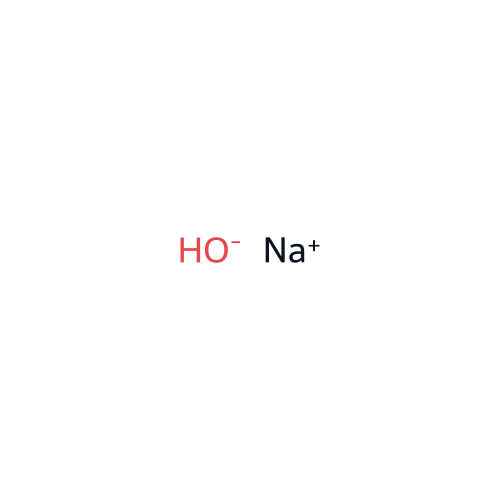 | 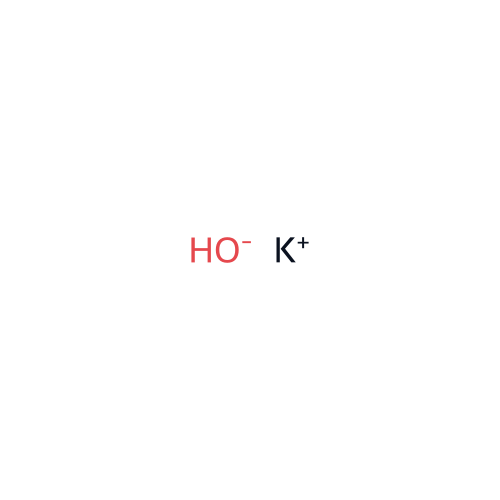 | |
|---|---|---|
| Identity | ||
| Name in our database | Sodium hydroxide | Potassium hydroxide |
| CAS number | 1310-73-2 | 1310-58-3 |
| Molecular formula | HNaO | HKO |
| Molar mass | 40.00 g/mol | 56.11 g/mol |
| IUPAC name | sodium hydroxide | potassium hydroxide |
| EC number | 215-185-5 | 215-181-3 |
| Physical properties | ||
| Appearance | White, orthogonal crystals | White or colorless, orthorhombic, deliquescent pieces, lumps, or sticks having crystalline fracture |
| Melting point | 323 °C | Ca. 360 |
| Boiling point | 1,388 °C | 1,327 °C |
| Density | 2.13 g/cm³ 25 °C | 2.044 g/cm³ |
| Solubility | 1 g dissolves in 0.9 mL water, 0.3 mL boiling water | Solubility in water, 121 g/100 g water at 25 °C |
| LogP (octanol/water)Computed from the structure | -3.17 | -3.17 |
| Safety (GHS) | ||
| Signal word | Danger | Danger |
| Pictograms | ||
| Hazard statements |
|
|
| UN number | UN 1823 | UN 1813 |
| Uses and classification | ||
| Uses and functions |
|
|
| Category | Inorganic chemicals › Hydroxides and bases | Inorganic chemicals › Hydroxides and bases |
| HS code | 281511Sodium hydroxide (caustic soda), solid | 281520Potassium hydroxide (caustic potash) |
| Market on CompoundList | ||
| Suppliers | 1,399 suppliers | 706 suppliers |
| Supplier countries | 88 countries, most in India, United States, China | 62 countries, most in India, United States, China |
| Price rangeOnly prices set by suppliers who manage their own profile | Price on request | Price on request |
Measured and computed values as shown on each chemical page, plus live listings on CompoundList. Details may have changed, please confirm them with the supplier. Safety data is a summary, not an SDS.
Sodium hydroxide
Potassium hydroxide
More comparisons
Other common chemical pairs, compared the same way.