Agrochemicals and fertilisers
Urea vs ammonium nitrate
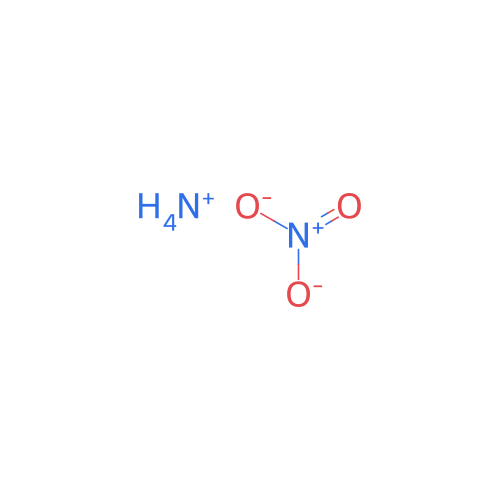
Urea (CH4N2O, CAS 57-13-6) and ammonium nitrate (H4N2O3, CAS 6484-52-2) are both listed under fertilizers and micronutrients.
Urea has a molar mass of 60.06 g/mol, ammonium nitrate 80.04 g/mol.
Measured melting points are 132.7 °C for urea and 169.7 °C for ammonium nitrate.
Ammonium nitrate carries the GHS signal word Danger, while no signal word is recorded for urea in our records.
On CompoundList, 338 suppliers list urea and 186 suppliers list ammonium nitrate.
Data last updated 7 October 2026
 |  | |
|---|---|---|
| Identity | ||
| Name in our database | Urea | Ammonium nitrate |
| CAS number | 57-13-6 | 6484-52-2 |
| Molecular formula | CH4N2O | H4N2O3 |
| Molar mass | 60.06 g/mol | 80.04 g/mol |
| IUPAC name | urea | azanium nitrate |
| EC number | 200-315-5 | 229-347-8 |
| Physical properties | ||
| Appearance | White crystals or powder | White hygroscopic crystals, orthorhombic |
| Melting point | 132.7 °C | 169.7 °C |
| Boiling point | Decomposes | 200 to 260 |
| Density | G/cm³ | 1.7 g/cm³ |
| Solubility | In water, 5.45 × 10⁺⁵ mg/l @ 25 °C | 213 g/100 g water at 25 °C |
| LogP (octanol/water)Computed from the structure | -0.98 | 0.14 |
| Safety (GHS) | ||
| Signal word | None | Danger |
| Pictograms | None | |
| Hazard statements | No hazard statements recorded |
|
| UN number | Not recorded | UN 2067 |
| Uses and classification | ||
| Uses and functions |
|
|
| Category | Agrochemicals › Fertilizers and micronutrients | Inorganic chemicals › Nitrates and nitrites |
| HS code | 310210Urea, whether or not in aqueous solution | 310230Ammonium nitrate, whether or not in aqueous solution |
| Market on CompoundList | ||
| Suppliers | 338 suppliers | 186 suppliers |
| Supplier countries | 43 countries, most in United States, Canada, China | 40 countries, most in United States, India, China |
| Price rangeOnly prices set by suppliers who manage their own profile | Price on request | Price on request |
Measured and computed values as shown on each chemical page, plus live listings on CompoundList. Details may have changed, please confirm them with the supplier. Safety data is a summary, not an SDS.
More comparisons
Other common chemical pairs, compared the same way.