Prothoate safety data
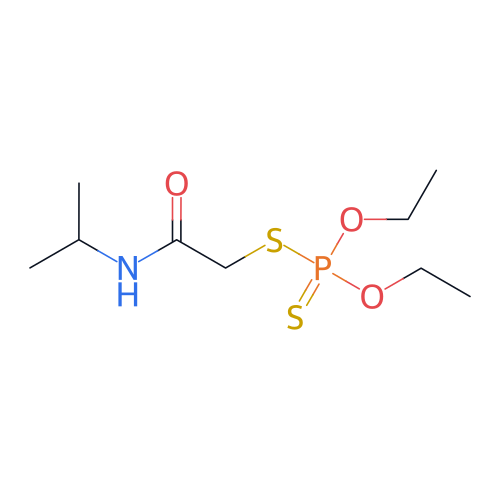
GHS classification summary, not a safety data sheet (SDS). Classifications can differ by supplier, grade and concentration. Always check the supplier's SDS.
GHS classification
Pictograms, signal word and hazard classes of the GHS classification
Hazard classes and categories
- Acute Tox. 1/2 (oral)
- Acute Tox. 1/2 (dermal)
- Aquatic Chronic 3
Hazard statements
H codes grouped by type. Percentages show the share of classification notifications that report the statement
Health hazards
- H300Fatal if swallowed.
- H310Fatal in contact with skin.
Environmental hazards
- H412Harmful to aquatic life with long lasting effects.
Precautionary statements
P codes for prevention, response, storage and disposal
Prevention
- P262Do not get in eyes, on skin, or on clothing.
- P264Wash skin thoroughly after handling.
- P270Do not eat, drink or smoke when using this product.
- P273Avoid release to the environment.
- P280Wear protective gloves, protective clothing, eye protection and face protection.
Response
- P301 + P316If swallowed: Get emergency medical help immediately.
- P302 + P352If on skin: Wash with plenty of water.
- P316Get emergency medical help immediately.
- P321Specific treatment (see supplemental first aid instructions on the label).
- P330Rinse mouth.
- P361 + P364Take off immediately all contaminated clothing. And wash it before reuse.
Storage
- P405Store locked up.
Disposal
- P501Dispose of contents and container in accordance with local regulations.
Handling, storage and disposal
Summaries only, follow the supplier SDS for your grade
Safe handling
Respiratory protection (supplied-air respirator with full facepiece or self-contained breathing apparatus) should be available where these compounds are manufactured or used and should be worn in case of emergency and overexposure. /Phosphorus compounds/ Respirator Selection: Where the potential for exposure to this chemical, use a NIOSH approved supplied-air respirator with a full facepiece operated in the positive pressure mode or with a full facepiece, hood, or helmet in the continuous flow mode, or use a NIOSH approved self-contained breathing apparatus with a full facepiece operated in pressure-demand or other positive pressure mode.
Storage
Storage: Prior to working with this chemical you should be trained on its proper handling and storage. Store in tightly closed containers in a cool, well-ventilated area. Where possible, automatically transfer material from drums or other storage containers to process containers. Sources of ignition such as smoking and open flames are prohibited where this chemical is handled, used, or stored. Metal containers involving the transfer of this chemical should be grounded and bonded.
Disposal
Disposal Method Suggested: In accordance with 40CFR165 recommendations for the disposal of pesticides and pesticide containers, must be disposed properly by following package label directions or by contacting your state pesticide or environmental control agency or by contacting your regional EPA office. All organic pesticides, whether of botanical or synthetic origin, can be destroyed by incineration. /Organic pesticides/
Exposure limits and toxicity
Occupational exposure limits and toxicity data
This is a highly toxic material capable of causing death or permanent injury due to exposures during normal use. Small doses at frequent intervals are additive. Similar to parathion.
Supplier safety data sheets
SDS documents uploaded by suppliers who list this chemical
No supplier has uploaded an SDS for Prothoate yet. Suppliers usually send one with their quote. Request quotes
Safety questions
Quick answers about handling Prothoate safely
Is Prothoate hazardous?
Which GHS pictograms apply to Prothoate?
How should Prothoate be stored?
Where can I get the SDS for Prothoate?
GHS classification summary, not an SDS. Always check the supplier's SDS. Last updated 7 Oct 2026. Report an error